Trump to escalate global trade tensions with new reciprocal tariffs on US trading partners


US President Donald Trump was poised to impose sweeping new reciprocal tariffs on global trading partners on Wednesday, upending decades of rules-based trade, threatening cost increases and likely drawing retaliation from all sides.
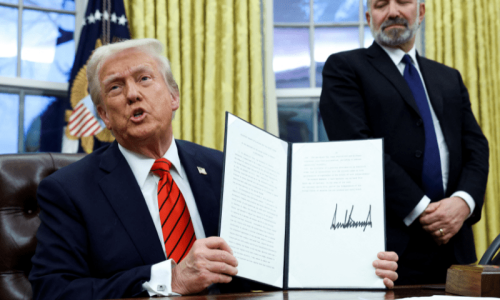
Details of Trump’s “Liberation Day” tariff plans were still being formulated and closely held ahead of a White House Rose Garden announcement ceremony scheduled for 4pm Eastern Time (1am PKT).
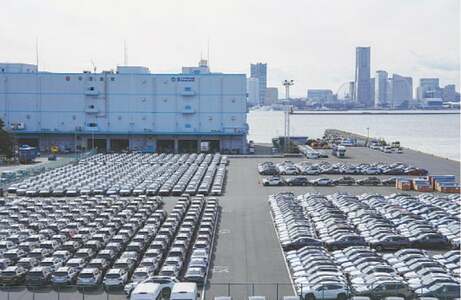
The new duties are due to take effect immediately after Trump announces them, White House spokesperson Karoline Leavitt said on Tuesday, while a separate 25 per cent global tariff on auto imports will take effect on April 3.
Trump for weeks has said his reciprocal tariff plans are a move to equalise generally lower US tariff rates with those charged by other countries and counteract their non-tariff barriers that disadvantage US exports. But the format of the duties was unclear amid reports that Trump was considering a 20pc universal tariff.
A former Trump first-term trade official told Reuters that Trump was more likely to impose comprehensive tariff rates on individual countries at somewhat lower levels.
The former official added that the number of countries facing these duties would likely exceed the approximately 15 countries that Treasury Secretary Scott Bessent had previously said the administration was focused on due to their high trade surpluses with the US.
Bessent told Republican House of Representatives lawmakers on Tuesday that the reciprocal tariffs represent a “cap” of the highest US tariff level that countries will face and could go down if they meet the administration’s demands, according to Republican Representative Kevin Hern.
Ryan Majerus, a former Commerce Department official, said that a universal tariff would be easier to implement given a constrained timeline and may generate more revenue, but individual reciprocal tariffs would be more tailored to countries’ unfair trade practices.
“Either way, the impacts of today’s announcement will be significant across a wide range of industries,” said Majerus, a partner at the King and Spalding law firm.
Stacking tariffs
In just over 10 weeks since taking office, the Republican president has already imposed new 20pc duties on all imports from China over fentanyl and fully restored 25pc duties on steel and aluminum, extending these to nearly $150 billion worth of downstream products.
A month-long reprieve for most Canadian and Mexican goods from his 25pc fentanyl-related tariffs is also due to expire on Wednesday.
Administration officials have said that all of Trump’s tariffs, including prior rates, are stacking, so a Mexican-built car previously charged 2.5pc to enter the US would be subject to both the fentanyl tariffs and the autos sectoral tariffs, for a 52.5pc tariff rate — plus any reciprocal tariff Trump may impose on Mexican goods.
Growing uncertainty over the duties is eroding investor, consumer and business confidence in ways that could slow activity and drive up prices.
Economists at the Federal Reserve Bank of Atlanta said a recent survey showed corporate financial chiefs expected tariffs to push their prices higher this year while cutting into hiring and growth.
Rattled investors have sold stocks aggressively for more than a month, wiping nearly $5 trillion off the value of US stocks since mid-February. Wall Street ended mixed on Tuesday with investors stuck in limbo awaiting details of Trump’s announcement on Wednesday.
Retaliatory measures
Trading partners from the European Union to Canada and Mexico have vowed to respond with retaliatory tariffs and other countermeasures, even as some have sought to negotiate with the White House.
Canadian Prime Minister Mark Carney and Mexican President Claudia Sheinbaum spoke on Tuesday about Canada’s plan to “fight unjustified trade actions” by the US, Carney’s office said.
“With challenging times ahead, Prime Minister Carney and President Sheinbaum emphasised the importance of safeguarding North American competitiveness while respecting the sovereignty of each nation,” Carney’s office said in a statement.
US companies say a “Buy Canadian” movement is already making it harder for their products to reach that country’s shelves.
Trump has argued that American workers and manufacturers have been hurt for decades by free-trade deals that have lowered barriers to global commerce and fueled the growth of a $3tr US market for imported goods.
The explosion of imports has come with what Trump sees as a glaring downside: massively imbalanced trade between the US and the world, with a goods trade deficit that exceeds $1.2tr.
Economists warn his remedy — hefty tariffs — would raise prices at home and abroad and hammer the global economy. A 20pc tariff on top of those already imposed would cost the average US household at least $3,400, according to the Yale University Budget Lab.