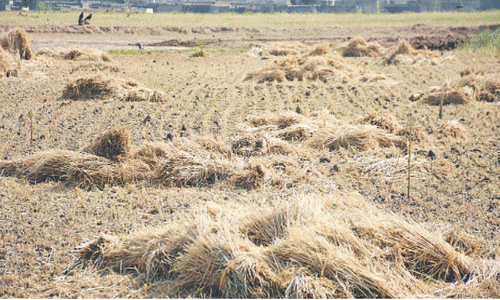
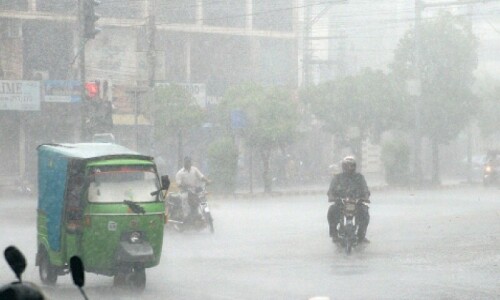
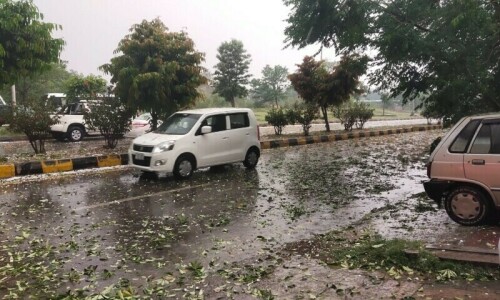
THE freak hailstorm that swept across northern Pakistan on Wednesday, claiming lives and causing destruction, indicates how climate chaos is fast becoming our new normal. Social media was awash with videos showing ‘golf ball-sized’ icy projectiles damaging vehicles and solar panels in Islamabad, flash floods disrupting traffic on the Peshawar-Torkham Highway, and standing crops in Punjab and KP suffering damage.
This month alone has seen weather swings that defy historical precedent. Just days earlier, the Met Office warned of an intense heatwave gripping much of the country, with temperatures in Sindh and Balochistan forecast to be 6°C to 8°C above average. Drought-like conditions in large parts of southern Punjab and Sindh had already raised fears about falling wheat yields, while strong gusts and hail have now damaged crops in KP as well. Pakistan, it is clear, is trapped in a relentless cycle of climate volatility. The contrast between these extremes — from drought to heatwave to destructive storms — paints a troubling future.
Compounding these challenges is the disheartening global shift in climate policy. The resurgence of climate scepticism has led to a rollback of critical climate finance commitments. Notably, America’s recent withdrawal from major climate finance pledges has further narrowed the window for developing nations to adapt. For a country like Pakistan — among the most climate-vulnerable yet least responsible for global emissions — this is a crushing setback. Hopes of external funding to invest in resilience, disaster preparedness, and clean technology appear more remote. Simultaneously, the decline in fossil fuel prices has prompted many countries to double down on oil and gas investments. Media reports have highlighted a $200bn surge in new LNG projects, posing a significant threat to global climate goals.
Internally, Pakistan faces another set of challenges. The ongoing water dispute between Punjab and Sindh over the Cholistan canal project underscores the urgency of equitable water resource management. With reservoir levels at Tarbela and Mangla alarmingly low, and agricultural output threatened by both drought and extreme weather, the risk of food insecurity looms large.
Despite this grim outlook, Pakistan must respond with clarity and urgency. It cannot afford to rely on undelivered pledges or assume that relief will come from abroad. A national climate action plan must be urgently updated and enacted. This includes better forecasting for such events, reformed irrigation and farming practices, and serious water conservation efforts. We are being forced into a future shaped by climate uncertainty, and must confront this crisis with the seriousness it deserves — not as a series of isolated calamities, but as a structural threat to national survival. With foreign aid in retreat, the burden of action rests squarely on the state.
Published in Dawn, April 18th, 2025