• Shipping and insurance costs could soar if key oil route shut, warn business leaders
• Global oil prices retreat 4pc
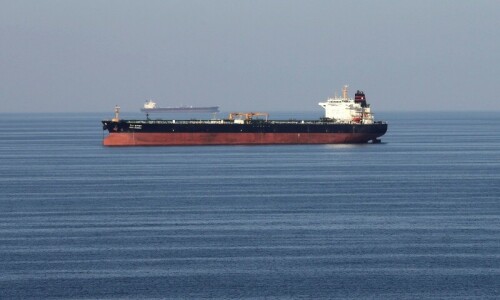
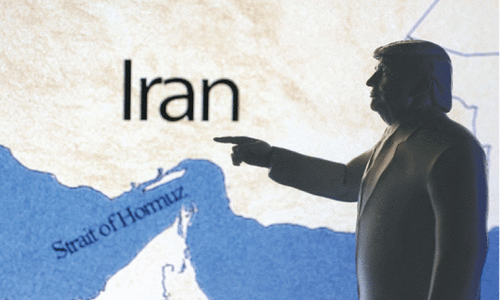
KARACHI: The potential closure of the Strait of Hormuz — one of the world’s most critical oil transit chokepoints —could deal a devastating blow to Pakistan’s already fragile economy, with soaring production, shipping, and insurance costs threatening industrial output, exports, and employment.
Zubair Motiwala, Chairman of the Businessmen Group (BMG) and former CEO of the Trade Development Authority of Pakistan (TDAP), warned that a shutdown of the Strait—located between Iran and Oman—would significantly disrupt supply chains. “Our imports of raw materials, 30 to 40pc of which pass through this route, would become prohibitively expensive, making continued production unsustainable,” he said.
Motiwala noted that freight markets were already strained due to the ongoing Israel-Iran conflict. He pointed to Iran’s parliament approving a move to close the Strait in retaliation for US strikes on its nuclear facilities, which he said could trigger a severe economic shock for oil-importing countries like Pakistan.
Crude oil prices slip
According to a Reuters report, global crude oil prices surprisingly dipped on Monday despite growing concerns over the possible closure of the Strait of Hormuz. Brent crude futures were down $2.91, or 3.8pc, at $74.09 a barrel by 1:13 p.m. ET (1713GMT). US West Texas Intermediate crude (WTI) eased $2.8, or 3.8pc, to $71.06.
Analysts attributed the decline to market expectations that a full-blown disruption was unlikely or could be temporary. However, traders and economists in Pakistan argue that even the threat of such a closure is enough to spike freight and insurance costs for the country, which heavily relies on oil imports and maritime trade.
“The impact is already visible. A shipment from China to Karachi that cost $1,250 per container earlier is now being quoted at $5,000,” said Motiwala. “This is simply devastating for business viability.”
He added that the European Union — Pakistan’s largest buyer of textiles and other goods — may no longer find Pakistani exports competitively priced due to the sharp rise in shipping and production costs.
Motiwala further warned that rising insurance premiums and disrupted raw material supply would halt factory operations, leading to widespread layoffs. “Our machines will stop. Hundreds of thousands of workers will be on the streets,” he said.
Business leaders expressed concern over the lack of preparedness among local industries. Many, they said, have not assessed the scale of disruption nor developed contingency plans for alternate supply routes.
Karachi Chamber of Commerce and Industry (KCCI) President Javed Bilwani stated that more time is needed to comprehend the consequences fully. “If the Strait is closed, the cost of doing business will skyrocket, especially if the Iran-Israel conflict escalates further,” he added.
The Ministry of Commerce has yet to issue an official statement on how the government intends to address the emerging crisis.
Federation of Pakistan Chambers of Commerce and Industry (FPCCI) Senior Vice-President Saqib Fayyaz Magoon echoed these concerns. “About 30 to 40pc of our imports move through the Strait of Hormuz. If ships are forced to take longer routes to reach Karachi, both freight and insurance will surge dramatically,” he said, warning of a “highly volatile” outlook for business.
Several traders, when approached, admitted they were unaware of the full extent of the impact. Some said while the economy may survive the shock, economic growth would be stifled, leading to widespread job losses.
Others pointed out that the closure of the Strait could also choke off the Red Sea route, making access to West Asia and Europe prohibitively costly. “If that happens, inflation will spiral. Businesses will collapse. Import and export operations could grind to a halt,” said Motiwala.
He concluded with a grim warning: “Oil prices have already started creeping up. If the war escalates further, we are staring at unimaginable inflation and economic paralysis.”
Published in Dawn, June 24th, 2025