QUETTA: While Iran and Israel fired missiles at each other last month, the people of Mashkhel — a border town in Balochistan — were struggling to secure essential items.
For years, residents of this town have relied on the neighbouring country for daily use items, mainly because it is too far from regular supply chain routes.
Located around 700km from Quetta with only a rudimentary road link, the town with a population of around 67,000 has historically been dependent on trade with Iran to meet even its most basic needs.
Earlier, locals would purchase edible items from Jalk, the nearest Iranian town, located around 20km from Mashkhel.
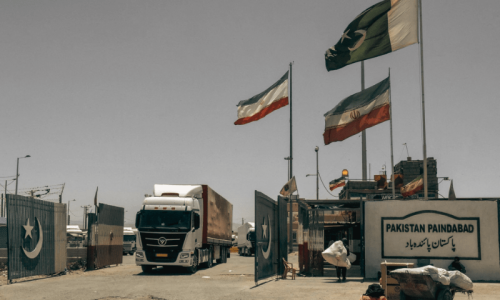
But the Zero Point gate with Iran has been closed since the Covid-19 pandemic.
Locals forced to purchase Iranian goods from Quetta at triple the price
“We were compelled to get edible items from either Dalbandin (in neighbouring Chaghi district) or from Quetta,” says Kabir Ahmad Reki, a local.
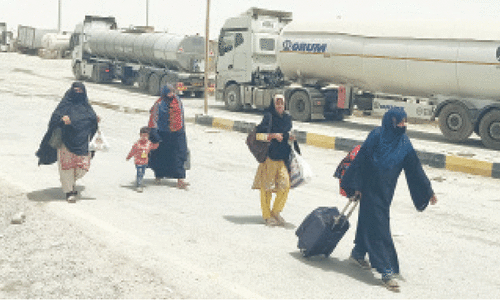
In the absence of formal trade, people from the area are forced to use ‘unofficial’ routes to obtain essentials from the Iranian side. Those who are unable to do so have to rely on the supply from local markets, such as Dalbandin and Quetta.
Due to the immense distance between them, goods brought from these far-flung markets are often priced out of reach for locals, owing to the added transportation costs.
The irony here is that the goods they are buying from larger urban centres are also Iranian-made products that are brought in via transit trade.
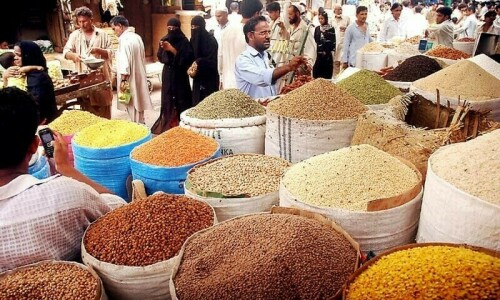
Although local alternatives are available in Quetta’s markets, people prefer to purchase Iranian goods due to their superior quality.
According to Mr Reki, if the Iranian edible items such as fish, cooking oil, or ghee are transported from Quetta to Mashkhel through local transporters, it costs them three times their original price.
“For instance,” he explains, “the price of fish is Rs180 in Jalk. But in Mashkhel, we get the Iranian fish from Quetta, and that too for around Rs400.”
Mohammad Ayub Mariani, president of the Quetta Chamber of Commerce and Industry, also said that trade was returning to pre-war levels.
“But the hurdles to trade with Iran lie on our part,” he said.
“The government ought to give subsidies to the people living in border towns, to provide them with edible items, oil, diesel, groceries that are supplies from Karachi,” he said.
Washuk Deputy Commissioner Abdul Majeed Sarparah told Dawn that Pakistan wanted to open border points for trade, but Iran hadn’t agreed to the proposal.
Mr Sarparah, who assumed charge of the district last month, said he had visited Mashkhel and held an open court to listen to people’s issues.
“Among other things, locals mentioned the issue of the trade, and I have apprised the higher authorities.”
However, he claimed the situation was starting to normalise since the ceasefire between Iran and Israel.
Published in Dawn, July 1st, 2025