
PAKISTAN has adopted several climate policies, including the National Climate Change Policy (2021) and its Nationally Determined Contributions (NDCs) under the Paris Agreement. However, implementation has been slow and fragmented, resulting in delays and setbacks. Judicial oversight offers a mechanism to bridge this gap by ensuring compliance, accountability and institutional coordination.
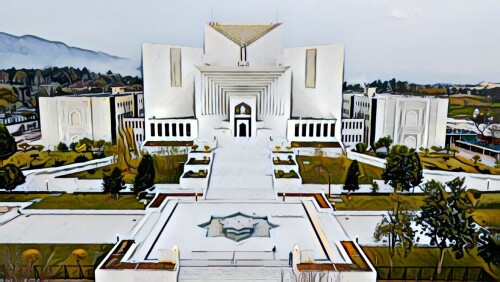
Judicial activism in Pakistan refers to the assertive role played by the higher courts in interpreting the Constitution, expanding the scope of fundamental rights, and intervening in matters traditionally reserved for the executive or legislature. This has enabled the courts to address various social and environmental issues that lack adequate government attention. Courts have recently adopted a progressive interpretation of Article 9 (right to life) and Article 14 (dignity of man) to include access to clean water, air, healthcare and a healthy environment. This approach has brought environmental concerns and climate change impacts under the ambit of constitutional rights.
The expansion of public interest litigation and the exercise of suo motu powers under Article 184(3) of the Constitution have empowered the judiciary to act on issues of public importance without waiting for formal complaints. These tools have enabled civil society and citizens to raise environmental concerns directly before the courts.
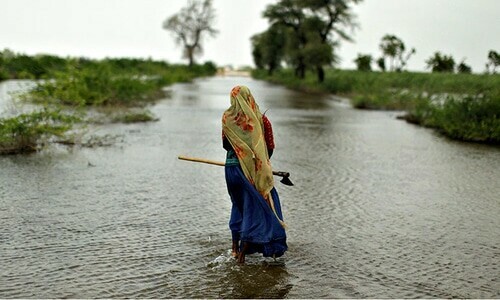
As climate threats intensify, the gap between policy and implementation will become starker, putting millions at risk due to delayed action. At a time when the global order is becoming increasingly anarchical, weak climate governance can lead to chaos and disorder. For Pakistan, this is particularly dangerous due to its geography and heavy reliance on a river system fed largely by snow and glacial melt. The lack of coherence and clarity between federal and provincial responsibilities exacerbates the situation, while the growing gap between demand and supply of essential resources for a burgeoning population worsens the crisis.
The country is heading towards a serious crisis with no bailout plan for the most vulnerable. Past judgements have acknowledged the disproportionate impacts of climate change on the vulnerable, reinforcing the concept of environmental justice. It is time for the courts to step in to safeguard long-term climate goals by issuing binding decisions to protect environmental and climate commitments from being undermined by political changes or short-term interests. The judiciary can enforce timelines, require periodic reporting and conduct regular hearings to monitor institutional performance. This will give public agencies a strong incentive to implement climate measures and improve interdepartmental coordination.
Judicial oversight can also reveal structural weaknesses and recommend improvements in legal frameworks, technical capacity and institutional mandates. One entry point is the management of protected parks, forests and biodiversity hotspots. The blatant disregard for conservation rules in national parks and guzara forests highlights the need for judicial activism to promote constitutionalism, transparency and accountability in environmental protection. Guzara forests owned by the community and managed by the forest department run the risk of becoming a new breeding ground of exploitation and environmental degradation if not protected by law.
It is time the courts stepped in to safeguard climate goals.
The Margalla Hills National Park (MHNP), which falls under the administrative jurisdiction of the Islamabad Capital Territory, can serve as a case study and model for harmonising policy with implementation as well as development with nature. Straddling KP and Punjab, the ICT presents a unique opportunity for addressing issues related to land use in adjacent areas, including guzara forests, and their long-term impact on national parks. Developing a governance framework that considers the strategic impact of land use around fragile ecosystems can serve as a blueprint for managing both protected and surrounding lands.
A successful intervention in MHNP can be replicated provincially to conserve ecological assets and restore degraded ecosystems using nature-based solutions in line with Pakistan’s NDCs. Every habitat damaged or destroyed contributes to microclimatic changes, altering its immediate and broader environment.
As the crisis deepens, the judiciary must play a key role in narrowing the implementation gap by enforcing legal obligations, protecting citizen rights and driving institutional reform. Its continued engagement — balanced with respect for democratic institutions — is vital for achieving sustainable, rights-based climate action in Pakistan.
The writer is chief executive of the Civil Society Coalition for Climate Change.
Published in Dawn, July 11th, 2025