US, world’s top producer of plastics, urges countries to reject UN production caps
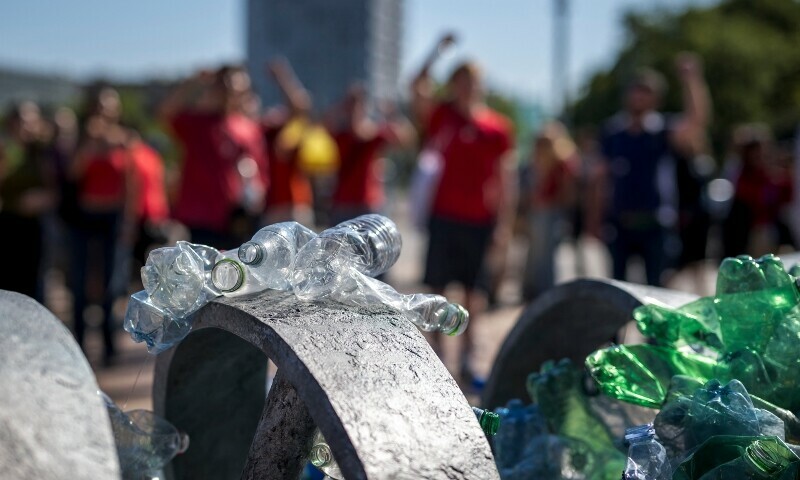

GENEVA: The United States has sent letters to at least a handful of countries urging them to reject the goal of a global pact that includes limits on plastic production and plastic chemical additives at the start of UN plastic treaty talks in Geneva, according to a memo and communications.
In the communications dated July 25 and circulated to countries at the start of negotiations on Monday, the US laid out its red lines for negotiations that put it in direct opposition to over 100 countries that have supported those measures.
Hopes for a “last-chance” ambitious global treaty that tackles the full life cycle of plastic pollution from the production of polymers to the disposal of waste have dimmed as delegates gather for what was intended to be the final round of negotiations.
Significant divisions remain between oil-producing countries who oppose caps on virgin plastic production fueled by petroleum, coal, and gas and parties such as the European Union and small island states, which advocate for limits, as well as stronger management of plastic products and hazardous chemicals.
The US delegation, led by career State Department officials who had represented the Biden administration, sent memos to countries laying out its position and saying it will not agree to a treaty that tackles the upstream of plastic pollution.
“We will not support impractical global approaches such as plastic production targets or bans and restrictions on plastic additives or plastic products — that will increase the costs of all plastic products that are used throughout our daily lives,” said the memo understands was sent to countries who could not be named due to sensitivities around the negotiations.
Nairobi meeting
The US acknowledged in the memo that after attending a preliminary heads of delegation meeting in Nairobi from June 30 to July 2, “we plainly do not see convergence on provisions related to the supply of plastic, plastic production, plastic additives or global bans and restrictions on products and chemicals, also known as the global list”. A State Department spokesperson said each Party should take measures according to its national context.
“Some countries may choose to undertake bans, while others may want to focus on improved collection and recycling,” the spokesperson said.
John Hocevar, Oceans Campaign Director for Greenpeace USA, said the US delegation’s tactics under Trump marked a “return to old school bullying from the US Government trying to use its financial prowess to convince governments to change their position in a way that benefits what the US wants”.
One of the world’s leading producers of plastics, the US has also proposed revising the draft objective of the treaty to reduce plastic pollution by eliminating a reference to an agreed “approach that addresses the full life cycle of plastics”, in a proposed resolution.
A source familiar with the negotiations told Reuters it indicated that the U.S. is seeking to roll back language that had been agreed in 2022 to renegotiate the mandate for the Treaty.
The US stance broadly aligns with the positions laid out by the global petrochemicals industry, which stated similar positions ahead of the talks, and a number of powerful oil and petrochemical producer countries that have held this position throughout the negotiations.
Published in Dawn, August 7th, 2025