Pakistan floats ‘plastic credits’
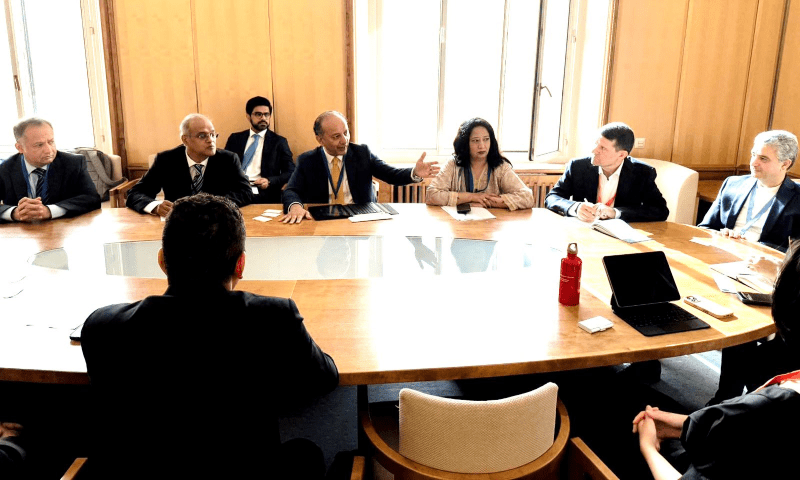

KARACHI: The idea of setting up a ‘global plastic fund’ for a marketplace to buy and sell plastic credits, floated by Dr Musadik Malik, the federal minister for climate change and environmental coordination, at the fifth session of the plastic pollution treaty negotiations taking place in Geneva, has received quite a few nods and thumbs up from delegates.
“Once we have enough countries agreeing to this, the [UN Environment Programme] secretariat will be forced to put it on the agenda,” said the climate minister.
Going through the treaty’s text with a fine-tooth comb, he found it confounding that there was no mechanism to show how the polluters would pay to countries that were getting polluted, he said, giving the example of small island nations which generate less plastic waste, but get ashore anyway from the rest of the world.
He also asked developed nations to stop exporting their plastic waste to “countries like Pakistan” and using them as “junkyards”.
Interestingly, in his address at the informal ministerial dialogue on investment opportunities for a plastic circular economy, he said, “When I look at the green financing, I find that the same countries that are consuming plastics are the countries that are getting green financing,”, putting the blame squarely on countries with a bigger plastic footprint.
Musadik Malik says he is ‘extremely disappointed’ at UN system, as plastic talks remain stalled
Talking to a packed hall, he warned, “Injustice is unsustainable and if we do injustice to nature; it is not going to care… it will retaliate, and we shall all suffer.”
Giving the example of coal, he added, “We are all interwoven as one global village, or so I believed, up until the geopolitical tectonic plates moved. And when they moved and some countries started to use coal once again, other countries were forbidden from using it. I find that perplexing… how can coal in one country be black and another country be orange with yellow polka dots. So sometimes, naive as I am, I don’t get the geopolitics of the world. The plastics [pollution] is, frankly, no different.”
“I told them to listen to us; we’re not voiceless and don’t ramrod us,” he told Dawn over the phone from Geneva.
‘Race to the bottom’
Billed as the most important environmental deal since the 2015 Paris climate accord, the 10-day summit with delegates from 184 countries has yet to agree on a definition of “plastic pollution” itself.
“They’re just squabbling over where the semi-colon is going to be placed; the number of brackets in the text continues to grow; no wonder nothing gets done,” said Dr Malik.
He was not the only one. European Union environment chief Jessika Roswall found there to be “more square brackets in the text than plastic in the sea”.
Dr Malik said he was extremely disappointed with the way the UN system works. “Is this how you deal with matters that affect the lives and livelihood of people?”
From Geneva, Rachel Radvany, environmental health campaigner at the Centre for International Environmental Law (CIEL), told Dawn: “What was meant to be a global effort to solve the plastics crisis has stalled.”
She further said, “As in the climate space, it’s the countries least responsible for the problem that are fighting the hardest for an ambitious treaty… while producers are in a race to the bottom, with some even questioning whether the treaty is about plastic.”
“The written jargon-infested statements were benign to say the least; everyone agreeing and endorsing each other that the world needs to do something about the plastic waste, yet offering not a single solution,” said Dr Malik, adding that it had been exhausting.
Published in Dawn, August 14th, 2025