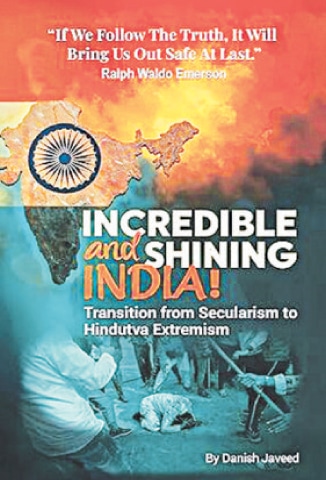
Incredible and Shining India — Transition from Secularism to Hindutva Extremism
Self-published
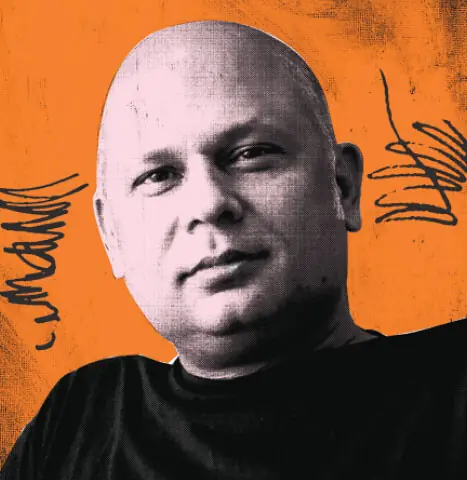
By Danish Javeed
ISBN: 978-627-946581-8
255pp.
The author, Danish Javeed, devoted seven years to completing this exhaustive study of the alleged state-sponsored 2002 Gujarat pogrom in India. Nonetheless, it is a distressing read due to its gory details.
A three-day period of inter-communal violence occurred in the western Indian state of Gujarat from February 28 to March 1, 2002. The burning of a train in Godhra the day before, which caused the deaths of 58 Hindu pilgrims returning from Ayodhya, is cited as having instigated the violence. It is alleged that it was a state-sponsored false flag operation. Further outbreaks occurred in Ahmedabad for three months. More outbreaks of violence against the minority Muslim population of Gujarat continued for the next year.
According to official figures, the riots ended with 1,044 dead, 223 missing and 2,500 injured. Among the dead, 790 were Muslim and 254 Hindu. The Concerned Citizens Tribunal Report estimated that 1,926 may have been killed.
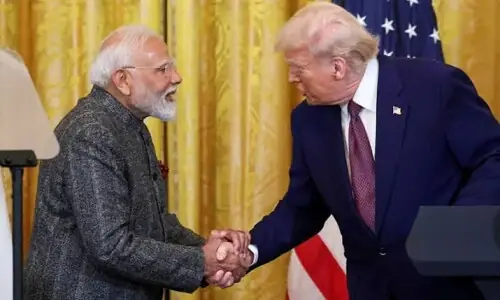
In addition to many brutal killings, many rapes were reported, as well as widespread looting and destruction of property. Narendra Modi, then chief minister of Gujarat and later prime minister of India, was accused of condoning the violence, as were police and government officials who allegedly directed the mob and provided lists of Muslim-owned properties to the attackers.
The result of years of exhaustive research, a self-published book provides readers with a closer look at the 2002 Indian Gujarat anti-Muslim pogrom
Javeed describes how and why he undertook this gruelling project: “In June 2013, I happened to read the transcripts of inhumane confessions by religious extremists [included in the book] about the Gujarat genocide in 2002 in India.
“Following the confessional transcripts, I studied Human Rights Watch and Amnesty International’s Reports on the Gujarat genocide. In this process, I came across the ‘Concerned Citizens Tribunal, Gujarat 2002’ report, titled ‘Crime against Humanity’, which I consider to be the most comprehensive and impartially compiled account, containing findings on the Gujarat genocide…
“The account of the cruelty unleashed during the genocide was too painful to absorb. The religious extremists slit apart pregnant women’s wombs, pulled out [and] swung their foetuses over swords and threw them into the fire.”
He further writes, “I could not sleep that night and cursed myself for being incapable of saving innocents who were raped, mercilessly slaughtered, and burned alive. Then, I did not know that one day I would be writing a book on extremist trends and human rights abuse prevailing in today’s India to bring about a realisation that may serve both peace and humanity.”
There are 13 tables and 76 gruesome photographs, mostly coloured, about the events that took place and their victims during the carnage.
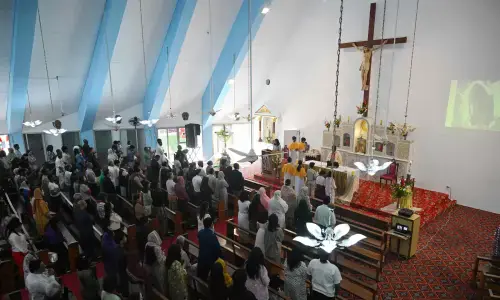
Some of the topics covered in detail include ‘How India Appears to the World Today on Human Rights Abuse and Declining Indicators’; ‘Gujarat Massacre-2002: Inconceivable Degree of Extremism, Immorality, and Dark Obsession’; ‘Attacks on Christians Post-Godhra Incident’; ‘All Was Pre-Planned? India Before and After Gujarat Genocide-2002: Transition from Secularism to Extremism’; ‘Hinduism, Hindutva and the Caste System’; ‘Life of Christians Under Violence’; ‘Sikh Community and Atrocities Faced by Them’; ‘State-Sponsored Assassination and Terrorism on Foreign Soil’; ‘Indian Held Kashmir (IHK): An Unprecedented Tale of Human Rights Violations’; ‘Afzal Guru’s Execution’; ‘Immoral and Unethical Activities to Bolster Modi’s Image and Target Hindutva Critics’; ‘Bollywood, Hindutva Ideology and Extremism’; and ‘A Dangerous Country for Journalists and Activists.’
Javeed also discusses the ambiguities in the Indian Constitution concerning the definition of secularism and refers to constitutional experts on the subject.
“After partition in 1947, Nehru and the Indian National Congress effectively managed to keep Hindutva forces sidelined and uphold their conceived model of secularism and inclusivism. Unfortunately, after Nehru died in 1964, the same Congress party, under the leadership of his daughter Indira Gandhi and then his grandson, Rajiv, pandered on religious lines for electoral gains, thus paving the way for Hindutva forces to take centre stage. After that, secular forces appeared to engage in pseudo-secularism rather than the genuine secularism Nehru had promoted through his envisioned secular model.”
The author propagates that these negative violent trends can be turned around by raising awareness about the truth, starting at an individual level. Every individual, from any background and in any position, can plant the seeds of collective wisdom for the prosperity of the society, country, region and the world. The transformation of societies can begin with individuals who uphold mutual respect and tolerance rather than enforcing their rules on others.
Likewise, the role of the international community is also crucial in preventing human rights abuses in India and any part of the world, especially in the name of caste and religion. “We must work together before racial and religious extremism annihilates targeted minorities and extends its influence beyond geographical boundaries.”
Javeed adds, “In 2013, one of my daughters was eager to learn what defines good and bad for us human beings, irrespective of any religious beliefs that could appeal to common sense. I provided the following words to answer her question: when any creature in this universe is adversely affected by our thought, a word or an act, it is termed ‘bad’. Conversely, it is ‘good’ when any creation benefits from our thoughts, expressions, words or actions. In the larger picture, good and bad intentions influence the life of a person who harbours them and affect his surroundings correspondingly.”
Unfortunately, despite its attention to details about the pogroms in India, there is hardly any information available about the author, the publisher, or the distributor in the book or online.
The reviewer is a freelance writer and translator.
He can be reached at mehwer@yahoo.com
Published in Dawn, Books & Authors, August 17th, 2025