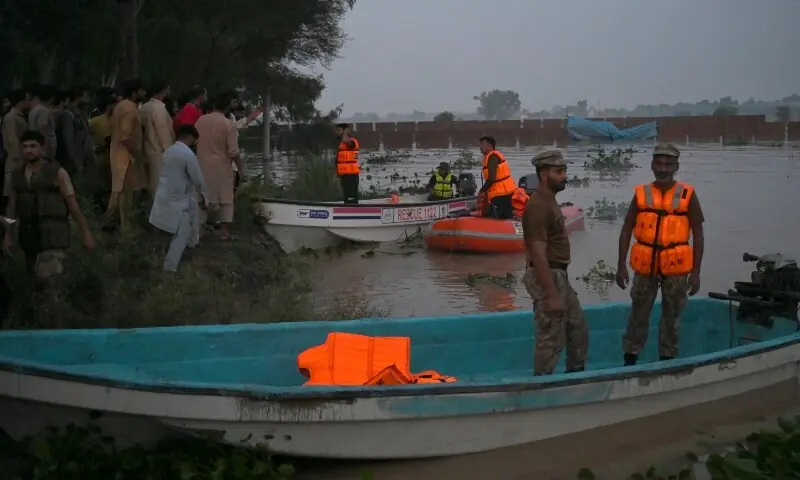
PUNJAB is reeling from massive flooding triggered by a combination of torrential rains and excess water released by India from the Ravi, Chenab and Sutlej rivers.
The three eastern rivers — allocated to India under the Indus Waters Treaty — are now experiencing medium to exceptionally high floods, with forecasts of more rain across several districts of the province, particularly in the catchment zones of the flooded areas.
A major rescue operation has been launched, with over 200,000 people evacuated and relocated to relief camps for medical care, food and other essential services since mid-August. Army troops have been deployed in at least eight districts to assist the civil authorities in moving residents to safety as floodwaters surge downstream, devastating hundreds of villages along the way.
Officials have warned that very high to exceptionally high flooding could hit multiple districts, including Lahore, in the next few days as water levels in the three rivers continue to rise. Besides riverine flooding, major cities such as Sialkot, Gujrat, Rawalpindi and Lahore have been battered by urban flooding caused by intense downpours. The extent of damage to crops, infrastructure, livestock, homes and other assets is yet to be fully assessed. But initial estimates suggest the losses are in billions of rupees.
The devastation of recent days exposes the provincial authorities’ weak state of preparedness, despite repeated warnings of unusually heavy rains and excess water releases by India, whose upstream river catchment areas have also received torrential downpours.
The situation exposes the ruling elite’s deep indifference towards the flood-vulnerable communities. This was underscored by Punjab Chief Minister Maryam Nawaz’s decision to visit Japan and Thailand — accompanied by her core team, including senior provincial bureaucrats as well as family members — at such a crucial time, instead of staying back to lead the response and devise a strategy to tackle the emerging crisis.
This attitude has justifiably earned the Punjab government much criticism. That said, the growing severity and frequency of floods with each passing year calls for holistic, integrated planning across governance structures to build resilience and preparedness to proactively mitigate the impact on vulnerable populations.
No doubt, Punjab, like the rest of Pakistan, is trying to deal with the challenge of climate change, the main trigger of extreme weather events across the country. But climate change alone is not responsible. Unplanned urbanisation, deforestation, an inadequate flood-resilient infrastructure, poor river management, etc, have all aggravated the situation.
The lesson is unmistakable: floods can no longer be dismissed as merely a by-product of climate change. Unless Punjab starts investing in climate-resilient infrastructure and adopts effective adaptation strategies, it will not be able to build the capacity it needs to minimise the impact of the devastation.
Published in Dawn, August 28th, 2025