’Hydro-politics’ or ‘water politics’ is nothing new. But thanks to climate change, hydro-politics between countries is witnessing a manifold increase in intensity. On the one hand, climate change is compounding the problem of water scarcity and, on the other, it is triggering heavier rainfalls and flooding.
Various countries share common sources of fresh water. For this, they sign water-sharing treaties. Recognition of these treaties involves the signatory nations and international organisations. There is no single global authority to enforce these agreements, though.
In a 2023 essay, the sustainability specialist Emmanuel Gutman-Gates wrote that the increasing frequency of water-related conflicts and the ‘weaponisation of water’ in specific instances suggest that water politics is a growing source of instability and conflict.
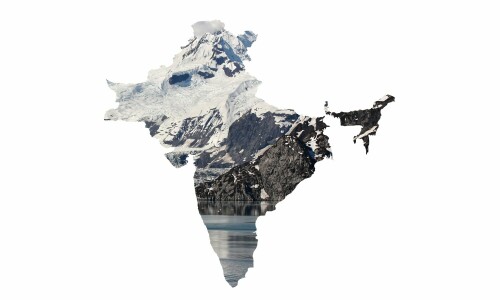
The water dispute over the Indus River, for example, is a major source of tension between India and Pakistan. In April this year, India “suspended” the Indus Waters Treaty (IWT) that was signed in 1960 between the two countries. This has escalated the threat of serious confrontation between the two historically antagonistic neighbours.
From the Indus to the Rio Grande, rivers are no longer just lifelines — they are now battlefronts. As climate change shrinks and floods waterways, nations are turning treaties into weapons and neighbours into rivals
In August, the Permanent Court of Arbitration in The Hague ruled that the IWT does not allow for unilateral suspension. But India rejected the verdict. Pakistan’s army chief allegedly responded by claiming that it would take just 10 missiles for Pakistan to destroy any new dams built by India to disrupt the water supply to Pakistan.
River Indus is Pakistan’s largest river. It originates in Tibet and then goes through India before entering Pakistan. Climate change is disrupting the flow of the river, which is an important water source for both countries. Pakistan has often accused India of using its upstream position to threaten its water supply.
Nevertheless, in May this year, the former irrigation minister Mohsin Laghari wrote in The Nation, “The IWT treaty now risks obsolescence — designed for a bygone era, it is ill-equipped to deal with the challenges of climate change and geopolitical volatility.” The treaty needs to be reframed, but India’s recent act of suspending it has further compounded the issue.
Afghanistan has been facing a scarcity of water. The River Amu Darya is a vital source of water for Afghanistan and its northern neighbours, Uzbekistan and Turkmenistan. The Taliban regime in Kabul is planning to make a canal, which is likely to lessen the flow of Amu into Uzbekistan and Turkmenistan by 15 percent. Both the countries are now negotiating with Kabul to resolve the issue peacefully.
The Kabul River, which flows into Pakistan from Afghanistan, sustains the lives of millions of people on both sides. There have been attempts by Afghanistan to build dams on this river, which Pakistan fears are likely to disrupt the supply of water to Pakistan. However, due to constant political turmoil and civil wars in Afghanistan, no such major dam has been built yet. Nevertheless, Pakistan is eager to sign a water treaty with Kabul sooner than later.
Water reserves in Iraq have hit their lowest levels in 80 years. This is straining Iraq’s relations with its upstream neighbours Iran and Turkey, who are blatantly restricting flows in the Tigris and Euphrates rivers in Iraq. According to the researcher Hayder Al-Shakeri, the Iraqi government has, however, failed to respond with professional water diplomacy. Corruption among Iraq’s political elite has weakened institutional capacity. This creates openings for Turkey and Iran to press for deals that serve their own priorities.

Another long-running hydro-political flashpoint has been over the Jordan River. The tension in this regard is mainly between Israel and Jordan. Both the countries signed a water treaty in 1994 to diplomatically resolve the issue, but climate change, wars in the region and an increase in the populations of Jordan and Israel are severely testing the treaty.
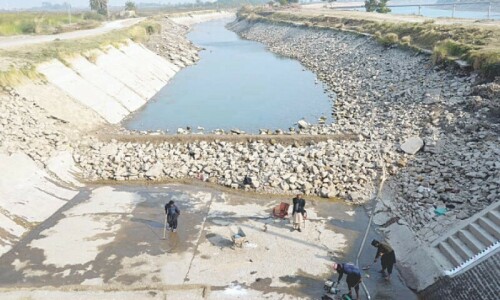
The River Rio Grande, which flows from the US to Mexico, has been rapidly dwindling due to climate change, overuse and outdated water management practices. It is a source of a decades-long dispute between the US and Mexico. Rio Grande is also one of the most endangered rivers in the world. Mexico has fallen behind on its commitments under the 1944 US-Mexico Water Treaty.
However, this year, the US and Mexico announced that they would ‘upgrade’ the treaty according to current needs and conditions. But experts believe the current framework is still inadequate to fully resolve the issue due to the river drying up at an alarming pace.
Water politics has also become a prominent part of the internal politics of various countries. This includes political and social issues surrounding the management, allocation and distribution of water resources within a country’s borders.
For example, water disputes between states/provinces in India are intensifying due to disagreements over the use, distribution and control of inter-state river waters. It is one of the tensest issues in Indian federalism today. India has just four per cent of the world’s freshwater supplies but holds a massive 18 per cent of the world’s total population.
Pakistan’s two major provinces, Punjab and Sindh, are constantly locking horns over the waters of River Indus. Climate change is intensifying this tussle, especially with monsoon patterns becoming unpredictable. Indus River flows are likely to decrease and the risk of both floods and droughts likely to increase. There is now greater awareness of climate change among most people, but it only receives obligatory lip-service from the governments and the state.
For example, political opponents are more invested in pulling each other’s legs for failing to control flash flooding in major urban areas. There has been no show of any serious intent by the state and politicians to address the impacts of climate change beyond attacking each other for being incompetent.
In south-eastern Australia, the vast river system and drainage basin, the Murray-Darling Basin, is a flashpoint for internal water politics involving states and farmers. A major government initiative — the Basin Plan — to resolve the issue has continued to be ineffective due to disputes between federal and state governments, with New South Wales and Victoria often reluctant to accept the plan.
In the US, long-running battles over shared water resources have intensified due to the impact of climate change, particularly involving the Colorado River and Rio Grande basins. In Ethiopia, serious water imbalances between regions have been a major issue in the country’s politics.
Environmental activists spent decades to finally make the term ‘climate change’ a frequent part of everyday vocabulary — even among its deniers. Yet, it remains a vague term for many because, despite experiencing its impacts more than ever, no one seems to know how to address it. This is not to suggest that there are no solutions. But most of these require dramatic changes in political policies and in established lifestyle practices, which can create social, economic and political disruptions.
But one wonders: what more can be more disruptive than melting glaciers, increasing droughts, frequent floods, unprecedented rainfalls, dying rivers and water disputes that can lead to outright wars between nations?
Published in Dawn, EOS, September 6th, 2025