ISLAMABAD: The World Meteorological Organisation (WMO), marking the “Day of Clean Air for Blue Skies” on Sunday, highlighted the complex relationship between air quality and climate while underscoring how tiny aerosol particles contribute to the intensification of wildfires, winter fog, and urban pollution.
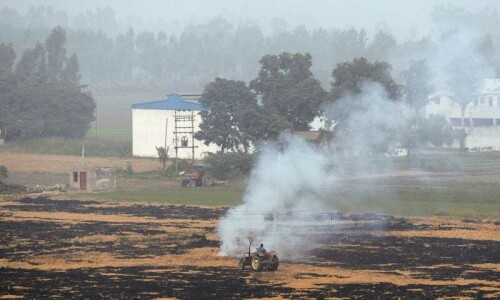
In its ‘Air Quality and Climate Bulletin’, the WMO identified the burning of post-monsoon agricultural residue, particularly in Indian Punjab and the upper Indo-Gangetic Plain, which encompasses northern and eastern India, eastern Pakistan, southern Nepal, and almost all of Bangladesh, as a dominant seasonal contributor to emissions.
Satellite data confirms sharp increases in aerosol optical depth during these months, correlating with spikes in fog intensity across the region, which is home to over 900 million people.
The persistence of fog in the Indo-Gangetic Plain “is no longer a simple, seasonal weather event — it is a symptom of escalating human impact on the environment,” the WMO bulletin stated.
The organisation noted that other pollution sources in the densely populated region include vehicle and construction emissions, as well as ammonium from large cattle populations and poor sanitation.
This ammonium interacts with other chemicals to form stable fog condensation nuclei, resulting in persistent fog. Many brick kilns using inferior coal and obsolete technology further increase organic aerosol emissions, the WMO said.
WMO says tiny air borne particles ‘aerosols’ intensify wildfires, winter fog, and urban pollution
“Climate impacts and air pollution respect no national borders – as exemplified by intense heat and drought which fuels wildfires, worsening air quality for millions of people,” WMO Deputy Secretary-General Ko Barrett said.
Fossil fuel burning and other human activities that contribute to climate change are also sources of pollutants like black carbon, nitrous oxide and ground-level ozone, which in turn aggravate climate change, creating what Mr Barrett called “a vicious cycle.”
Tiny airborne particles ‘aerosols’ have a complex relationship with the atmosphere. Darker particles like black and brown carbon warm the atmosphere and melt ice, while brighter aerosols such as sulphates reflect solar radiation back to space, providing temporary cooling before falling as acid rain.
Aerosol concentrations continue to rise in South Asia, South America and northern latitudes due to increasing wildfires and industrial activity, according to the bulletin. Held under the theme “Racing for Air”, this year’s observance emphasised the need to accelerate solutions and collective action to deliver clean air for all.
The WMO said addressing the problem requires comprehensive strategies, such as enforcing regulations on agricultural burning and promoting cleaner energy for cooking, heating, lighting and public transportation.
Published in Dawn, September 8th, 2025