Digital rupee over crypto dollarisation?
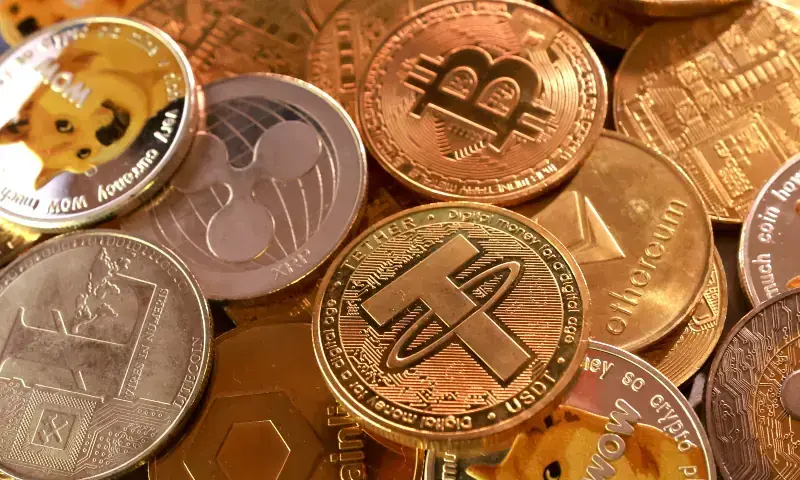

As Pakistan gears up to regulate crypto and blockchain, with the creation of a United Arab Emirates-like Virtual Assets Regulatory Authority, a specific use case related to stablecoins — a unique form of digital currency — raises concerns. These concerns, amplified by recent stablecoin legislation adopted by the US, have also led the European Central Bank to fast-track its plans for a digital euro, according to a Financial Times report. Why? The threat of a local currency substitution, particularly dollarisation, in this case of increasingly popular stablecoins pegged to the dollar.
Humza Khan, Binance’s regional operations lead for the Middle East, North Africa and South Asia, said, “The main risks with stablecoin adoption in Pakistan relate to dollarisation and the potential impact on the country’s monetary policies.”
Mubariz Siddiqui, a legal expert and founder of Carbon Law, further added that the biggest issue that the central bank has is the “dollarisation of the economy”. Therefore, Pakistan now faces a critical policy question: can a central bank’s fiat digital currency provide resistance to this threat posed by centralised fiat-backed digital currencies to preserve the central bank’s authority and Pakistan’s monetary sovereignty?
While confirming an uptake in interest in Binance and its users since government efforts to regulate virtual assets, Mr Khan said, “The community in Pakistan has been active for many years, and that strong foundation has supported the growth we have seen more recently.” He also confirmed, “In Pakistan, stablecoins are increasingly being explored as a tool for remittances and everyday transactions.”
As Pakistan prepares to pilot a central bank digital currency, stablecoins are emerging as a haven for institutional as well as retail investors, raising concerns of dollarisation and monetary sovereignty
He further acknowledged the interest of Pakistanis in stablecoins “being used for peer-to-peer [P2P] transactions” as it provides a means of hedging against local currency fluctuations. Delivering on these pain points for a population and an economy which relies heavily on cross-border transactions, with personal remittances contributing 9.4 per cent of the GDP in 2024, according to World Bank Data, “Stablecoins are a product-market fit for remittances and payouts,” said Faisal Aftab, Founder and CEO of Zayn VC.
According to Mr Aftab, stablecoins will “eventually terminate in RAAST, which is the State Bank’s central switch”. He added that “The central bank will then hold those stablecoins as reserves, convert them into digital rupees, most likely a central bank digital currency [CBDC], and from there distribute them into wallets and bank accounts.”
As much as this use case fulfils the current needs of this population, it is dependent on an unstable local currency. Therefore, with increased dependence on stablecoins, there is a structured incentive for an unstable local currency, compounded by an already dollarised textile and information technology sector.
These incentives are amplified by the unique nature of this form of centralised digital currency, as it makes it even more accessible to get “digital dollars”, and to retain the dollar as a local medium of exchange through P2P transactions. This, in the end, affects the central bank’s authority, as the dollar displaces even more use cases of the rupee, eventually weakening the impact of the central bank’s policies to manage inflation.
Mr Khan also explained, “The increase in stablecoin adoption and reliance on the stablecoin USDC’s risks reliability of the local rupee, delegitimising the currency and limiting the central bank’s ability to mitigate inflation and liquidity.” He further adds that this could lead to a Pakistan-backed stablecoin “to ensure that the central bank of Pakistan and the digital asset landscape in the country grow and adapt in unison.”
A veteran tech founder, currently building on a similar use case, shared “Stablecoins can help formalise a lot of this informal saving.” While wishing to stay anonymous, he added, “Emerging markets with unstable money usually have foreign exchange controls,” and that “any platform that gives people access to digital dollars should follow those foreign exchange controls”.
Furthermore, “when a government appropriately regulates stablecoins, this can actually result in tremendous inflows”, he explained, as these dollar stablecoins come from abroad; if stablecoins are allowed to come in, but not go out, it results in “net new inflows”.
Mr Aftab, on the other hand, while acknowledging the risk of dollarisation, said, “Regulators in Pakistan have made it clear that stablecoin activity will be channelled through RAAST and digital rupee rails, which means there will be a path to manage this risk.”
But this is just one of the many use cases that blockchain technology provides, which, if used correctly, are ideal for emerging economies like Pakistan. Talking about the different use cases, Mr Khan from Binance shared that “each emerging market is unique and looks to different use cases” within decentralised finance. “In South East Asia, we see strong interest in technology, smart contracts, and developing new projects,” he discussed, “While across Africa, adoption has been driven by tools and services such as cross-border payments.”
While the central bank avoided offering specific timelines, it confirmed exploratory work on CBDCs. The chief spokesperson for the State Bank of Pakistan, Noor Ahmed, says that as part of its exploratory initiative, “SBP is engaging with selected CBDC solution providers at the proof-of-concept stage to better understand the underlying technologies, operational models and their solution offerings.”
The writer is an independent business journalist
Published in Dawn, The Business and Finance Weekly, October 20th, 2025