AS temperatures begin to drop, smog makes an unwelcome arrival in many parts of the country, particularly Lahore and urban Punjab. This health and climate crisis has been brewing for some years, while the state — nudged on by civil society and experts — has begun to take steps to combat the smog hazard.
South Asian cities have some of the worst air on the planet, and many Pakistani urban centres are included in this unenviable list. For example, on Tuesday, both Lahore and Karachi were amongst the top five most polluted cities globally, as per IQAir monitoring data, with air quality described as “very unhealthy”. And as winter sets in, things will get worse.
In Lahore’s case, experts say a combination of local factors and pollutants blowing in from across the border with India are responsible for the dirty air. In particular, pollution caused by firecrackers set off during the Diwali celebrations in India has aggravated matters, as that country’s supreme court relaxed a ban on fireworks, allowing ‘green firecrackers’ for the occasion.
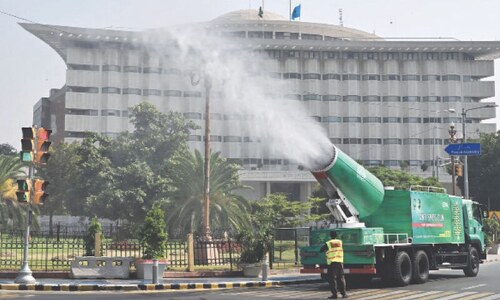
The Punjab administration has taken steps to help reduce air pollution. This includes deploying anti-smog guns as well as rounding up people responsible for emissions from factories and vehicles, and those burning crop stubble. The provincial government has also urged people to wear masks outdoors, and keep doors and windows closed. These steps were direly needed as last winter, Lahore witnessed some of the worst air quality levels on record.
It remains to be seen whether the state’s efforts result in a noticeable change in air quality. Along with such precautionary steps, it is essential to reduce emissions and encourage a switch to electric vehicles, while providing more public transport options to reduce the carbon footprint. Experts also recommend a shift to mechanical composters to address the burning of crop stubble.
While many steps are required locally and nationally, air pollution is also a transboundary issue, and a coordinated response is needed for better air across South Asia. As a senior UN official told the recently held Air We Breathe conference, organised by DawnMedia in Lahore, Pakistan cannot face the threats of air pollution and climate change alone; these are issues that require an international response.
The latest example of firecrackers set off in northern India affecting air quality in Punjab is one small example of this. While relations with our eastern neighbour may be at rock bottom, both states need to cooperate on issues such as transboundary pollution and climate change.
Clichéd as it may sound, dirty air knows no borders, and it is only through sharing data and best practices that South Asia can tackle the problem of poisonous air. In the meantime, we must do all possible locally to shield people from the acrid smog.
Published in Dawn, October 22nd, 2025