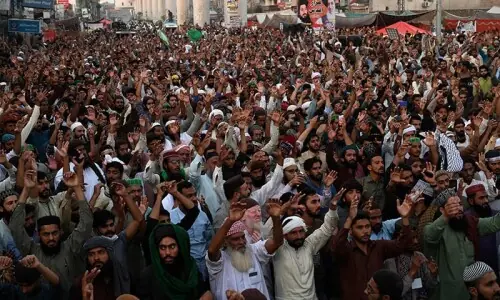
AFTER the federal cabinet approved the ban on the TLP a day earlier, the interior ministry published a notification on Friday saying that the state believed there were “reasonable grounds” to proscribe the hard-line outfit due to its connection with “terrorism”.
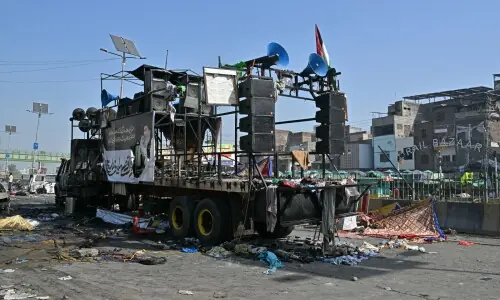
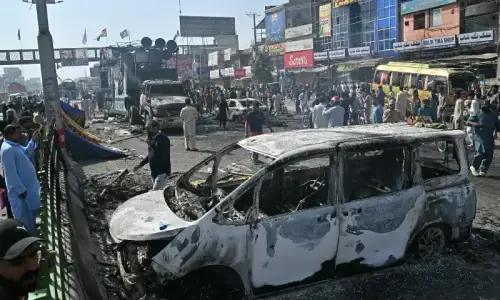
Going by the government’s signals, a formal ban had seemed imminent after TLP cadres clashed with the state in a deadly showdown last week. The immediate trigger was the administration’s refusal to let the outfit march on Islamabad in supposed solidarity with Gaza. This would be the second time the religiously inspired party has been banned. The last proscription in 2021 lasted only a few months, but this time the state appears intent on sustaining the ban. However, one should keep in mind that extremist parties and groups have been banned earlier too, but have re-emerged under new monikers.
PML-N leader and adviser to the PM Rana Sanaullah has said that the state had no issue with the TLP’s religious views and the ban was not designed to ‘eliminate’ the party. Rather, it was supposed to purge “anti-state and terrorist elements”. Going by this logic, if the aim is to target individuals who break the law, why does the state ban parties and groups?
Moreover, in the past, how many heads of militant groups, sectarian outfits and extremist parties have been tried for their crimes? The state’s history of banning groups — from the Musharraf era to date — does not inspire confidence, as outfits are proscribed on paper, but cases against their leaders and active cadres are not diligently pursued. There is also the genuine fear that the powers that be may apply the labels of ‘terrorism’ and ‘extremism’ to ban political parties that have fallen afoul of the state.
In reality, the policy of banning groups is tragicomic. Nacta’s current list of proscribed organisations contains over 80 entries, with some going as far back as 2001. Most of the groups that populate this list ascribe to jihadi, sectarian or extremist ideologies, with a smattering of separatist and ethno-nationalist outfits. But the modus operandi of ‘banned’ groups is to restart work under new names after the ban. For example, Jamaatud Dawa, an incarnation of Lashkar-i-Taiba, has at least 10 aliases, most of which are banned. Moreover, sectarian outfit Sipah-i-Sahaba, which now operates under the ASWJ moniker, has worked under three different names, some banned, others not.
The point is that unless the leaders and members of extremist groups are prosecuted for their crimes — promoting terrorism, inciting violence, hate speech, etc — the state’s attempts to impose bans will not work. The state has banned TLP today, but until those associated with it who have broken the law are prosecuted, it may re-emerge tomorrow in an even more extreme form.
Published in Dawn, October 25th, 2025