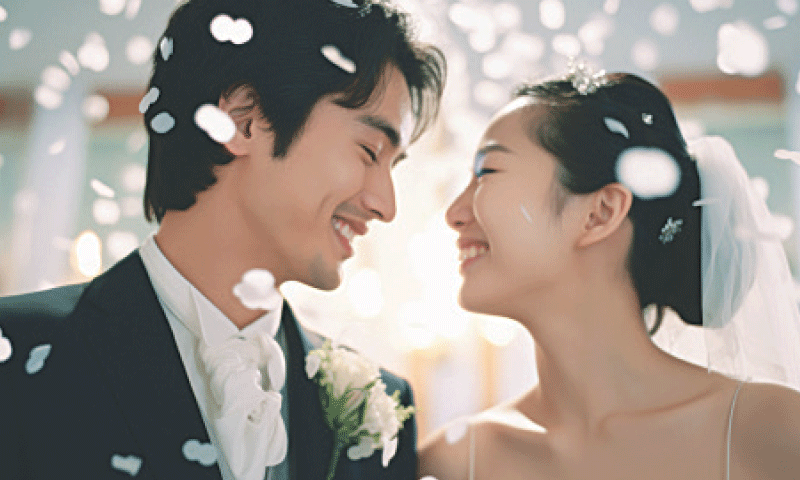

IN KOREA, speed and efficiency define almost every aspect of life, and weddings are no exception.
At most wedding halls in Seoul, ceremonies are scheduled every 60 to 90 minutes, from morning until evening, to accommodate as many couples as possible.
If you arrive early and stay late for your friend’s wedding, you might see up to three different brides: your friend, the bride before her and the one after.
But how did weddings — often a once-in-a-lifetime event — become such a streamlined process?
Limited venues & tight schedules
Professor Seol Dong-hoon of Jeonbuk National University said the brevity of nuptials here is an adaptation to Seoul’s physical constraints: a densely populated city, with a limited number of venues for weddings.
While wedding venues require ample space and sufficient parking, preferably in easily accessible locations in city centers, they typically operate only on weekends. To remain profitable in such conditions, wedding halls must maximise efficiency.
“If you want a longer ceremony, you often have to pay double,” said Professor Seol.
Family & guests before the couple
Lee Eun-hee, honorary professor of consumer studies at Inha University, adds another dimension to the explanation: Weddings in Korea aren’t centered on the bride and groom — they’re centered on their parents.
“It’s not just about two people getting married; it’s a union of two families. That’s why guests are mostly the parents’ acquaintances, their colleagues and distant relatives whom the couple often doesn’t even know. Weddings are also a chance for parents to ‘recoup’ the cash gifts they’ve given over the years, so the more guests, the better.”
Because many guests don’t have a close relationship with either the bride or groom, they often show up to give the cash gift and head straight to the banquet hall without watching the ceremony.
As a result, the bride and groom often feel that ending the ceremony quickly is a courtesy to attendees, said Yoo, who now lives in the United States.
More like business deal than love
Professor Lee said that while couples may see their wedding ceremony as a declaration of love and a sacred vow, the reality is that marriage in Korea is often more about formality than love, and that’s reflected in the ceremony itself.
“Some young couples try to hold smaller, more customized weddings these days, but many can’t because their parents insist on inviting a large number of guests to recoup gift money’’.
Published in Dawn, November 10th, 2025