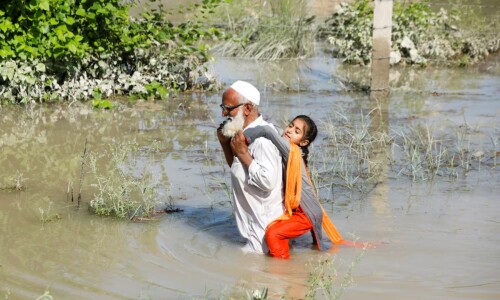
CLIMATE BYTE: Global South disproportionately vulnerable to climate change: watchdog
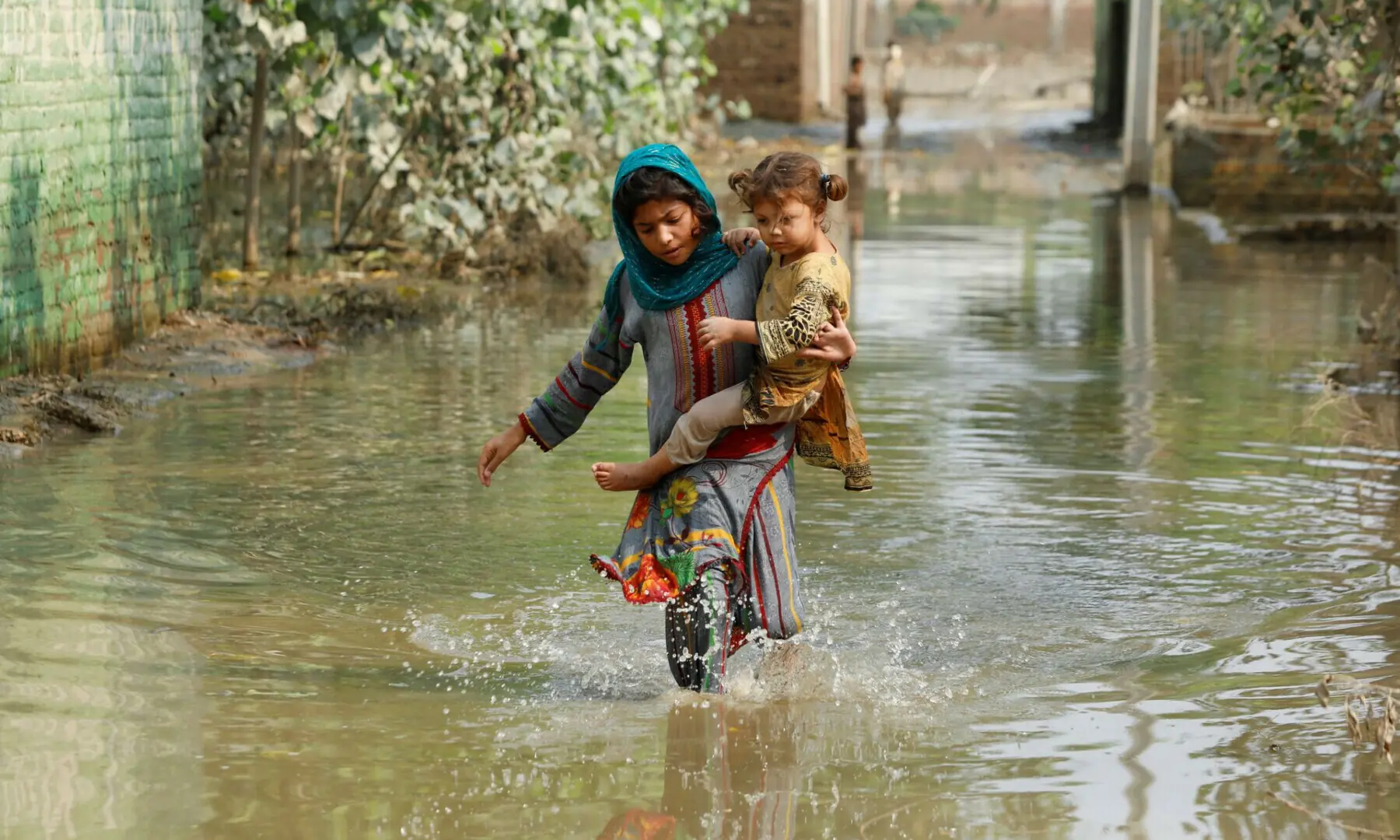

• Risk index says climate disasters claimed over 832,000 lives from 1995 to 2024
• Pakistan among top 20 vulnerable countries in long-term index
ISLAMABAD: The Climate Risk Index 2026 has revealed that extreme climate events disproportionally affected the Global South countries, as none of the 10 most affected over the previous 30 years were in the high-income group.
The index, published by the international NGO Germanwatch, ranks countries by the human and economic toll of extreme weather.
In its report, which highlighted increasing losses and the urgent need for stronger climate resilience and action, the watchdog said Dominica, Myanmar, Honduras, Libya, Haiti, Grenada, the Philippines, Nicaragua, India and the Bahamas were among the top 10 affected countries as per the 30-year ranking.
Pakistan is at the 15th spot, Afghanistan at 19th and China is at 11th in the list of 20 countries most impacted by climate change.
In 2024, Pakistan was ranked at 47. However, the 2024 ranking also showed that the Global South was disproportionately affected. St. Vincent and the Grenadines, Grenada, Chad, Papua New Guinea, Niger, Nepal, the Philippines, Malawi, Myanmar, and Vietnam were most affected in 2024. None of these countries is from the high-income group.
Almost 1m deaths in 30 years
According to the report, from 1995 to 2024, more than 832,000 people died worldwide and direct economic losses of over $4.5 trillion (inflation-adjusted) directly resulted from more than 9,700 extreme weather events.
It said floods, storms, heatwaves and drought were the most prominent impacts short- and long-term, adding that from 1995 to 2024, heatwaves (33 per cent) and storms (33pc) caused the most fatalities.
“Floods accounted for almost half of those affected (48pc). Storms caused, by far, the greatest economic losses (58pc or $2.64tr, inflation-adjusted),” the report said.
It said human-caused climate change added 41 days of dangerous heat for billions of people worldwide, greatly impacting vulnerable populations and driving other extreme weather events, such as intensified hurricanes and wildfires. The summer of 2024 was the hottest on record, with two billion people experiencing over 30 risky heat days, it added.
The NGO said the findings were in line with the Intergovernmental Panel on Climate Change (IPCC) Sixth Assessment Report (AR6) high-confidence statement that “vulnerable communities who have historically contributed the least to current climate change are disproportionately affected”.
It added that human-induced climate change affects the frequency and intensity of extreme weather events and leads to widespread adverse climate impacts. El Niño influenced many extreme events at the beginning of 2024. However, attribution science found that climate change helped fuel these events even more than El Niño, it added.
The report urged COP30, currently underway in Brazil’s Belem city, to find effective ways to close the global ambition gaps to immediately reduce global emissions, step up adaptation efforts, enforce effective solutions to address loss and damage and provide adequate climate finance.
Published in Dawn, November 13th, 2025