State must ensure every woman receives her rightful share in inheritance: SC
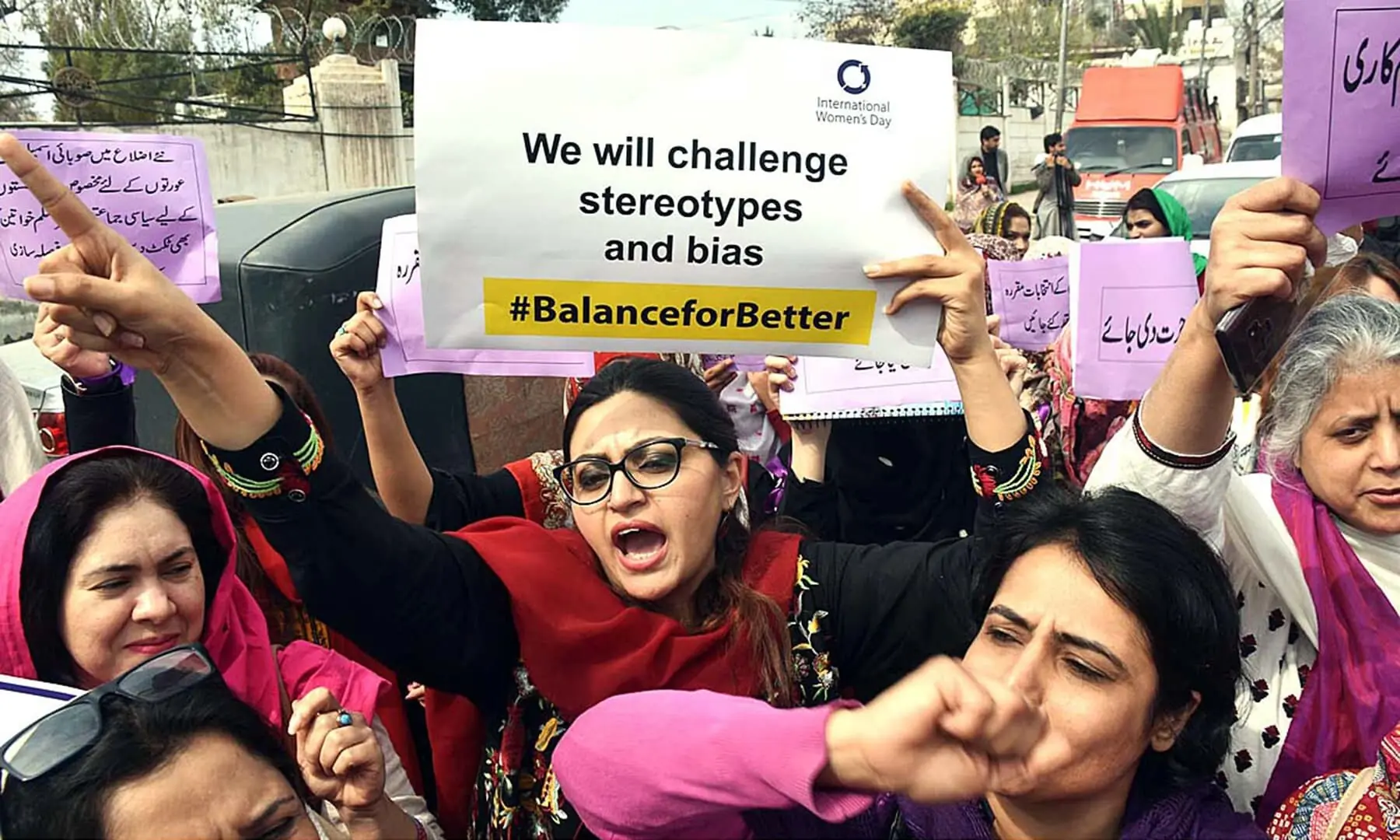

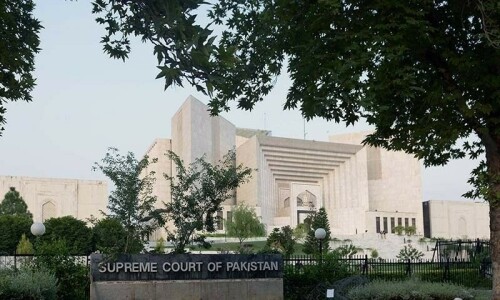
The Supreme Court has ruled that the state must ensure every Pakistani woman gets her share in inheritance and called for a mechanism to assist them in securing this “divinely bestowed” right.
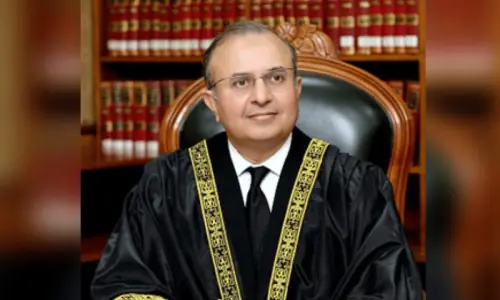
The observation came in a seven-page judgment released on Saturday, authored by Justice Athar Minallah for a case heard by him and Justice Irfan Saadat Khan on August 29. It may be noted that the verdict was authored before Justice Minallah resigned as a judge on November 13, criticising the newly passed 27th Amendment that has practically replaced the SC with the Federal Constitutional Court as the country’s apex judicial platform.
“It is incumbent upon the state under the Constitution and the clear Injunctions of Islam, to ensure the effective and unfettered realisation of women’s right to inheritance,” the order read.
In its verdict, the SC bench dismissed an appeal filed by Abrar Hussain against a March 3, 2023, order of the Sindh High Court (SHC). The high court had rejected his plea challenging a 2021 order that had also refused his appeal against a 2019 trial court decision.
The case pertained to a property dispute between Hussain and his sister Bibi Shahida, who had filed a complaint in March 2015. Shahida said she repeatedly demanded her share after her father passed away in 2002, as well as her two other siblings later on, but Hussain refused to give it.
Hussain “took exclusive possession of the property; thereby depriving the other legal heirs of their lawful shares”, the SC judgment observed.
“The petitioner (Hussain) had no case on merits and yet persisted in litigation, thereby prolonging the deprivation of his siblings of their lawful inheritance, which devolved upon them on 1.1.2002, the date of their father’s demise,” Justice Minallah wrote.
“The challenge before this court was nothing more than an attempt to delay and frustrate the rights of the other legal heirs, amounting to a mere abuse of process,” he noted.
The state had a constitutional duty to ensure that “every woman is informed of, and enabled to claim her rightful share in inheritance without delay, fear or dependence on lengthy litigation”, the judgment read.
It added that the state must establish a “proactive and accessible mechanism through which women can be identified, reached out to,” and assisted in securing their lawful entitlements.
“Furthermore, those who, through coercion, deceit, or undue influence, deprive women of this divinely bestowed right must be held accountable under the law and made answerable,” Justice Minallah stressed.
The judgment also referred to the Federal Shariat Court’s (FSC) landmark ruling in March this year, wherein it declared that any custom — such as of ‘Chaddar’, ‘Parchi’ or ‘Haq Bakhshwai’ — that deprived women of inheritance right was “un-Islamic” and had no legal standing whatsoever.
The SC judgment observed that the right to inheritance was “not a concession granted by human law but a divinely ordained command, explicitly declared in the Holy Quran”. “Any denial or obstruction of this right is, therefore, not merely unlawful but a transgression against Divine Will,” it stated.
The ruling, echoing the FSC’s verdict, emphasised that “cultural or societal practices that deprive women of their rightful inheritance are rooted neither in faith nor in justice”.
It termed such customs “remnants of ignorance which the message of Islam came to abolish”, and noted that the state bore a “sacred constitutional duty to uproot such practices”.
“A society that turns a blind eye to deprivation of inheritance rights to its women defies the spirit of Constitution and express Command of Almighty Allah,” the ruling stated.
“A state that fails to safeguard the inheritance rights to its women fails in its duty to uphold the principles of equity, faith and justice.”
The SC in its short order had imposed a cost of Rs500,000 on Hussain, which was to deposed with the SC registrar within seven days. “It is directed that the amount so deposited shall be distributed amongst the legal heirs declared by the trial court,” the SC judgment reiterated.
The property dispute
In her 2015 complaint, Shahida alleged that Hussain “was in illegal possession of the property and had rented out a portion of it without the consent of the other legal heirs, while retaining the rent without distributing it according to their respective shares”, the judgment recalled.
It noted that the remaining siblings supported the assertion made by Shahida and consented to her suit.
On the other hand, Hussain contested the suit claiming that the “predecessor-in-interest had gifted the property to him during his lifetime out of love and affection and that possession had been handed over to him”.
In October 2019, a trial court decreed Shahida’s 2015 suit, declaring Shahid, Hussain and other siblings as the legal heirs. It ordered that the property be partitioned, or sold, and its proceeds be divided if the former was not possible, and also directed Hussain to pay mesne profit to other legal heirs from the rent received by him.
Hussain challenged that decision in an appellate court, but his petition was dismissed in January 2021. A second appeal was also dismissed by the SHC in an order dated March 3, 2023.