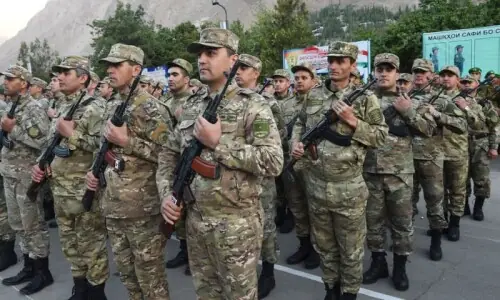
FO says use of drones in attack on Chinese workers in Tajikistan underlines ‘gravity of threat emanating from Afghanistan’
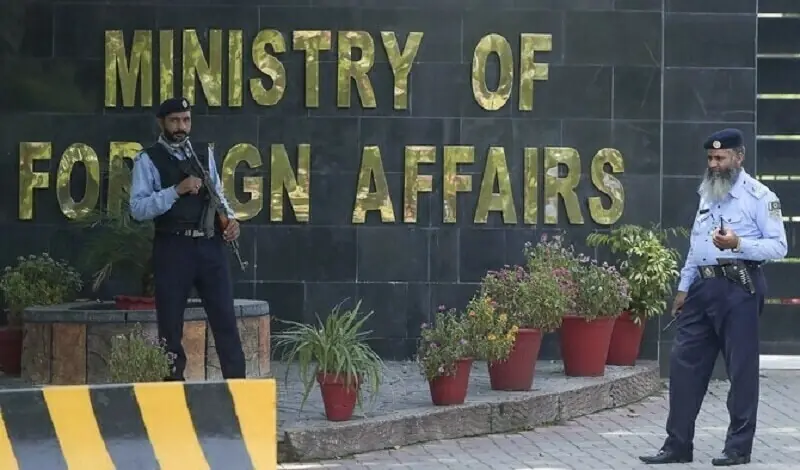

The Foreign Office (FO) has condemned the attack which claimed the lives of three Chinese workers in Tajikistan, saying that the use of armed drones in the incident underlined the “gravity of the threat emanating from Afghanistan and the brazenness of those behind it”.
Tajik authorities said on Thursday that three Chinese workers in Tajikistan were killed in an attack launched from Afghanistan near the border. The foreign ministry said a drone and firearm attack hit workers of a Chinese company in the country’s south.
“The attack, carried out with firearms and a drone loaded with grenades, claimed the lives of three employees of Chinese nationality,” it said in a statement. Dushanbe rarely comments officially on such incidents, and it did not say who it suspects carried out the attack.
Subsequently, the FO, in a statement issued early on Friday, expressed Pakistan’s condolences and solidarity with China and Tajikistan over the lives lost in a “heinous terrorist attack in Tajikistan near its border with Afghanistan”.
“Pakistan unequivocally condemns this cowardly attack on Chinese nationals. The use of armed drones in the incident underlines the gravity of the threat emanating from Afghanistan and the brazenness of those behind it,” the FO said.
“As a neighbour that has repeatedly suffered terrorist attacks orchestrated from Afghan soil, the people of Pakistan fully understand and share the grief and anguish of our Chinese friends and Tajik partners,” it said.
“Pakistan has consistently stressed that Afghan territory must not be used for terrorism against its neighbours or any other country. The repeated use of Afghan soil by terrorist elements and their continued presence under the patronage of the Afghan Taliban regime, is a matter of serious concern for the entire region and the wider international community,” it said.
It added that concrete and verifiable action against the perpetrators, abettors, facilitators and financiers of terrorist groups operating from Afghan soil was the only way to address “this growing menace”.
“Pakistan will continue to work closely with China, Tajikistan and other regional partners to promote peace, stability and security in our shared neighbourhood,” the FO said.
Pakistan’s bilateral relations with Afghanistan have come under strain in recent times as the banned terrorist Tehreek-i-Taliban Pakistan (TTP) group remains the main point of contention between the two countries.
Pakistan has demanded that the rulers in Kabul take action to stop cross-border terrorism, but the Afghan Taliban deny Islamabad’s allegations of terrorists being allowed to use Afghan soil to carry out attacks in Pakistan.
Last week, Denmark, in the capacity of the chair of the UN Security Council ISIL (Daesh) and Al-Qaeda Sanctions Committee, pointed to the “serious threat” posed by the TTP in Central and South Asia and said that the terror outfit was receiving “logistical and substantial support” from the de facto Afghan authorities.
Meanwhile, Muslim-majority Tajikistan, one of the poorest countries in the former Soviet Union, has been concerned about possible flare-ups in extremism since the Taliban returned to power in 2021.
Militants are active in the mountainous border region, which spans around 1,350 kilometres between the two countries.
Tajik President Emomali Rakhmon, in power since 1992, is openly critical of the Taliban and urged the group to respect the rights of ethnic Tajiks, estimated to make up around a quarter of Afghanistan’s 40-million population.
At the same time, Tajikistan has cautiously engaged in some areas, including through diplomatic meetings, the opening of markets in border towns and supplying electricity.
Tajikistan’s foreign ministry said on Thursday, “Criminal groups located in the neighbouring country (Afghanistan) continue to commit acts aimed at destabilising the situation in the border regions.”