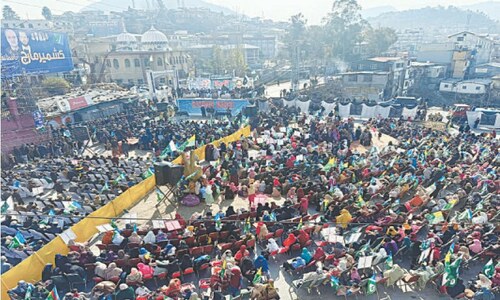
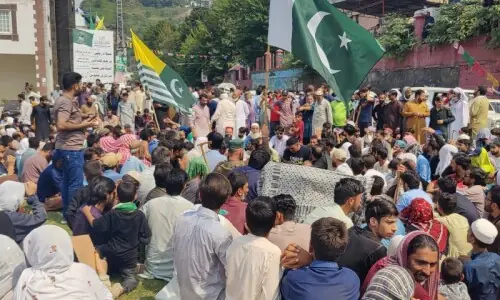
British lawmakers press for action on Kashmir freedom

• Highlight ‘urgent’ crisis following India’s revocation of disputed region’s special status; call for self-determination vote as per UN’s 1948 resolution
• Hamish Falconer insists lasting resolution rests solely with India and Pakistan
LONDON: British lawmakers on Wednesday urged their government to support self-determination for the disputed region of Jammu and Kashmir, and called on it to press India on human rights.
However, a minister reaffirmed the UK’s long-standing policy on the decades-old dispute during a parliamentary debate by saying “we believe in diplomacy”, with a renewed push for bilateral talks between India and Pakistan.
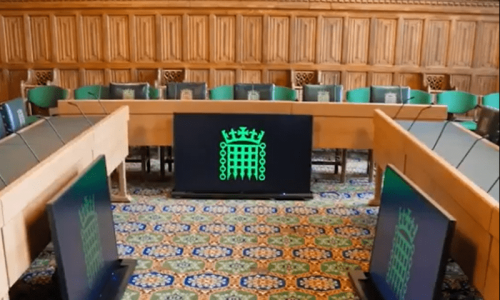
The debate “Kashmir: Self-determination”, in Westminster Hall, saw several members of parliament calling for a more active British role, citing concerns from their large British-Kashmiri constituencies.
The session was led by Labour MP Imran Hussain, who described the situation as an urgent human rights issue.
For the people of [India-held] Kashmir, this is not a distant foreign-policy issue, Mr Hussain said.
“This is about families torn apart, homes bulldozed, voices silenced, human rights abused. The right to choose their own destiny has been denied for generations.”
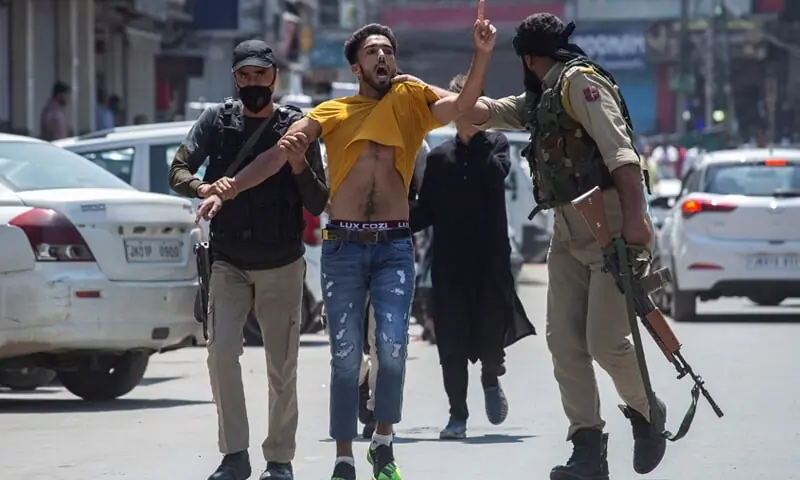
He criticised India’s revocation of the region’s special status in 2019. “Since the removal of Articles 370 and 35A, we have seen communication blackouts, curfews, mass detentions and attempts to alter the demographics of the region,” he said.
He also referenced a 1948 United Nations resolution calling for a vote on the disputed territory’s future.
The promise of a free and fair plebiscite made in 1948 remains unfulfilled, Mr Hussain added.
Decades later, the international community and successive UK governments have failed to ensure that Kashmiris can exercise their right to self-determination, he added.
Other MPs echoed his concerns. Jim Shannon of Strangford highlighted the humanitarian situation in occupied Kashmir, highlighting “repressive policies” including the use of arbitrary detention, extrajudicial killings and other most serious abuses, including sexual abuse.
Gareth Snell of Labour from Stoke-on-Trent Central highlighted the large British-Kashmiri population and the enduring lack of political attention to the issue.
Labour MP Andy McDonald of Middlesbrough and Thornaby East raised concerns over reports of arbitrary detention, suppression of free speech and restrictions on journalists.
Responding for the government, Hamish Falconer, who is the Parliamentary Under-Secretary of State for Foreign, Commonwealth and Development Affairs, emphasised that the UK’s position has not changed.
“It is for India and Pakistan to find a lasting resolution to the situation in Kashmir, which must take into account the wishes of the Kashmiri people,” he said, stressing that both sides are friends. Mr Falconer also said the UK regularly raises human rights with both nations. “The UK takes human rights seriously,” he said. “We continue to raise concerns with both India and Pakistan regarding restrictions, the detention of political leaders, and the protection of minorities. We welcome any steps to lift remaining restrictions and release political detainees,” he added.
He also addressed the UK diaspora, saying the UK recognises the strength of feeling among the British-Kashmiri community and remains open to engagement with community representatives, adding, “I do not wish to take a view about whether a further reference to the United Nations is useful at this time, but it is critical in 2025 and into 2026 that there is dialogue between India and Pakistan. We have seen the extent of the pressure when dialogue breaks down.” While ministers acknowledged the plight of Kashmiris and the UK’s role in raising concerns, they stopped short of committing to any UK-led mediation or a UN-backed plebiscite.
The session marks the latest in a series of parliamentary debates on the disputed Himalayan region, including discussions in March 2025 and January 2021, reflecting the ongoing concern among MPs, constituents, and diaspora communities about human rights and political representation in the region.
Published in Dawn, December 11th, 2025