Pakistan Ulema Council urges Afghan govt to implement clerics resolution
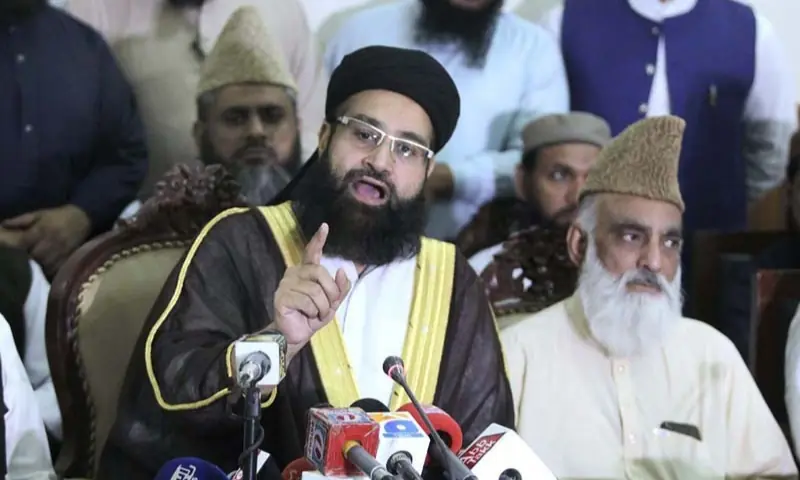

• Tahir Ashrafi says religious scholars on both sides of border desire peace
• Expresses gratitude to Turkiye, Qatar and Saudi Arabia for their mediation efforts
LAHORE: The Pakistan Ulema Council (PUC), a broad coalition of clerics from various Sunni schools of thought, has urged the Taliban interim government to implement the resolution recently passed by more than 1,000 Afghan clerics against indulging in militancy abroad.
“It is now the responsibility of the Afghan interim government to ensure the implementation of the recent declaration issued by its scholars,” PUC Chairman Hafiz Tahir Mahmood Ashrafi said here on Sunday, terming the resolution a “positive step in the right direction”.
He said there was no difference between the stance of Afghan clerics and that of those belonging to Pakistan.
“There are two basic points in the declaration. First, they [Afghan clerics] say that aggression against Afghan soil is unacceptable, and we say that terrorism in Pakistan is unacceptable. Second, they say that Afghan soil should not be used against any other country, and we hold the same opinion. There should be no attacks on Pakistan from Afghanistan and vice versa,” he added.
Stressing that peace and stability in the region are in the collective interest, he thanked Turkiye, Qatar and Saudi Arabia for their attempts to negotiate between Pakistan and Afghanistan.
Mr Ashrafi warned that any attempt to raise voices against the armed forces would be strongly resisted.
He said that if the need arose, religious seminaries and mosques would stand ready to defend the country, its security and stability. He emphasised that safeguarding the homeland was a collective responsibility.
Calling for political maturity, Mr Ashrafi urged all political parties to sit together and engage in dialogue to strengthen the country’s defence, economy and internal stability.
He criticised the use of abusive language in politics, saying that those who resorted to hate speech did not want peace in the country. He said scholars from all schools of thought had unanimously declared that violent behaviour was unacceptable. “Our objective is to take the country towards the caliphate system through peaceful means,” he added.
He also strongly condemned attacks and criticism directed at the ISPR director general following his recent press conference.
Published in Dawn, December 15th, 2025