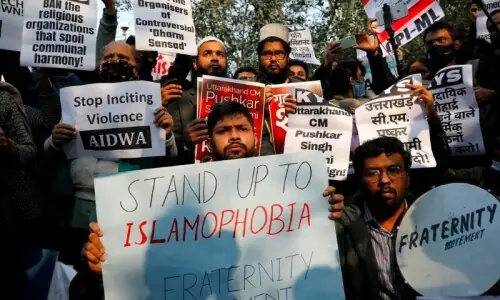
HATE speech against Muslims in India is no longer sporadic. It is organised and increasingly led by those in power. A new report by the India Hate Lab documents 1,318 hate speech events across the country in 2025 — an average of four a day — with Muslims the main targets in almost every case. This is a pattern that reflects how politics in India is now being done.
What stands out is where this hate is happening. Nearly nine out of 10 incidents took place in states ruled by the BJP or its allies. In opposition-run states, such incidents fell sharply. That contrast matters. Law and order is the state’s responsibility, and the data shows clearly that where the BJP governs, hate is allowed to flourish.
This is also no longer limited to election seasons. Even in a non-election year, hate speech remained high and widespread. That signals a shift. Communal hostility is no longer just a tool to mobilise voters; it has become part of everyday governance. Rallies, religious processions and public meetings are repeatedly used to paint Muslims as outsiders, threats or enemies within.
The language used is not just offensive, it is dangerous. Nearly a quarter of recorded speeches openly called for violence. Others urged social and economic boycotts, demanded the demolition of mosques and churches, or encouraged people to arm themselves. Muslims were regularly described as “parasites”, “termites” or “invaders”. Such words strip people of their humanity and make violence easier to justify.
Senior BJP leaders feature prominently in this ecosystem. Chief ministers, cabinet ministers and party figures were among the most frequent speakers. They promoted conspiracy theories such as “love jihad”, “population jihad” and “vote jihad” — claims that Muslims are secretly plotting to dominate India through marriage, childbirth or elections. These ideas have no basis in fact, but they serve a political purpose: to turn fear into votes and prejudice into policy.
The BJP often claims it cannot control what fringe groups say. But the report shows a clear division of labour. Allied organisations mobilise on the ground, while political leaders set the tone from above. Police action is rare. Social media platforms amplify the speeches. The result is impunity.
The cost of this strategy is high. It weakens India’s constitutional promise of equality, deepens social divisions and puts millions of Muslims at risk of discrimination and violence. It also damages India’s standing as a democracy governed by the rule of law at a time when global scrutiny is intensifying.
Hate does not spread by accident. It spreads when those in power find it useful and refuse to stop it. India’s leadership must decide whether it will pull the country back from this path, or continue to lead it down a darker one.
Published in Dawn, January 15th, 2026