WIDE ANGLE : THE EXISTENTIAL CRISIS OF THE US LEFT

Donald Trump’s victory in November 2024 led to considerable soul-searching among those on the left of US politics. Having failed to defeat a convicted criminal they beat once before, the Democrats spent most of 2025 licking their wounds, as Trump launched what they saw as a full-frontal assault on US democracy.
This new year has begun with fresh outrages at home and abroad, with the administration acting with increasingly horrifying impunity. Coupled with the continued rise of right-wing populism and authoritarianism the world over, Trump 2.0 has felt like an existential crisis for the left.
The country has been here before. Left-wing protest movements in the 1960s in the US contributed to great legislative change — particularly in the area of civil rights — but they were often caricatured as unpatriotic, particularly in relation to the war in Vietnam. The feeling that the country was coming apart at the hands of young, violent radicals led the conservative ‘silent majority’ to deliver Richard Nixon’s 1968 election victory.
Since then, mainstream left-wing politics in the US has recoiled from the idealism of the 1960s and instead offered change mostly in small increments. But this has arguably not proven a particularly successful strategy either over the past half century or more.
Two films from 2025 concerned with the failures of left-wing revolutionary politics of 1960s and 1970s America have emerged almost simultaneously with Trump’s resurgence
In the context of yet another defeat and the latest round of introspection, it seems appropriate, then, that two films concerned with the failures of left-wing revolutionary politics of the 1960s and 1970s should emerge almost simultaneously with Trump’s resurgence.
Exploring left-wing activism
Though very different in style and tone, Paul Thomas Anderson’s One Battle After Another (2025) and Kelly Reichardt’s The Mastermind (2025) both critique what they see as the strategic inadequacy and self-indulgence of left-wing activism, as well as explore its personal cost.
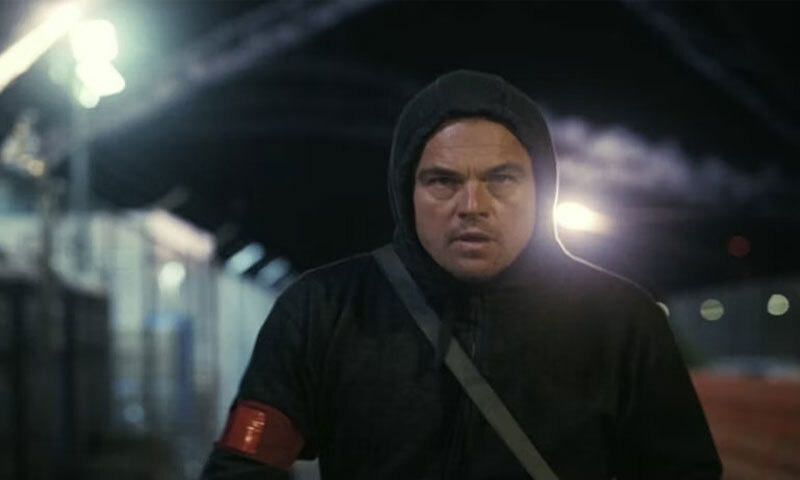
One Battle After Another sees former revolutionary Pat Calhoun, aka ‘Bob’ (Leonardo Di Caprio), trying to rescue his daughter Willa (Chase Infiniti) from the clutches of a psychopathic white supremacist colonel, Lockjaw (Sean Penn).
Though Bob had, in a previous life, resisted the federal government’s cruel, racist immigration policies through a series of daring raids on detention centres, fatherhood and excessive cannabis use have dulled his revolutionary edge. Instead, Bob is now a somewhat incompetent buffoon.
The film mines, for comedic purposes, his shambolic attempts to communicate with the “French 75” — the revolutionary army of which he was once part, modelled on real-life revolutionary groups of the 1960s and 1970s, like the Weathermen.
Stumbling around in his bathrobe, he has forgotten all the codes and conventions necessary to navigate this world. From passwords to pronouns, Bob is out of step with the times.
However, the film finds room to poke fun at the sanctimony of the left too. As Bob grows increasingly aggressive when unable to secure information regarding a crucial rendezvous point, the thin-skinned radical to whom he is speaking on the phone informs him that the language Bob is using is having a detrimental impact on his well-being. If Bob lacks the competence to support the revolution, the people in charge of it are too fragile to achieve one either.
By contrast, The Mastermind follows J.B. Mooney (Josh O’Connor) in his attempts to evade the clutches of the authorities after he orchestrates the theft of four artworks from a suburban museum. Husband, father, and the son of a judge, Mooney is privileged, directionless, disorganised, selfish and, it seems, oblivious to the impact of the war in Vietnam, as conflict rages all around him.
His disorganisation is obvious from the moment he realises his children’s school is closed for teacher training on the day of the heist. His privilege is clear when all he has to do is mention his father’s name when first questioned by police to get them off his back. Even his attempts to convince his wife, Terri (Alana Haim), that he did this for her and their kids are inadequate, as he stumbles into admitting he also did it for himself.
While on the run from the authorities, Mooney appears ignorant of what is really going on around him, from the young Black men who discuss their imminent deployment to Vietnam, to the news broadcast of the realities of the war. Without spoiling anything, Mooney is, in the end, unable to avoid the effects of Vietnam on US society altogether.
Telling moments in both films also suggest the wavering commitment to revolution among its former acolytes. In The Mastermind, Mooney hides out at the home of Fred (John Magaro) and Maude (Gaby Hoffmann), a couple with whom he attended art college.
Despite her activist past, Maude refuses to let him stay for longer than one night for fear of unwanted attention from the authorities. In One Battle After Another, Bob’s willingness to take risks with his safety and freedom declines when he becomes a parent, and he is — rather problematically — quick to judge Willa’s mother, Perfidia (Teyana Taylor), for continuing to do so.
Political cinema of the 1970s
Both films can’t help but recall the similarly political work produced in US cinema in the late 1960s and early 1970s, such as Five Easy Pieces (1970), Two-Lane Blacktop (1971) and Chinatown (1974). In the midst of the Nixon-era backlash to the radicalism of the 1960s, these films have a tone of defeatist resignation, featuring directionless protagonists and unhappy endings.
The Mastermind’s conclusion is comparable to these earlier examples: its conclusion sees the police at a Vietnam protest, patting each other on the back, having rounded up another bunch of protesters and sent them to the can.
Though One Battle After Another is considerably more effervescent in its style, it too sees left-wing revolutionary politics as something of a dead end. Smaller scale victories are possible, with Sergio (Benicio Del Toro) continuing to fight the good fight for undocumented immigrants, and Willa running off to join a Black Lives Matter protest at the film’s end.
But watching both films from the perspective of a new year in which the Trump administration threatens violent upheaval at home and abroad, I think of Captain America’s (Peter Fonda) mournful lament towards the end of counterculture classic Easy Rider (1969): “We blew it.”
The writer is Teaching Associate in Media and Cultural Studies at the University of Nottingham in the UK
Republished from The Conversation
Published in Dawn, ICON, February 1st, 2026