Untangling Iran’s protest narratives through first-hand accounts

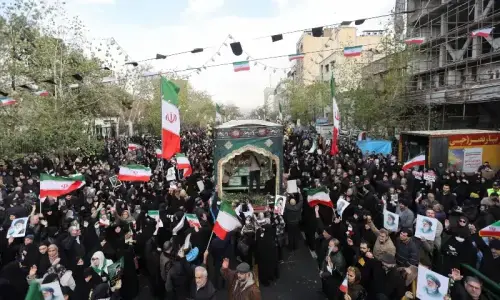
WHEN US President Donald Trump declared on January 9 that the Iranian city of Mashhad had “fallen” to “million” protesters, Davood Moradian was there and what he witnessed, he says, was something far more ambiguous than the narrative emanated from Washington.
Moradian, director of the Afghan Institute for Strategic Studies, had been in Iran’s spiritual capital since late December, conducting diplomatic and academic research.
His hometown of Herat, just across the Afghan border, shares deep linguistic and historical ties with Mashhad, giving him access to local networks and perspectives largely inaccessible to foreigners.
His account, published by The Atlantic, paints a picture of genuine unrest met with brutal repression but one that diverges sharply from both the regime’s dismissals and Western media proclamations of imminent revolution.
Researcher who spent weeks in Mashhad during January unrest says Washington, Western media’s assertions bore little resemblance to ‘on ground reality’
The early demonstrations, Moradian says, were modest affairs. In affluent neighbourhoods, small groups of masked young people chanted slogans before being quickly dispersed. “They easily could have been mistaken for agitated sports fans,” he recalled.
However, the situation intensified on Jan 8, coinciding with directives from the US-based former Crown Prince Reza Pahlavi calling for nationwide disruption.
This was simultaneous with social media provocation from US officials, including former Secretary of State Mike Pompeo, who publicly insinuated foreign intelligence operations within the crowds.
Driving through the city just after midnight on Jan 9, Moradian visited several reported flashpoints: Ahmad Abad Street, Vakil Abad Boulevard, and the working-class district of Tabarsi.
“The scenes were startling: burning buses and cars, destroyed footbridges, shattered traffic lights,” he said. Protesters had dispersed by then, but riot police remained on patrol as municipal workers cleared debris. He noted the absence of ambulances.
The ‘million-protester’ claim
Despite Trump’s assertion that day of mass demonstrations exceeding one million participants, Moradian found the figure implausible.
Having visited four of approximately ten reported protest sites, he said: “To imagine tens of thousands of protesters in these urban pockets is already a stretch, and far shy of a million.”
With internet and telecommunications severed across the city, residents were cut off from digital news and forced to rely on direct observation. “From my room I could hear occasional gunshots echoing across the city,” Moradian said.
Following a televised address by the supreme leader, Khamenei, which drew a firm line against “agitators” and accused them of acting as ‘foreign’ agents of instability, security forces visibly escalated their presence.
State media reframed the unrest from social crisis to armed insurrection involving “terrorists and Zionist agents”.
By Jan 10, the riot police carrying shotguns had been replaced by forces armed with AK-47s and heavy machine guns.
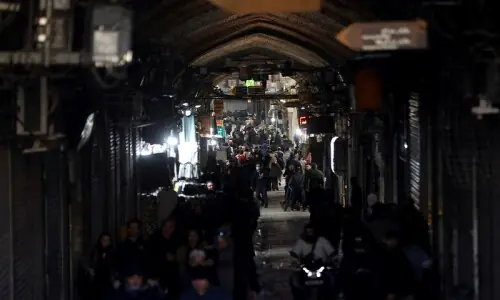
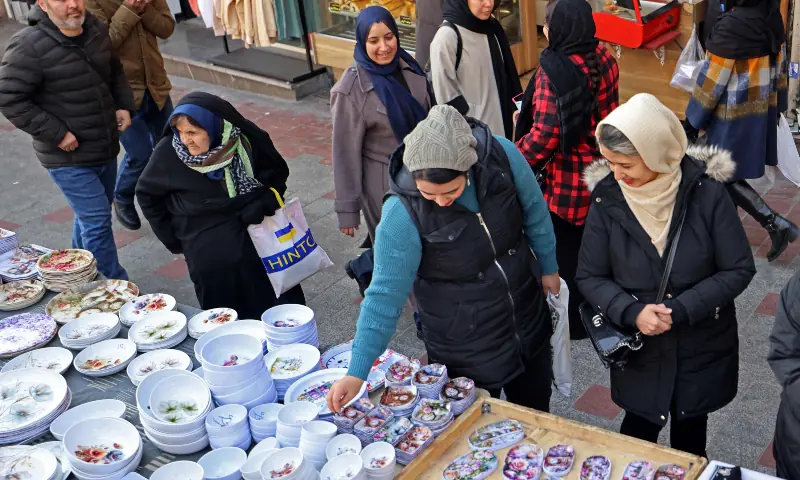
Morodian noted that lengthy lines appeared at bakeries as people searched for stability. The neighborhoods were eerily calm, contradicting reports of ongoing mass mobilization.
Competing narratives
The information environment grew increasingly confused. State television claimed order had been restored, while London-based opposition outlet Iran International and others reported a revolution on the brink of success.
Neither account, Moradian suggests, matched the grim reality facing ordinary residents: mass arrests, casualties, and pervasive fear.
Trump’s claim that Mashhad had “fallen” contained only a sliver of truth, he said: security forces did appear to temporarily withdraw during the second night of intense unrest, before returning in force.
The human cost, however, was substantial. Local accounts suggested the toll among protesters was quite high. A major police station was reportedly dedicated solely to processing inquiries from families searching for missing relatives.
“I asked my Mashhadi acquaintances if they personally knew people who had been killed or injured,” he said. “Two-thirds said they did.”
Published in Dawn, January 29th, 2026