
Pakistan has spent decades perfecting a familiar ritual. We negotiate for months, if not years, with the International Monetary Fund and other creditors to unlock a few billion dollars. The process is politically costly, economically disastrous, and rarely transformative. When the money finally arrives, it buys time rather than durability. Stability returns briefly, then the cycle resumes.
However, through every crisis and recovery, one external inflow keeps showing up with remarkable consistency: remittances.
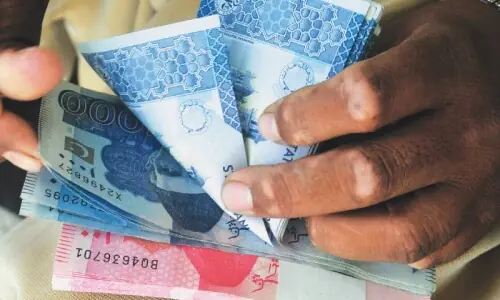
Pakistan now receives roughly $35–40 billion a year from its overseas workforce. These flows have remained resilient through global recessions, pandemics, wars, and tightening financial conditions. They arrive without negotiation, without conditionality, and without market drama. Yet, policy continues to treat them as background comfort rather than a strategic asset; a missed opportunity.
We spend years negotiating for billions that arrive once in a while, even though we’ve got $35–40bn arriving every year
Sustainable flows
Remittances are not hot money. They do not flee at the first sign of stress. They are fragmented across millions of senders, diversified across geographies, and driven by obligation rather than yield.
From a balance-sheet perspective, they are among the most stable external inflows Pakistan has. Yet beyond funding consumption and supporting the current account, they remain largely absent from macro-financial planning.
Other countries have asked a simple question: if a flow is stable enough to rely on every year, can a conservative portion of it be structured to support liquidity when it is needed most? Pakistan should be asking the same.
Securitising remittances
Remittance securitisation sounds technical, but the idea is straightforward. It involves pre-financing a calibrated portion of future remittance inflows through an air-tight structure, where collections are channelled through designated accounts and used first to service obligations.
The borrowing is backed by a real asset: cash that arrives monthly. In other words, a loan for which the security is future-guaranteed cash flows.
Even conservative structuring matters. Ring-fencing around $10bn per year of remittance inflows could support overwhelmingly stronger liquidity buffers over time. Spread prudently, this could translate into $50–100bn equivalent in financing capacity across multiple years, without flooding foreign exchange markets or creating near-term rollover stress.
The point is not the headline number; it is the quality of the buffer. This would be liquidity anchored in flows, not sentiment.
Why this matters now
External shocks tend to arrive before buffers are built, forcing policy to prioritise survival over creativity. And what better time to do it now, with increased geopolitical turbulence and extreme financial volatility
A remittance-backed liquidity structure would not replace exports, energy reform, or fiscal discipline. But it would materially reduce the risk that stress immediately turns into a balance-of-payments crisis. It would strengthen foreign exchange buffers without distorting spot markets, anchor confidence during risk-off episodes, and create space to manage debt rollovers and growth more deliberately.
Design is everything
Scepticism is justified. Used poorly, such instruments mortgage the future. Used properly, they buy time for reform.
Design is the difference. Any structure must be capped, transparent, and tightly ring-fenced. Only a limited share of inflows should ever be pledged, and proceeds restricted to balance-sheet objectives: reserve adequacy, external liability management, and macro-stability.
If used to fund recurrent spending, this will fail. If used to anchor stability while reforms proceed, it becomes a bridge rather than a crutch.
The opportunity we keep ignoring
Pakistan’s macro picture looks calmer again. Inflation has eased, reserves have recovered, and markets are optimistic.
But beneath the surface, familiar constraints remain: weak export competitiveness, high energy costs, disproportionate tax burden and fragile growth. Stability still rests on the absence of shocks rather than resilience to them.
Remittances already act as shock absorbers. The question is whether we continue to treat them as passive inflows, or recognise them as one of the few external anchors the country has.
We spend years negotiating for billions that arrive once in a while, even though we’ve got $35–40bn arriving every year. Ignoring that reality is a costly choice.
The writer is CEO of financial market data platform Tresmark.
Published in Dawn, The Business and Finance Weekly, February 2nd, 2026