Border closure leaves 947 Pakistani students stranded in Afghanistan, minister tells NA
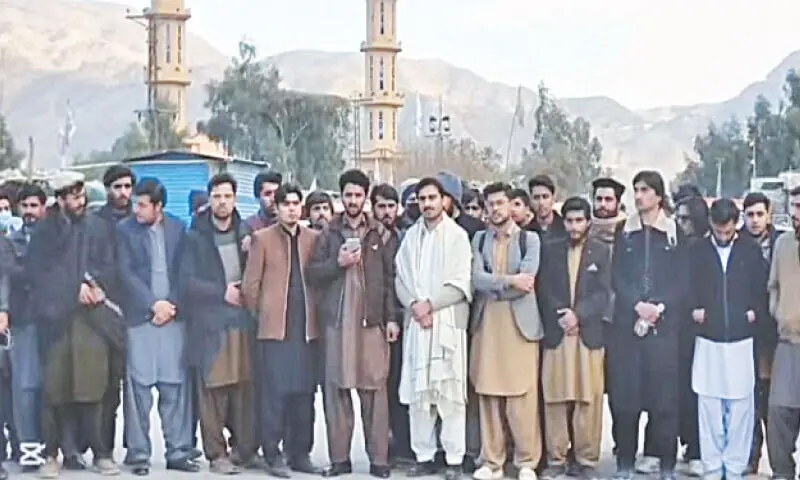

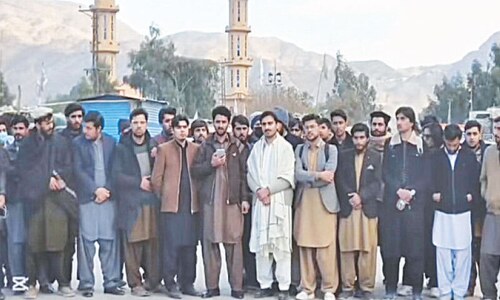
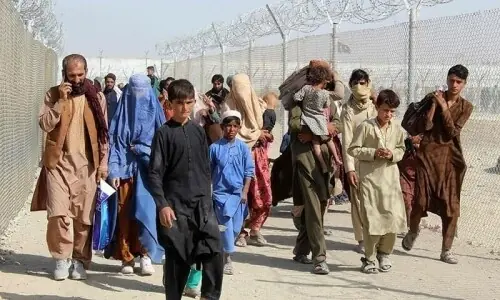
ISLAMABAD: The government on Tuesday informed the National Assembly that 947 Pakistani students were stranded in Afghanistan due to the border closure since October last year and efforts were being made to ensure their safety and eventual return to the country.
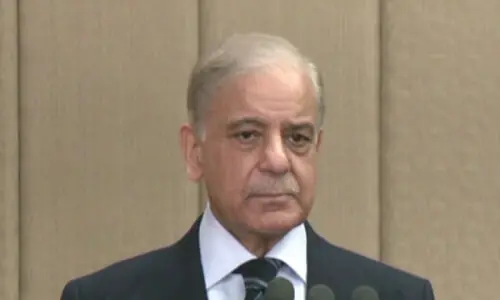
This information was placed before the lower house of the parliament by Minister for Parliamentary Affairs Dr Tariq Fazal Chaudhry while responding to a calling attention notice moved by Anjum Aqeel of the ruling Pakistan Muslim League-Nawaz on the matter.
The minister was responding on behalf of Foreign Minister Ishaq Dar.
The minister, however, clarified that none of these students were stranded at any border point.
Says efforts being made for their safe return
Dr Chaudhry further informed the lawmakers that about 1,100 Pakistani students had already returned to the country since the closure of border with Afghanistan. Majority of these students, he said, were brought back to the country by air whereas only about two dozen of them managed to enter Pakistan through land routes.
The minister said the Pakistani Embassy in Kabul was making every effort to facilitate the return of these stranded students, who had been studying in medical colleges in Kabul and Jalalabad.
According to state-run news agency APP, the minister said Pakistan decided to close the border after the Afghan government failed to provide assurances that cross-border infiltration and firing from Afghan soil would be halted.
He added that before October 2025, when the border remained open, a large number of Pakistani students regularly travelled via land routes to pursue their education in Afghanistan. However, the border was closed in October 2025, following repeated cross-border attacks.
He further informed the House that Pakistan held several rounds of talks with the Afghan Taliban authorities, including meetings in Doha and later in Turkiye. While Afghan representatives acknowledged that attacks originate from Afghan soil, they did not offer firm assurances to end cross-border terrorism or dismantle militant safe havens.
The minister said Pakistan could not allow a situation where cross-border terrorism continued while trade and movement remained open, adding that border crossings with Afghanistan were closed as a security measure.
Meanwhile, members belonging to the Pakistan Peoples Party (PPP) and the Muttehida Qaumi Movement-Pakistan (MQM-P) expressed their serious concerns over the problems being faced by the passengers at Karachi and Islamabad airports due to the lengthy immigration process by the Federal Investigation Agency (FIA) officials.
Seher Kamran of the PPP claimed that 51,000 passengers had been so far off-loaded at Karachi airport.
The members alleged that many people with valid documents had been offloaded whereas hundreds of passengers had missed their flights due to lengthy procedure.
MQM’s Aminul Haq also pointed out the miserable and “pathetic condition” of Karachi Airport, stating that not a single rupee had been spent to improve the facilities at the airport or to expand it.
Responding to the concerns shown by the members, the parliamentary affairs said the government was formulating a policy to manage certain airports under a public-private partnership model. He said the UAE had already showed its interest in running the Islamabad Airport after the government’s decision to outsource it.
The minister assured the members that he had noted down all the concerns raised by the members, stating that he would convey them to the relevant authorities for prompt action.
Earlier at the outset of the sitting, opposition member Junaid Akbar pointed out lack of quorum, forcing Deputy Speaker Ghulam Mustafa Shah to suspend the proceedings after a headcount. The proceedings remained suspended for nearly 40 minutes.
Published in Dawn, February 11th, 2026