
THE governments portrayal of the Seed (Amendment) Act, 2024 as a benign reform to modernise Pakistan’s seed sector conceals a deeper project of neo-colonisation. Beneath the language of efficiency and innovation lies a systematic transfer of control over seeds from farmers and public institutions to monopoly capital.
This legislation did not emerge from democratic deliberation or public demand; it was passed quietly, with little parliamentary debate, no consultation with farmers, and minimal media scrutiny. Such silence is not accidental. It reflects a governance model dictated by colonial powers.
This trajectory did not begin in 2024. The Seed (Amendment) Act of 2015 laid the groundwork for privileging private companies over public research institutions and farmer-led seed systems over a decade ago. It systematically excluded farmer-saved and locally-bred varieties. Closely aligned with the World Trade Organisation and Trade-Related Aspects of Intellectual Property Rights regimes, these laws reframe seeds not as a shared heritage but as proprietary commodities. They marginalise and criminalise age-old practices of saving and exchanging seeds that farmers across South Asia have relied upon for centuries to ensure resilience, biodiversity, and food security.
Farmers on the frontline of seed dependency
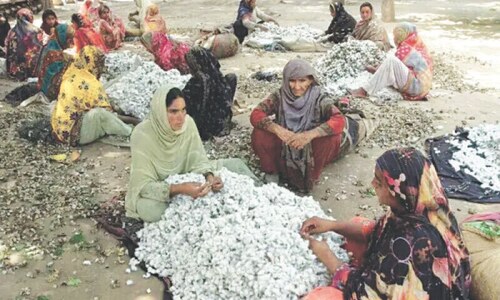
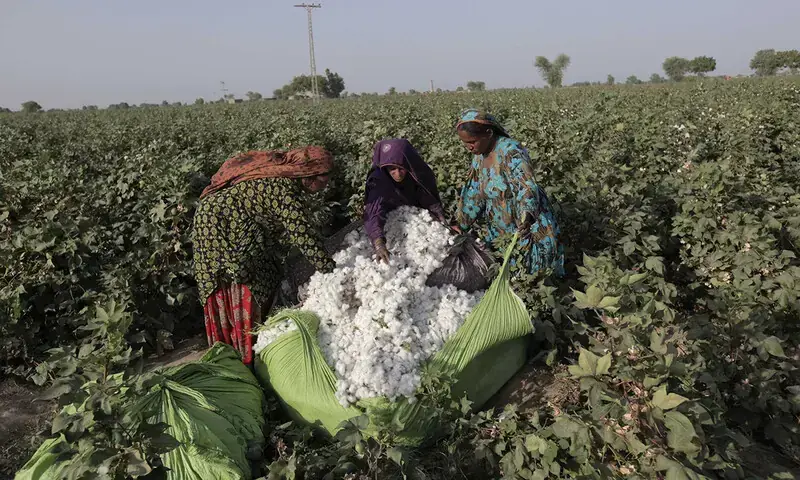
The consequences of these laws are borne most heavily by small and landless farmers, who constitute the backbone of Pakistan`s rural economy. For a tenant farmer in southern Punjab or a small cotton grower in Sindh, seed choice is no longer guided by agronomic suitability or local ecological knowledge. It is dictated by what multinational or domestic private companies choose to sell and at what price.
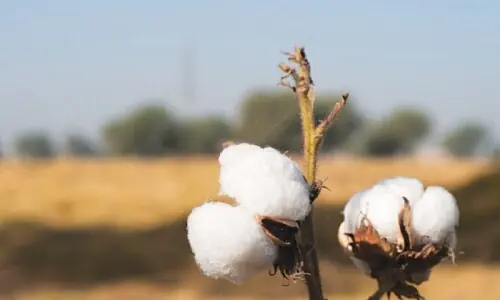
Each season, farmers are compelled to purchase new seed, often bundled with specific chemical fertilisers and pesticides, locking them into cycles of dependency, indebtedness, and vulnerability. Nowhere is this crisis more evident than in the collapse of Pakistan`s cotton sector. Cotton production has plummeted from around 14 million bales in 2014-15 to just 4.9m bales in 2022-23.
Policies passed without public scrutiny that prioritise corporate profits over farmers rights signal not reform, but surrender
Farmers across cotton-growing districts report that genetically modified Bt cotton varieties, marketed as high yielding and pest-resistant have failed catastrophically under local conditions. Rising temperatures driven by climate change, evolving pest resistance, and poor-quality seed have devastated yields. In Bahawalnagar, Rahim Yar Khan, and Sanghar, farmers describe fields ravaged by whitefly and pink bollworm despite escalating pesticide use, leaving them with mounting input costs and little to harvest.
For these farmers, crop failure is not an abstract statistic. It means selling livestock to repay loans, pulling children out of school, reducing food consumption, and, in many cases, abandoning farming altogether.
Moreover, the health consequences are immediate and severe. Households cut back on protein, fruits, and vegetables, leading to rising malnutrition, anemia among women, and stunting in children. For women, cotton also yielded wood a fuel for cooking and decreased crop has created another level of physical and economic hardship on them.
Chronic indebtedness and repeated crop losses fuel mental health crises, including depression, anxiety, and farmer suicides that remain largely undocumented. Bt cotton failures have driven heavier chemical use, resulting in respiratory illnesses, skin diseases, and long-term neurological harm in rural communities.
At the national level, the collapse of cotton has reduced export earnings from textiles, intensified pressure on foreign exchange reserves, and deepened Pakistan`s debt dependency demonstrating how seed policy directly shapes macroeconomic instability.
Corporate concentration and market power
These local crises are inseparable from global market dynamics. Worldwide, just four transnational corporations Bayer/Monsanto, Corteva, Syngenta, and BASF control between 60-75 per cent of the proprietary seed market and dominate genetically engineered seed sales.
In Pakistan, this concentration has translated into private and multinational firms supplying over 90pc of cotton seed. Farmers increasingly report that traditional or public sector varieties are unavailable or actively discouraged.
When crops fail, corporations face no accountability; the risk is fully socialised onto farmers, symbolising classic colonial relations.
Seed, sovereignty, and survival
Agriculture is inseparable from national sovereignty, and seeds are its foundation. When seed systems are surrendered to corporations, a country’’s ability to feed itself becomes contingent on external interests. Policies passed without public scrutiny that prioritise corporate profits over farmersrights signal not reform, but surrender. This is neocolonialism in its contemporary form exercised not through armies, but through patents, contracts, and laws.
The ongoing genocide in Gaza offers a stark and painful lesson. The deliberate destruction of farmland, olive trees, water infrastructure, and food systems has shown that food sovereignty is inseparable from national survival. A population denied control over its food is rendered defenseless. To surrender agriculture and seed sovereignty is to place a nation at the mercy of imperial powers and global markets.
Protecting seed and food sovereignty is therefore not merely about farmers rights. It is about safeguarding Pakistan’’s food security, economic independence, and dignity. Seeds must remain in the hands of those who cultivate them. Anything less is not modernization it is dispossession.
The writer has a Master`s in Environment Studies from York University, Toronto, Canada, and he is currently the Secretary of Pakistan Kissan Mazdoor Tehreek.
Published in Dawn, The Business and Finance Weekly, February 16th, 2026