Government borrowing increases five times
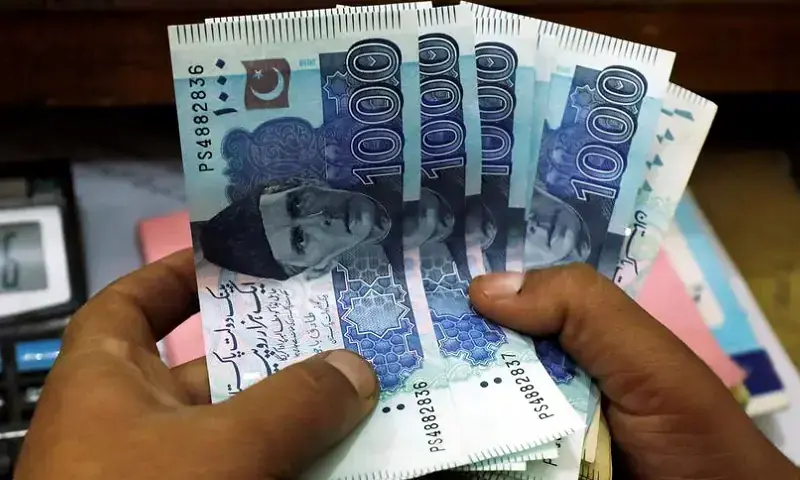

KARACHI: The government borrowed almost five times more from banks in the first seven months of FY26 than in the same period last year, reflecting growing spending despite higher revenue collections.
The government’s appetite for more bank money has shot up, leaving little room for the private sector to borrow. The private sector is not performing well enough to spur economic growth, given persistent tight monetary policy despite low inflation.
The data issued by the State Bank showed that the government borrowed Rs1,912 billion in 7MFY26 from the commercial banks compared to Rs408bn a year ago.
However, the government ended FY25 with total borrowing of Rs5.4 trillion, indicating most of the borrowing was carried out in the second half of that fiscal year.
Raises Rs1.9tr from banks in 7MFY26, leaves little room for private sector
The situation is even worse this year, as the government has already borrowed about Rs2tr, and if the pace continues, the total would surely exceed the Rs5.4tr borrowed in FY25.
It must be alarming, since the government had borrowed Rs8.5tr in FY24 to meet rising current expenditure.
Interest payments accounted for the largest share of spending, at around Rs8tr in FY25.
Financial sectors have been warning that increased borrowing will lead to higher debt servicing costs. The government has no option but to borrow and cut development spending, as noted over the last three years.
Last month, the State Bank reduced the Cash Reserve Requirement (CRR) for banks to 5pc from 6pc enabling banks to have higher liquidity. This additional liquidity has been created to feed the private sector.
However, financial sector experts believe the additional liquidity could boost investment in
government papers, as the private sector is least interested in launching new projects or expanding production. Businessmen and industrialists were borrowing for working capital, not for new ventures.
Experts offer several reasons for the private sector’s reluctance to borrow for long-term investments. First, the interest rate is still double the prevailing inflation and the highest among regional countries.
Secondly, the banks prefer risk-free easy profit from government securities and discourage long-term lending to businesses amid high default fears. Third, the unprecedented cost of inputs, especially energy, and high taxes, combined with rampant corruption in the Federal Board of Revenue, discourage new investment.
It is believed in the financial sector that the time is not suitable for any new long-term investment due to the uncertain political situation in the country, while an alarming high alert in the region regarding the increasing possibility of attacks on Iran by Israel and US forces.
Neither domestic nor foreign investors would invest in the economy unless the external and internal situation becomes conducive and attractive. This is why hundreds of Pakistanis have relocated their companies and partially shifted their businesses to Central Asia, Africa, and Mexico.
Published in Dawn, February 22nd, 2026