Tax authorities can raid without notice, FCC rules

• Judgement observes Section 175 can be invoked for enforcement of any provision of tax ordinance
• Ruling refers to use of word ‘enforcement’, implying that a ‘breach’ has occurred
• Courts can’t contradict if language of legislation is ‘unequivocal’, Justice Farooq holds
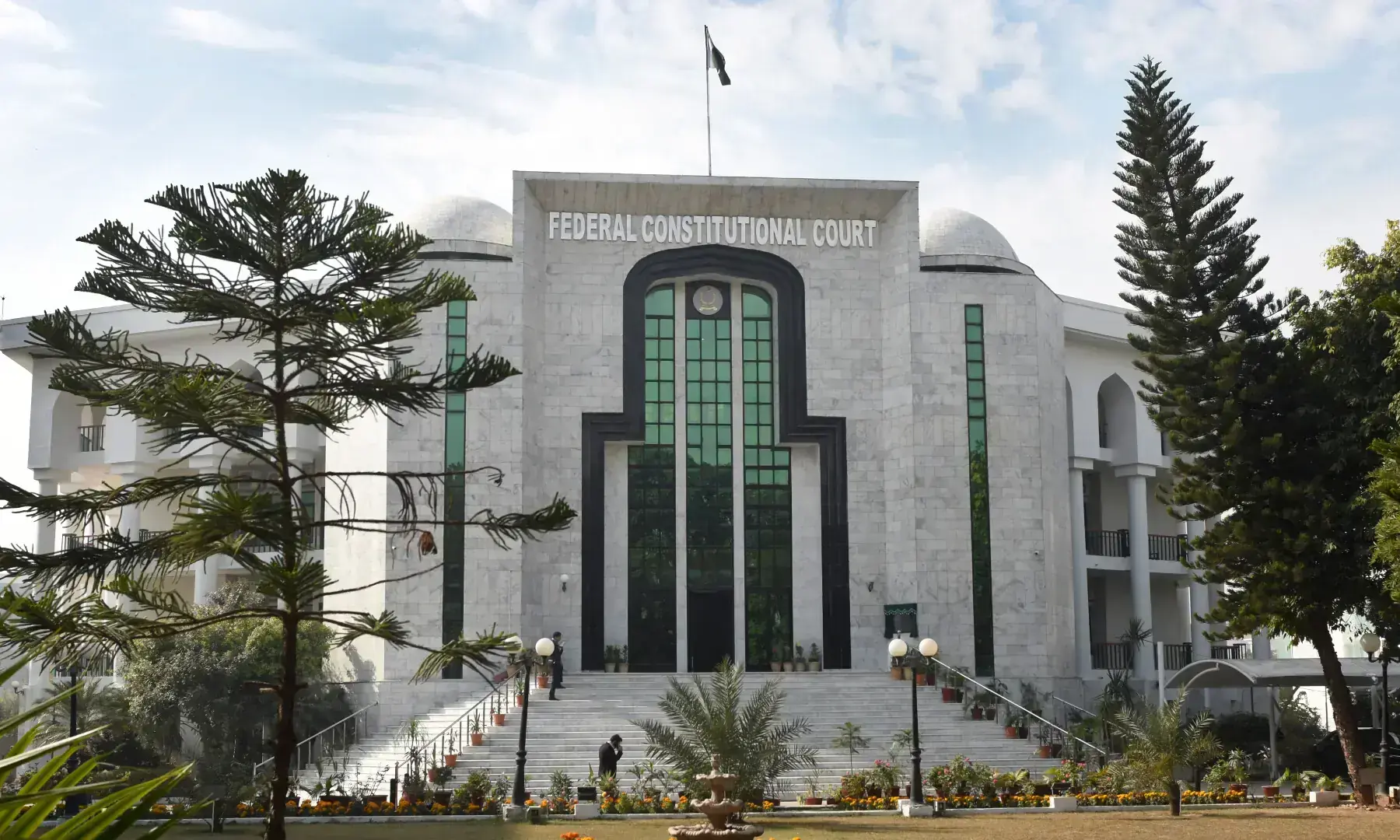
ISLAMABAD: The Federal Constitutional Court (FCC) ruled on Thursday that tax authorities can conduct raids and searches of taxpayers’ premises under Section 175 of the Income Tax Ordinance (ITO) 2001, even in the absence of any pending proceedings against them.
Headed by Justice Aamer Farooq, a three-judge FCC bench rejected a plea moved by M/s Sceptre Pvt Ltd against a Dec 24, 2025, Sindh High Court decision that had validated a tax raid on the petitioner’s premises.
The petitioner had challenged the raid conducted by tax authorities under Section 175. It said the section should be applied in case of ongoing proceedings, adding that a notice under Section 176, requiring certain documents and information, could not form the basis for a raid.
Authored by Justice Farooq, the judgement explained that Section 175 empowered the tax commissioner to act for the enforcement of any provision of the ordinance.
The words used by parliamentarians under the law are “enforcement”, and “enforcement” requires “breach”. When a law is breached, then it is “enforced”. If the statute had used the word “implement”, then the situation would have been different, the judgement said.
Thus, the examination of Section 175 shows that the words used were very clear and simple, that this provision can be invoked for the enforcement of any provision of the law, the judgement emphasised, adding that the SHC had correctly rejected the petitioner’s plea on the grounds of the precedent set in the earlier Agha Steels case.
Although the bench does not agree with the view expressed in the Agha Steels case, the petition is nevertheless liable to be dismissed, Justice Farooq observed.
Even if the requirements laid down in the previous case were not strictly followed, the mere fact remained that the tax commissioner — or an authorised officer — was empowered to act for the enforcement of the law under Section 175, he added.
In view of the referred provision of law and the factual aspects of the matter, the impugned judgment does not suffer from any infirmity warranting interference, Justice Farooq observed.
The cardinal rule of the construction of acts of parliament is that they should be construed according to the intention expressed in the acts themselves, Justice Farooq said, adding that the rationale for beginning with the ordinary and natural meaning of the statutory language was that legislation was often drafted to address specific situations in clear and straightforward terms.
In such instances, the words used are precise and are not intended to extend beyond their plain scope or to be expanded into broader contexts, he added.
Since the primary objective of statutory interpretation is to ascertain the intention of the lawmaker, the most appropriate and reliable method is to commence with the ordinary and clear meaning of the words used, as per the judgement.
“If the legislature says that a deed shall be ‘null and void to all intents and purposes whatsoever’, how can a court of equity say that in certain circumstances it shall be valid?” Justice Farooq observed.
The principle emerging from that dictum is clear: where the language of the legislature is express and unequivocal, the courts are not at liberty to qualify, dilute, or contradict it, he said.
Applying the same reasoning to the present case, when parliament has expressly provided that “in order to enforce any provision of the law, the commissioner or any authorised officer will at all times and without prior notice, have full and free access, including real-time electronic access to any premises, place, accounts, documents or computer”.
How can a court of law then read into the statutory provision to say that a proceeding must be pending before Section 175(1)(a) of the law to trigger the raid. The answer is that it cannot. Courts must be restrained from granting relief in a manner that runs contrary to clear and express statutory provisions, the judgement said.
Published in Dawn, February 27th, 2026