SBP seen holding rates steady as oil surge threatens inflation trajectory

The central bank is expected to hold its key policy rate steady at a policy review on Monday, a Reuters poll showed, as rising global energy prices and regional tensions cloud the inflation outlook and limit the room for cuts.
All 10 analysts in a Reuters poll expect the State Bank of Pakistan (SBP) to hold the rate at 10.5 per cent, after policymakers held the rate in January.
The central bank has cut the key rate by a cumulative 11.5 percentage points since mid-2024, from a record high of 22pc.
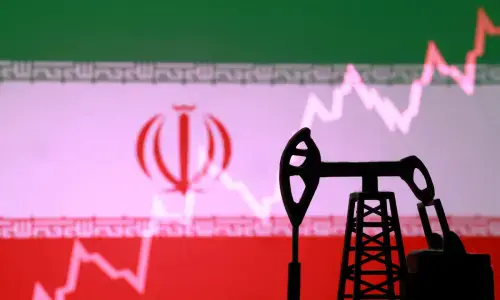
Escalating Middle East tensions after the US and Israel attacked Iran have raised the risk of disruption to shipping through the Strait of Hormuz and pushed oil-and-gas prices higher, adding to Pakistan’s import bill and inflationary pressures.
Analysts expect inflation to average between 6pc and 8pc in the coming months, but warned higher oil prices could push it up further.
“Energy prices should dictate the policy rate trajectory. Inflation could average around 7pc during the second half of FY26,” AKD Securities analyst Muhammad Aliv said.
The country’s heavy reliance on imported fuel leaves it vulnerable to global price shocks.
“Higher oil prices widen the trade deficit and pressure the rupee,” Waqas Ghani, head of research at JS Capital said.
Ghani said every $10 per barrel increase in crude prices adds about 0.5 percentage points to inflation, which clocked in at 7pc in February, jumping from 5.8pc in January.
The SBP says it aims to maintain a positive real interest rate to anchor inflation expectations under Pakistan’s $7 billion IMF programme, though inflation could exceed its 5pc–7pc target range for a few months this year as growth picks up and imports widen the trade deficit.
Governor Jameel Ahmad told Reuters last month that policymakers remained focused on medium-term price stability, even as the economy was projected to grow between 3.75pc and 4.75pc in the financial year 2026, supported by stronger domestic demand and earlier monetary easing.
Analysts said external risks, including higher oil prices, rupee pressure, and a widening trade deficit, could delay any move toward further monetary easing.