In the eye of a perfect storm
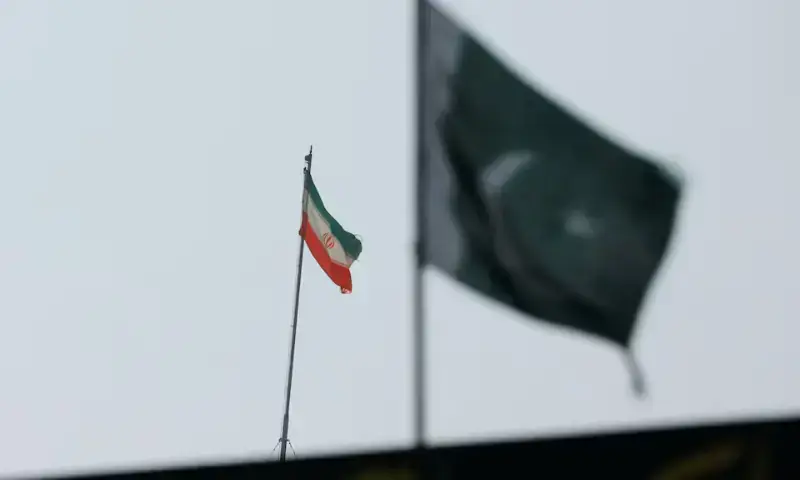

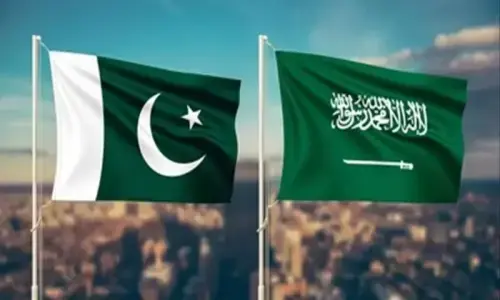
Pakistan’s geographic proximity and brotherly relationship with Iran and the Gulf Cooperation Council states, combined with its attempt to balance relations with both China and the United States, have pushed it to the centre of the geopolitical turbulence triggered by the war unleashed on Iran by the United States and Israel; one might say the country is, metaphorically, in the eye of a perfect storm.
The crisis erupted at a moment when global policymakers were already warning about rising geopolitical risks. When political and corporate leaders gathered at the World Economic Forum in Davos earlier this year, they identified four forces likely to shape the next decade of global growth: geopolitics, energy transition, artificial intelligence (AI) and climate change.
The US–Israel war with Iran has abruptly transformed that framework from a theoretical forecast into an immediate economic reality. For years, geopolitics was treated as secondary to the efficiencies of globalisation; that era is rapidly ending. This confrontation has reintroduced a tangible risk premium across financial markets, energy supply chains and global capital flows.
Three Gulf countries — Saudi Arabia, the United Arab Emirates (UAE) and Qatar — have reportedly begun reviewing their national budgets and overseas investment strategies following Washington’s decision to proceed with military action despite repeated regional warnings. According to media speculations, policymakers in the Gulf are examining proposals that could reduce exposure to the US and reassess major investment commitments across several international markets.
As the conflict-ridden global front carries on, Pakistan grapples with its first wave of supply disruptions as domestic oil prices rise by Rs55 per liter
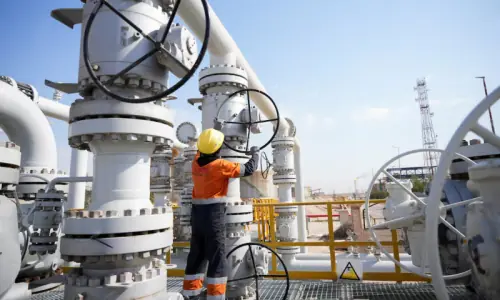
Energy policy is emerging as an even more powerful pressure point. Qatar, one of the world’s largest exporters of liquefied natural gas (LNG), is reported to have halted gas production in certain operations, highlighting the seriousness of the unfolding crisis. Any sustained disruption in Gulf energy supplies would inject significant volatility into global markets and place additional strain on already fragile economic conditions.
Pakistan has already begun feeling the consequences of LNG supply disruptions. LNG cargo arrivals from Qatar fell by around 75 per cent in the immediate aftermath of the conflict, forcing the Sui Southern Gas Company to prolong gas shutdowns during Ramazan for households. Both Sui Southern Gas Company and Sui Northern Gas Pipelines Limited have also reduced gas supply to commercial and industrial consumers.
Speaking at a joint press conference along with finance and petroleum ministers last week, Deputy Prime Minister Ishaq Dar confirmed that Qatar has excused from supplying previously agreed volumes of LNG cargoes to Pakistan. The three ministers had gathered late Friday night to announce an unprecedented Rs55 per liter increase in domestic oil prices amidst skyrocketing international prices amidst the Middle East crisis.
During the same press conference, it was announced that Pakistan would now start fixing domestic oil prices every week to align them with the international prices in a timely manner.
Meanwhile, the government has decided to introduce protocols like those practiced during the Covid-19 pandemic (such as car-pooling, work-from-home and online classes for students) to minimise the use of imported fuel. Following Qatar’s energy minister’s remarks on last Friday that oil and gas exporters in the Gulf might stop production “within days”, brent crude oil rose around $90 per barrel. Analysts warn that if the disruption persists, oil prices could climb well beyond $100 per barrel, potentially triggering a new global energy crisis.
International Monetary Fund Managing Director Kristalina Georgieva has warned that the conflict carries “obvious potential to affect global energy prices, market sentiment, growth and inflation.”
This renewed instability is forcing policymakers to rethink long-term energy strategy. United Nations climate chief Simon Stiell has argued that renewable energy now represents “the obvious pathway to energy security and sovereignty.”
AI is also emerging as a central strategic factor. AI is no longer merely a productivity tool but a core component of modern defence, surveillance and cyber operations. The present crisis demonstrates how AI-enabled systems underpin battlefield coordination and intelligence gathering, targeting high value-adversaries and information warfare.
Research by cybersecurity firm Recorded Future notes that cyber operations and AI deception are becoming inseparable from physical conflict.
The country faces mounting pressure on two fronts, as the Middle East moves closer to wider conflict and Islamabad intensifies security operations along its western frontier. The external shock arrives at a time when Pakistan is already managing a fragile balance-of-payments position.
Trade figures for the first eight months of FY26 highlight the strain. Merchandise exports fell 8.7pc year-on-year in February to $2.57 billion. Between July 2025 and February 2026, exports totalled $20.46bn compared with $22.07bn in the year-ago period, according to the Pakistan Bureau of Statistics. Imports during the same period rose 8.1pc to $45.5bn, widening the trade deficit to $25.04bn from $20.04bn a year earlier. Rising global energy prices threaten to expand that gap further, increasing pressure on foreign exchange reserves and the rupee.
Remittances — a stabilising pillar of Pakistan’s economy — may also face pressure if the Middle East conflict disrupts economic activity across the Gulf. More than 60pc of Pakistan’s remittance inflows originate from Gulf Cooperation Council countries, particularly Saudi Arabia and the UAE. Heightened security concerns and delayed investment projects could slow employment growth across construction, services, and energy sectors where Pakistani workers are heavily concentrated.
Published in Dawn, The Business and Finance Weekly, March 9th, 2026