Larijani assassination deepens uncertainty over Iran war, analysts warn
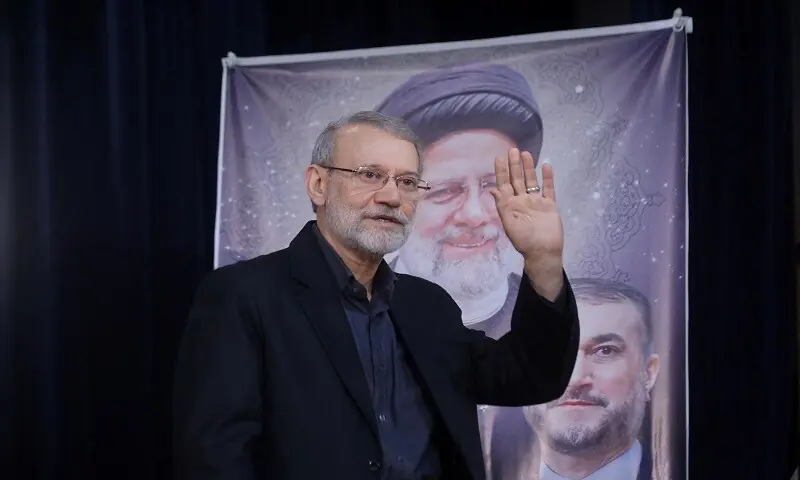

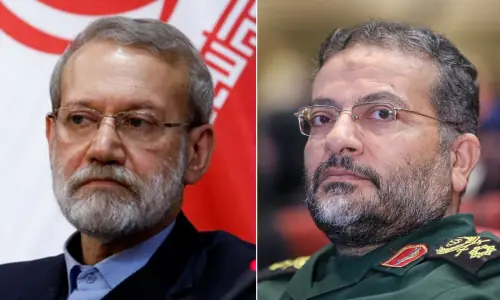
WASHINGTON: The assassination of Ali Larijani, a rare bridge between Iran’s military operations and its diplomatic channels, has deepened uncertainty over the trajectory of the Iran-US conflict.
Analysts warn that his absence removes one of the few moderating voices capable of preventing further escalation.
As the New York Times noted, “Ultimately, the consensus among experts is that Larijani’s death removes one of the few officials capable of connecting the battlefield to diplomatic solutions, making a quick resolution to the conflict less likely and strengthening the position of those favoring continued confrontation.”
Former US State Department adviser for the Middle East, Vali Nasr, emphasised the broader implications of the assassination, stating, “Larijani’s replacement will be appointed by the IRGC. With every assassination, the US and Israel are engineering greater radicalisation of Iran’s leadership.”
He added that Larijani’s removal will lead to “a bleak future for Iran, Iranians, the region, and ultimately make it far more difficult for the US to disentangle itself from endless conflict in the region.”
In Washington, reactions reflected a mix of caution and frustration. Among the Democrats, House Minority Leader Hakeem Jeffries said he would “not shed any tears” over Larijani’s death, but criticised the Trump administration for failing to articulate a clear strategy, warning that the conflict could evolve into a disastrous “forever war.”
Another Democrat, Senator Tim Kaine, challenged claims that Iran posed an imminent threat to the United States, arguing that classified intelligence did not justify sending American troops into another conflict.
Republican lawmakers have generally rallied behind President Donald Trump, who hailed the strikes as a major success. Claiming that the Iranian leadership “is gone,” Trump encouraged the Iranian people to rise up.
Senator Lindsey Graham doubled down on calls for regime change, asserting that Larijani’s demise puts “further pressure on the regime” as it loses critical layers of leadership.
Speaker of the House Mike Johnson, also a Republican, stated that “Iran is facing the severe consequences” of its actions and urged US allies to “step up” and help secure the Strait of Hormuz.
Analysts that Bloomberg spoke to underscored the reduced prospects for diplomacy in the near term. “With Larijani gone, analysts suggest a lower likelihood of a negotiated ceasefire in the short term, as the remaining leadership may seek to retaliate to maintain its legitimacy.”
The Brookings Institution pointed to Iran’s resilience: “Two weeks into the war with Iran, the regime has taken hits—but it’s holding. No major defections, a new supreme leader, and an uncertain endgame for the Trump administration.”
The human dimension of dissent within US circles is exemplified by the resignation of Joe Kent, Director of the National Counterterrorism Center.
Kent explained that he “cannot in good conscience support the ongoing war in Iran“ because “Iran posed no imminent threat to our nation.” A veteran and Gold Star husband, Kent cautioned against repeating past mistakes in which foreign wars cost American lives and depleted national wealth.
The conflict has already begun to affect global supply chains. The Strait of Hormuz and major Gulf air hubs, two of the world’s most critical logistics corridors, have been disrupted, delaying the transport of essential goods, including medicines. Experts warned that “consumers could see drug costs affected within four to six weeks because of increased Indian air-cargo rates.”
Another analyst added, “You’re looking at a level of the price of oil that would be exceptionally noticeable. And would it be at least a percentage point hit to the US economy? Probably more. There’s probably some nonlinearities.”