Islamabad AG Ayaz Shaukat appointed chairman of newly-established Social Media Protection and Regulatory Authority


ISLAMABAD: The federal government on Thursday appointed lawyer and incumbent Islamabad Advocate General Ayaz Shaukat as the first chairman of the newly established Social Media Protection and Regulatory Authority (SMPRA).
Sources privy to the development revealed that Shaukat is expected to tender his resignation from the office of advocate general soon after Eidul Fitr vacations to assume his new responsibilities.
The authority was established under the amended Prevention of Electronic Crimes (Amendment) Act, 2025, and will comprise a total of eight members.
The federal government also notified 5 members, namely Sohail Iqbal, Adnan Khan, Muhammad Salman Zafar, Fahad Malik, and Muhammad Saad Ali.
According to the amendment, the remaining two members are to be a journalist and a software engineer. The chairman and the members will be appointed for a period of five years.
SMPRA will function as a corporate body with the power to sue and be sued in its own name. Its principal office will be based in Islamabad, with the provision to establish regional offices in provincial capitals and other parts of the country.
Under the law, SMPRA has been entrusted with wide-ranging powers, including regulating unlawful or offensive content on social media, overseeing the enlistment and registration of platforms, and granting, renewing, suspending, or revoking their licenses.
The authority may also partially or fully block platforms that fail to comply with legal provisions until compliance is ensured.
Additionally, SMPRA will issue guidelines and standards for digital platforms, prescribe fines for violations, and direct relevant authorities to remove or block unlawful content for specified periods. It will also provide a mechanism for complaint redressal and may initiate action on its own motion in cases of violations.
The authority is further mandated to promote online safety, facilitate research and awareness, coordinate with international organisations, and support capacity building in the digital sector.
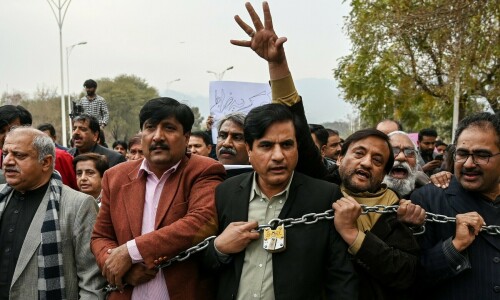
Peca, since its introduction in 2016, has been widely criticised as a “black law” created mainly to punish dissent.
At the time of the passage of the amendments last year, Amnesty International had warned that the proposed changes to the country’s cybercrime laws could “further tighten the government’s grip over Pakistan’s heavily controlled digital landscape” if enacted into law.
The Human Rights Commission of Pakistan (HRCP) had also expressed concern that amendments “would curb fundamental rights.”