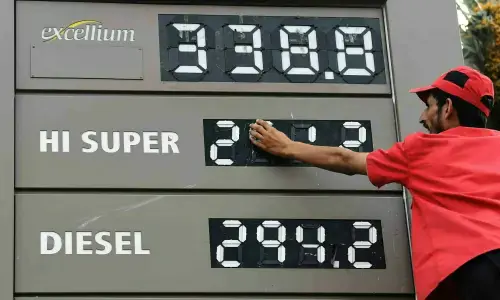
THERE is fiscal logic in the government’s decision to sharply increase the petroleum levy on high-octane fuel — a niche product consumed almost exclusively by owners of luxury and high-performance vehicles. By extracting around Rs9bn per month from those with the greatest capacity to absorb the cost, and redirecting that amount to shield the broader public from surging oil prices, the policy introduces an element of targeted relief.
That said, the merits of the move should not be overstated as the decision is more of a stopgap response than a strategy. Though not trivial, the step is modest relative to the pressures generated by the global oil price shock and does little to address the structural conditions responsible for our vulnerability to external energy shocks: deep reliance on imported fuels, a precarious external account and fiscal space too narrow to absorb prolonged volatility without raising prices or running deficits. Targeted relief buys time but time without reform is a deferred liability.
Finance Minister Muhammad Aurangzeb’s own admission that “hope is not a strategy” as the world waits for the US-Israel war on Iran to end applies with equal force to the government’s broader approach to rising energy prices. The earlier steps announced — reduced fuel allowances, partial work-from-home arrangements, etc. — are also limited. Even if hostilities were to subside soon, downstream effects like supply chain disruptions, production shutdowns and rerouted trade flows could sustain elevated prices beyond any ceasefire.
The need is to move towards permanent structural demand management. Early closure of markets, restaurants and businesses — measures long avoided due to political economy constraints — should now be treated as baseline policy rather than emergency improvisation. Our energy consumption patterns are inefficient and poorly regulated because they have been politically inconvenient. With fiscal and external buffers as thin as they are, that inconvenience can no longer serve as justification for inaction.
If the aim is to rebalance the burden towards higher-income groups, the petroleum levy adjustment is insufficient by itself. The deeper problem is not, as Prime Minister Shehbaz Sharif has repeatedly framed it, one of asking the elite to ‘sacrifice’ in times of crisis. It is the chronic failure to ensure that powerful segments of society consistently meet their existing tax obligations. A country where the majority live in poverty or are vulnerable to the slightest shock, cannot rely on ad hoc measures to deliver equity.
Broadening the tax base and eliminating preferential treatments for powerful segments of society are not crisis-time options, they are structural imperatives. The current crisis underscores how external shocks quickly translate into domestic instability when underlying imbalances remain unaddressed. The government’s response so far does not show the scale of resolve required.
Published in Dawn, March 24th, 2026