Pakistan has conveyed US proposal; Turkiye or Pakistan could host talks, senior Iranian official says

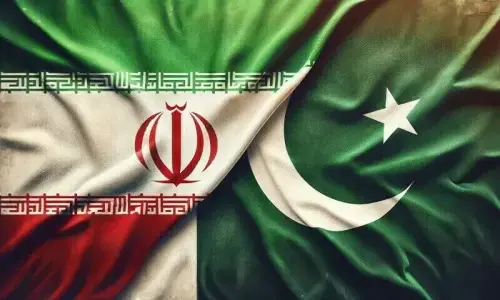
Pakistan delivered a proposal from the United States to Iran, and either Pakistan or Turkiye could be venues for discussions to de-escalate the war in the Gulf, a senior Iranian official told Reuters on Wednesday.
The comments, by an official speaking on condition of anonymity, were among the few signs that Tehran was willing to consider diplomatic proposals, despite having denied in public that it would negotiate with the administration of US President Donald Trump.
However, later in the day, it emerged that Tehran had “responded negatively” to the US proposal and outlined five conditions under which Tehran would agree to end the ongoing conflict.
The Iranian source that spoke to Reuters did not disclose details of the proposal passed on by Pakistan, or whether it was the same as a 15-point US proposal that has been reported by news outlets. The source said “either Turkiye or Pakistan was under consideration as the venue for such talks”.
A source familiar with the matter had confirmed on Tuesday to Reuters that the plan had been sent to Iran.
Dawn has reached out to Pakistan’s Foreign Office for a comment on the matter.
According to Reuters, three Israeli cabinet sources said Prime Minister Benjamin Netanyahu’s security cabinet had been briefed on the proposal, which they said includes removing Iran’s stocks of highly enriched uranium, halting enrichment, curbing its ballistic missile programme and ending funding for regional allies.
Separately, Iran’s ambassador to Pakistan said there had been no talks between Washington or Tehran.
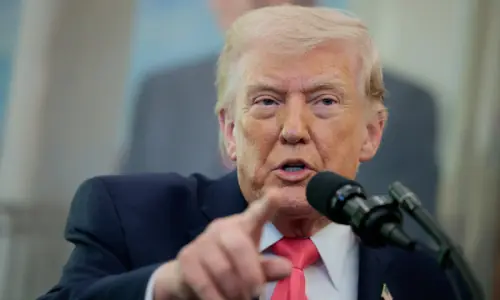
“We have also heard such details through the media, but according to my information — and contrary to Trump’s claims — so far no negotiations, direct or indirect, have taken place between the two countries,” said ambassador Reza Amiri Moghadam, adding that it was “natural that friendly countries are always engaged in consultations with both sides to end this illegitimate aggression”.
Malaysia welcomes Pakistan’s ‘timely and constructive offer’ to host talks
Meanwhile, Malaysian Prime Minister Anwar Ibrahim welcomed Pakistan’s “timely and constructive offer to host dialogue” between the US and Iran.
In a post on X, he said, “I commend Prime Minister Shehbaz Sharif and the leaders of other friendly nations for stepping forward at a moment of acute regional danger, following the earlier commendable efforts of the leadership of Oman and other friendly countries. Pakistan’s relationships with the relevant parties, and its standing as a credible voice in the Muslim world, place it in a strong position to help create the conditions for meaningful negotiations.”
“Malaysia supports this initiative and encourages in particular the United States and Iran to respond in the spirit in which it was offered. I note with cautious hope the signals, however incomplete, that suggest some space for diplomacy may still exist. That space should be treated with the seriousness it deserves,” he said.
Reaffirming Kuala Lumpur’s support for Islamabad’s initiative, he encouraged, in particular, the US and Iran to “respond in the spirit in which it was offered”.
“I note with cautious hope the signals, however incomplete, that suggest some space for diplomacy may still exist. That space should be treated with the seriousness it deserves,” PM Ibrahim said.
At the same time, the Malaysian prime minister emphasised that any negotiation between the US and Iran “must proceed on the basis of genuine intent: a clear commitment to ending the conflict, not managing its tempo for tactical advantage”.
He affirmed Iran’s “right to defend its sovereignty, as recognised under international law, particularly in the face of continued Israeli strikes in the country and in Lebanon”.
PM Ibrahim recalled that in recent days, he has held discussions with the leaders of the Gulf Cooperation Council, Türkiye, Egypt, Indonesia, Japan, Pakistan and other partners “to better understand the situation and to advocate for de-escalation”.
“Malaysia will continue to support every credible effort towards a just and lasting peace,” he reaffirmed.
PM Ibrahim urged “all parties to exercise maximum restraint and to ensure that civilian populations and the infrastructure of neighbouring states, namely the Gulf states, are not drawn further into a conflict they did not choose”.
“The Gulf states, the region and the world have much at stake — economically, socially and in terms of long-term stability — and their peoples must not bear the consequences of decisions taken elsewhere,” he stressed.
The Malaysian PM also noted with concern that “some of the strongest advocates of the rules-based international order appear to apply it unevenly”.
“International law cannot be invoked selectively. It cannot shield one party from accountability while denying another its inherent right to self-defence. Its credibility depends on consistency,” he asserted.
Islamabad offers to host US-Iran climbdown effort
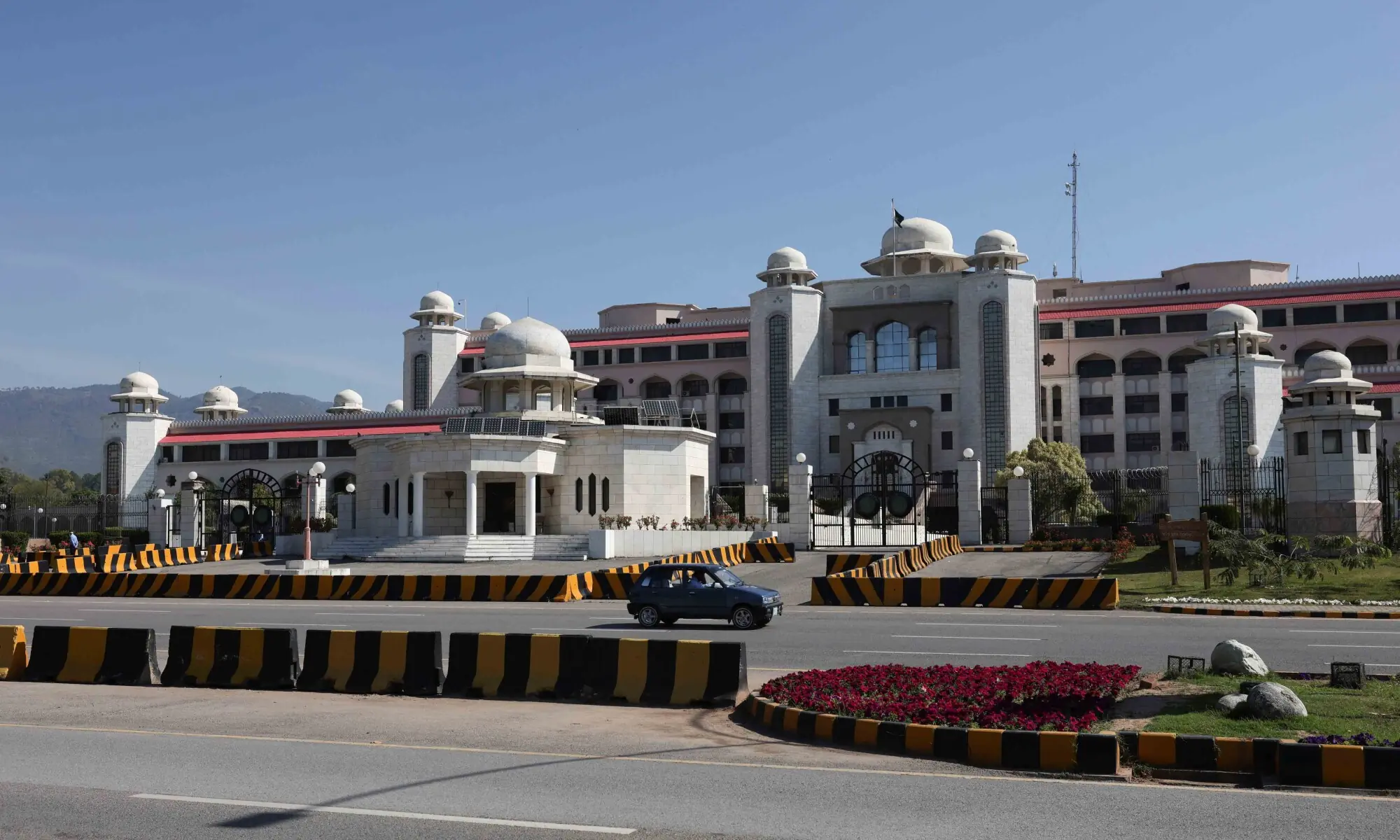
On Tuesday, Prime Minister Shehbaz Sharif formally pitched Islamabad as a potential venue for negotiations between Iranian and US officials.
“Subject to concurrence by the US and Iran, Pakistan stands ready and honoured to be the host to facilitate meaningful and conclusive talks for a comprehensive settlement of the ongoing conflict,” he wrote on X, tagging US President Donald Trump, Iranian Foreign Minister Abbas Araghchi and US Special Envoy Steve Witkoff.
The move followed reports that Pakistan, Turkiye and Egypt had talked the US out of attacking Iranian energy infrastructure — a move that many fear would mark a dangerous escalation in the already-deadly conflict raging in West Asia.
While there was no official word on whether the offer was Pakistan’s own initiative, sources privy to discussions said that the request that Islamabad host talks between the two warring sides had actually come from Washington.
“Didn’t you see who re-tweeted the PM’s message,” a source privy to developments told Dawn when asked where the proposal originated from.
This was a reference to President Donald Trump, who shared PM Shehbaz’s tweet on his own Truth Social platform.
Pakistan has not made the offer ‘just for fun’, the insider said, adding that there was a deeper significance behind the move.
When asked why Pakistan was chosen, the source said that the offer did not come about in a day or two, but was deliberated on in a series of meetings and backchannel efforts aimed at de-escalating the situation in the Middle East.
“Pakistan’s Deputy Prime Minister and Foreign Minister Ishaq Dar was in constant contact with Iranian counterpart Abbas Araghchi and talked to him at least five times in recent days,” the source said.
Similarly, PM Shehbaz has spoken to Iranian President Masoud Pezeshkian twice in a couple of days, and their last conversation on Monday was said to have lasted over an hour.
Meanwhile, the top military brass engaged Washington, the source said, referring to reports that Field Marshal Asim Munir had spoken to President Trump.
In addition, civil and military leaders also met Crown Prince Mohammad Bin Salman and his Defence Minister Faisal bin Farhan during a recent trip to Saudi Arabia, the insider said, painting all of these individual occurrences as being part of the chain of events that led up to the offer of Islamabad as a potential venue for de-escalation measures.
Another aide to the PM cited media reports, which claimed that Trump’s Middle East Envoy Steve Witkoff had traveled to Pakistan. “There is, however, so far no sign of any meaningful Iranian figure joining him there,” the aide told Dawn.
One source scoffed at the general feeling of ‘surprise’ over Pakistan playing a central role in organising talks between the warring sides, saying that it reflected how the country’s diplomatic potential was always underestimated.
The source recalled that in the past, the country had played a key role in mediating between Iran’s Ahmedinejad regime and Saudi Arabia when their enmity was at its peak.
Pakistan was also instrumental in bringing both the Afghan Taliban and Washington to the table at Doha.
Going further back in history, the source recalled how Pakistan was the conduit for Henry Kissinger’s surreptitious China diplomacy in the early 1970s.