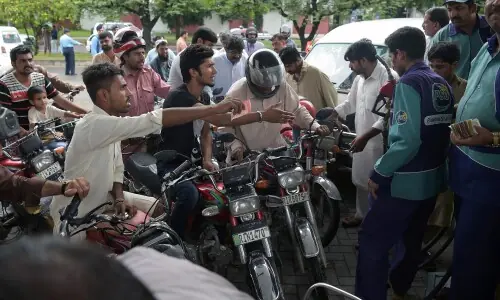
THE latest proposal to introduce a mobile app-based fuel quota system, targeting subsidies for low-income users of two- and three-wheelers, is a positive attempt by the government to protect the poor against surging oil prices. It promises efficiency through digital vouchers, real-time quota tracking and automated validation at petrol pumps.
Fuel subsidies, if indiscriminate, largely benefit those who consume the most — usually higher-income households. Low- and middle-income citizens, reliant on two- and three-wheelers, receive little benefit. This strains the national exchequer and weakens social equity. With volatile global oil prices, unfocused relief risks becoming a costly populist gesture rather than meaningful support for the needy. Targeted relief through mobile apps can ensure that subsidies reach those who truly need them. By linking fuel entitlements to verified income brackets, the government can shield the poor from price shocks without subsidising the affluent.
This approach also signals that state resources are allocated on the basis of need rather than privilege. Moreover, the principle of targeting is critical for fiscal discipline. Every rupee spent inefficiently on subsidies is a rupee that cannot fund essential services such as healthcare and education. In times of economic stress, ensuring that public money serves the maximum social good is both prudent and a state obligation.
While uncertainty in global energy markets deepens over the ongoing stalemate between the US and Iran, the benchmark crude and petroleum rates continue to fluctuate daily in response to speculation on diplomacy. These swings, however, are largely superficial; the underlying supply risks remain acute as attacks on oil infrastructure in the Gulf and Strait of Hormuz’s closure have forced key producers to cut output.
Domestic policy cannot escape this global shock. The cost of maintaining fuel subsidies — whether through direct government outlays, provincial participation or indirect costs passed on to consumers — is immense. Already, some Rs70bn has been spent in just two weeks to keep petrol and diesel rates unchanged, necessitating a Rs100bn cut in the development budget. Earlier austerity directives, including reductions in discretionary spending and energy conservation, were meant to create fiscal space. But the current surge in global prices shows that the burden of energy shocks ultimately falls on public finances and, indirectly, the consumers.
As Pakistan navigates global energy volatility and domestic economic challenges, targeted fuel relief is not just a technical solution but also a test of fair governance and social responsibility. Policymakers must resist populist pressure to offer indiscriminate subsidies, and instead, take steps that protect the poor, promote equity and preserve the state’s ability to meet broader developmental needs. Only by ensuring that relief reaches those who deserve it can we maintain both fiscal stability and social justice in these times.
Published in Dawn, March 27th, 2026