‘I always knew they were a paper tiger’: Could war on Iran create unbridgeable rift between US and Nato?
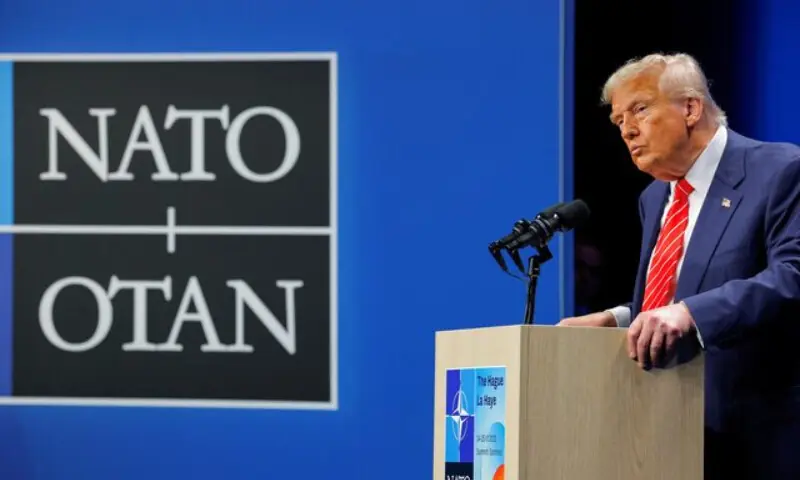

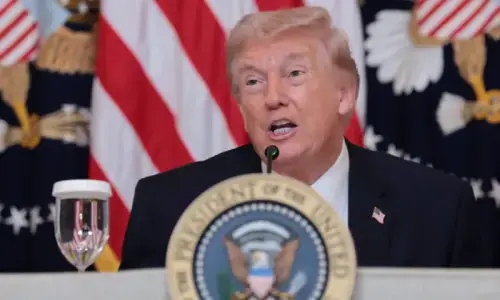
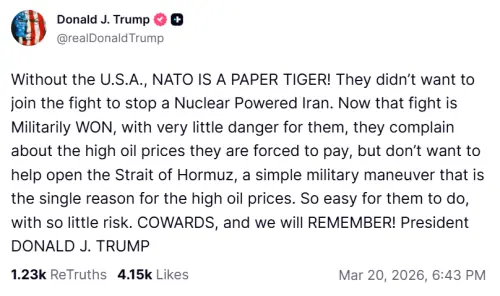
“Paper tiger”. “Cowards”. As US President Donald Trump grapples with the fallout of his war on Iran, much of his anger has been redirected onto another target: the Nato military alliance.
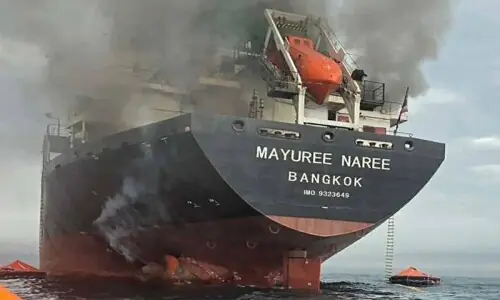
Enraged by European allies who have refused to back his fight, rejected demands to help reopen the Strait of Hormuz, or denied access to US jets, Trump’s tone has grown increasingly menacing.
“I was never swayed by Nato. I always knew they were a paper tiger,” Trump told British newspaper The Telegraph on Wednesday, suggesting he was strongly considering pulling the United States out.
The ire from the president — who has also blasted Nato allies as “cowards” over Iran — is just the latest existential crisis to grip the 77-year-old alliance since his return to power last January.
A few months ago, he rocked Nato’s foundations by threatening to seize the vast Arctic island of Greenland from fellow member Denmark — before abruptly backing off.
That followed him repeatedly pulling the rug from under Ukraine in the war against Russia, threats not to protect allies if they don’t spend more on defence, and warnings that Washington could yank troops from Europe.
But while previous storms have blown over, there is increasing anxiety among some US allies that this time the damage might be harder to recover from.
“Day by day it is getting more serious,” one European diplomat at Nato told AFP, speaking on condition of anonymity.
Trump has long railed against Nato, calling it “obsolete” in 2017 and mulling withdrawing during his first term in office.
Fuelling the worry is that this time round it is not only Trump that is sounding off about the alliance from Washington, but other traditional supporters.
US Secretary of State Marco Rubio warned on Tuesday that the United States “is going to have to reexamine” its relationship with Nato after several European countries restricted the US military from using bases on their soil.
“When we need them to allow us to use their military bases, their answer is ‘No?’ Then why are we in Nato? You have to ask that question,” he told Fox News.
Former US ambassador to Nato Ivo Daalder argued that while Nato members have handled many disagreements in the past, this standoff threatened the vital glue of trust holding the alliance together.
“The last two weeks have brought relations between the president and European allies to a boiling point,” Daalder, who served under President Barack Obama, wrote in an online post.
“This is by far the worst crisis Nato has ever confronted.”
Stronger than ever?
After bending over backwards repeatedly to keep Trump happy — including a pledge to ramp up spending at Nato’s summit last year — European allies seem unwilling to play ball this time on Iran.
As Trump didn’t consult them before launching the war, there is little appetite to help clear up the problems it has unleashed and risk becoming further embroiled.
But while doomsayers see an unbridgeable rift opening up — others insist that Nato will pull through yet again.
“It has kept us safe for many decades, and we are fully committed to Nato,” British Prime Minister Keir Starmer said on Wednesday.
Alliance chief Mark Rutte — dubbed a “Trump whisperer” — is central as he has managed to keep the president onside, thanks in large part to his unbridled flattery of the US leader.
He has praised Trump for tackling the threat from Iran and continues to insist he has made Nato stronger by cajoling Europeans to up defence spending.
“Nato is stronger today than it has ever been,” he said last week.
‘Roller-coaster’
A major test looks set to come when Trump comes face-to-face with Nato’s 31 other leaders at a summit in Ankara in July — with some hoping the bad blood might have cleared by then.
“The only good news on Ankara is that there is still some time — three or four months in Trump terms is a lot,” the Nato diplomat said.
Even if this row passes, the alliance needs to brace for further tumult as long as Trump is in charge.
“I wouldn’t say it’s in perma-crisis, but rather on a kind of roller-coaster for the next three years or so,” John Deni, a non-resident fellow at the Atlantic Council think tank, told AFP.
Meanwhile, among European allies there is a growing sense that Trump has once again reinforced the fundamental fact that they need to take their defence more into their own hands.
“What we want to do is to strengthen Europe’s defence within the Atlantic alliance,” French armed forces minister Alice Rufo said.
“That creates reliability and trust.”