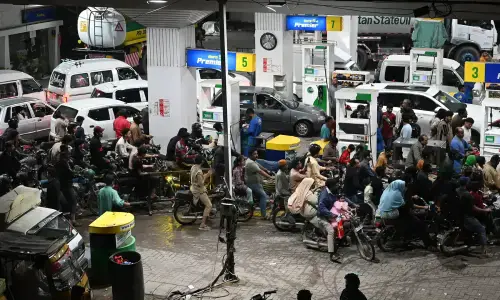
THE sharp increase in the domestic price of petrol and diesel is an unavoidable correction amid external price shocks triggered by the US-Israel war on Iran.
That the petrol price was reduced by Rs80 — after increasing it by Rs137 to Rs458 per litre — in less than 24 hours shows political pressure and confusion in officialdom.
Alongside the fuel price adjustments, the government has also ordered early market closures to conserve energy and announced targeted subsidy for motorcycle owners, farmers and transporters.
For weeks, the authorities had resisted passing on the full impact of rising oil prices to consumers, absorbing the surge in the budget.
Following an earlier increase of Rs55 per litre almost a month ago, the authorities were seemingly banking on a swifter resolution to the Gulf crisis, a bet that cost the national exchequer Rs129bn.
That space has now run out.
The move shows that Pakistan simply does not have the capacity to sustain fuel subsidies.
Years of weak tax revenue mobilisation, coupled with rising public sector expenditures, have left the government with little room to absorb such shocks without risking macroeconomic instability.
The pressure is not confined to the fiscal side. The external sector supported by a fragile foreign exchange buffer painstakingly rebuilt over two years is also vulnerable.
Higher global oil prices translate into a heavier import bill, threatening to erode reserves and destabilise the exchange rate. Given the ongoing Middle East crisis, the government had no other choice.
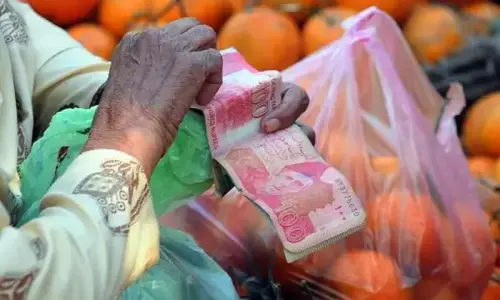
While the decision is fiscally justified, its consequences for the public will be immediate and severe. A fresh wave of inflation is inevitable.
In fact, transporters have already raised fares, freight operators have sharply increased charges, and businesses are passing on higher input costs to consumers.
This will cascade through the broader economy, significantly raising the cost of living.
The burden will fall disproportionately on low- and middle-income households, many of whom are already struggling to cope with persistent inflation.
Targeted subsidies may offer some relief but are unlikely to fully offset the broader price shock that is unfolding.
More fundamentally, this crisis underscores a deeper policy failure.
For decades, governments have delayed tax reforms and avoided difficult fiscal adjustments. Resultantly, the state remains heavily reliant on indirect taxation.
Today, a large part of fuel prices consist of government taxes and levies. Had revenue and spending reforms, such as broadening the tax base and curbing government expenditure, been undertaken earlier, the burden on consumers could have been significantly lower.
Instead, citizens are now facing a double squeeze: soaring global energy prices as well as elevated indirect FBR levies imposed to meet the government’s revenue needs.
While the fuel price hike was unavoidable it also serves to remind us of the heavy cost the masses are paying for delayed structural reforms.
Published in Dawn, April 4th, 2026