Khawaja Asif warns India against conducting ‘false-flag operation’


Defence Minister Khawaja Asif on Saturday said India was planning a “false-flag operation” to blame Pakistan, warning New Delhi of a strong reaction if it conducted such a “drama”.
Speaking to the media in Sialkot, Asif said: “They [plan] some kind of false-flag operation through their own men or through the Pakistanis in their detention by laying down some bodies somewhere and saying they were terrorists and had done so and so.
“The kind of insult they faced around a year ago […] the entire world, in fact, their own public, taunts them that they are five times larger than Pakistan in every aspect — population, resources, military, airforce,” he added.
The minister asserted that the Indian leadership would keep facing such backlash “till the end of the world”, recalling the Pakistan Air Force’s performance during the conflict with India last year.
“If they try to enact such a drama this time, then God-willingly, we will take them to Kolkata,” he added, referring to the eastern Indian city near the border with Bangladesh.
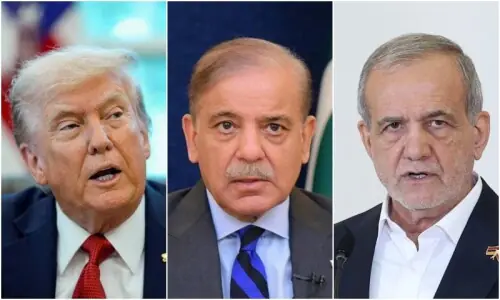
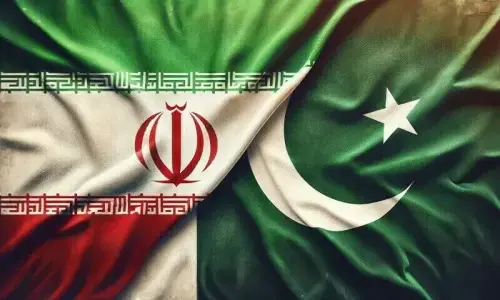
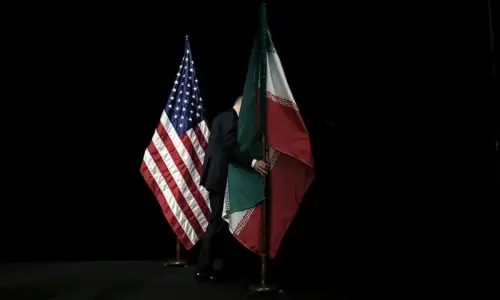
Speaking to the media, Asif also expressed hope that Pakistan’s efforts to mediate peace talks between the US and Iran would succeed.
Pakistan has recently stepped into a significant diplomatic role amid rising tensions between the US and Iran, offering to host direct talks between the two sides.
“Pakistan is playing an important role in the ongoing US-Iran negotiations,” the defence minister said.
He added that Pakistan aims to promote “regional stability” and hopes the ongoing negotiations will lead to a resolution of disputes.
The minister’s remarks come days after security sources warned that India was preparing for a false flag operation against Pakistan, which reportedly entailed exploiting Pakistani citizens captured after inadvertently crossing the border.
On Thursday, Asif had also reminded his Indian counterpart Rajnath Singh that the “illusion of space for war between two nuclear states is inconceivable and has drastic consequences”.
The reprimand was ostensibly in reaction to Singh’s recent statement, in which he warned Pakistan against any attempted “misadventure” under the shadow of the ongoing Middle East war, as reported by Indian media.
“Repeated rhetoric reflects not strength, but visible strategic anxiety as the anniversary of the staged false-flag operation in Pahalgam approaches — an episode that failed to withstand international scrutiny and exposed New Delhi’s reliance on manufactured crises,” Asif had said in a post on X, in which he did not specifically refer to the statement but tagged Singh.
“Such threat-mongering is not new; it is part of a predictable pattern — externalising internal fragility and attempting to provoke escalation under the guise of unsubstantiated allegations for vested political interests,” he added.
The Pahalgam episode that took place on April 22 last year saw tourists being attacked in India-occupied Kashmir. New Delhi, without evidence, linked it to Pakistan, which led to a brief military escalation between the two countries from last year. Islamabad had strongly denied responsibility for the attack while calling for a neutral investigation.
The Pakistan Army later named the period of conflict with India since the April 22 Pahalgam attack to the May 10 conclusion of its operation, Bunyanum Marsoos, as Marka-i-Haq (battle of the truth).
In his post, Asif said history stood as a stark reminder that miscalculation had consequences.
“Marka-i-Haq remains fresh in our minds. The next time our response will be even more forceful and decisive,” he warned.
“Let there be no ambiguity: Pakistan remains committed to peace and regional stability, but its resolve to defend sovereignty is absolute, its preparedness complete, and its response will be swift, calibrated, and decisive,” he said.
“Let me remind Rajnath Singh that the illusion of space for war between two nuclear states is inconceivable and has drastic consequences. India would be better served by confronting the growing unease within its own strategic and diplomatic space,” he said.