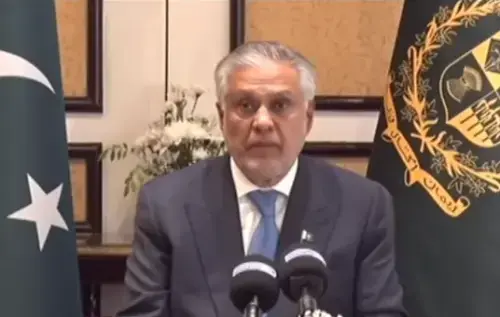
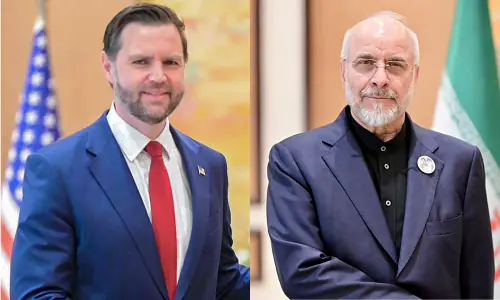
WHILE no breakthrough in US-Iran negotiations in Islamabad was expected on Saturday, there is hope: at the time of writing both sides had exchanged texts, and the very fact that the negotiations began is by itself a considerable achievement.
There are reports that Israel will ‘lessen’ its barbaric attacks on Lebanon while Iran’s assets, frozen by the US, will be released. Given sticking points like the Strait of Hormuz, until both sides confirm the details, any celebration would be premature.
The fact is that relations, which have been strained since the 1979 revolution in Iran, cannot be improved in days or weeks or even months; this will be a long process.
Trust will take time to build, especially when one considers that the US, in partnership with Israel, launched a war on Iran in the midst of talks in February. But the future of the bilateral relationship between Washington and Tehran need not be marked by perpetual hostility.
While the divide is deep, it is possible that even a basic agreement can be worked on. For instance, all talk of regime change must stop and the US must leave it to the people of Iran to decide what sort of system of government they want. As for the other issues the US has raised — Iran’s missiles and its support for regional armed groups — this is something ideally left to Tehran and its neighbours to sort out since it concerns the region as a whole.
The nuclear issue is also resolvable; the Oman-mediated parleys were making satisfactory progress before the US attacked Iran. If the US treats Iran with respect and does not cross certain red lines, the Islamic Republic should reciprocate and try and improve relations.
But perhaps the biggest obstacle standing in the way of better US-Iran ties is Israel and the Zionist lobby in Washington that does its bidding. Until Tel Aviv’s malign influence on US policy is curbed, ties with Iran are not likely to improve. After all, Israeli Prime Minister Benjamin Netanyahu said that after the Islamabad talks his country would continue to fight Iran.
The US must decide whether it wants to fight Israel’s war — one of Tel Aviv’s own making — or improve its own ties with Iran.
Clearly, the former option will lead to another destructive war in the region. Fortunately, while the path ahead is strewn with difficulties and suspicions, a process of de-escalation has begun, thanks largely to Pakistan’s sincere efforts in this direction, as well as those of other states.
Now it is time to carry the momentum forward, achieve what is doable for both states, and look to a more peaceful future. Spoilers, such as the warmongers in Israel and their supporters in the US, must be isolated and ignored.
Published in Dawn, April 12th, 2026