Asha Bhosle has often been described as one of Indian cinema’s most versatile playback singers. That is true, but insufficient. Her career stretched across roughly eight decades, and the best way to understand it is not through numbers but through the songs that listeners still carry like private possessions.
Here are some of mine.
‘Aaiye meherbaan’
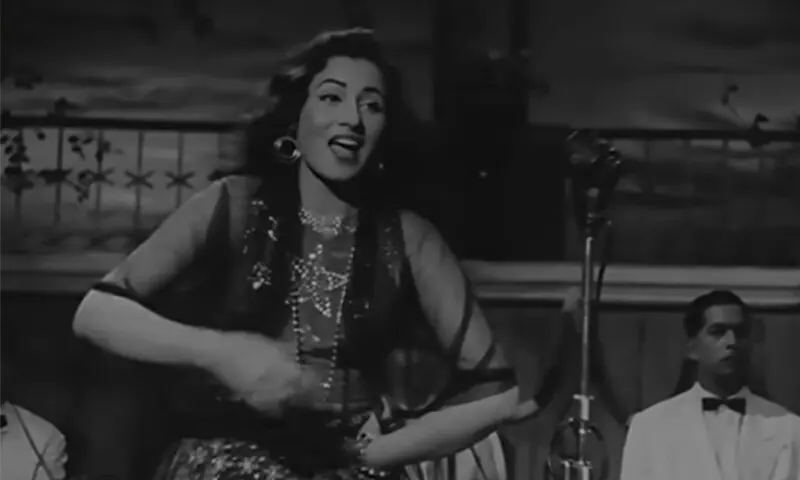
Take ‘Aaiye meherbaan’, from Howrah Bridge (1958), composed by O.P. Nayyar and picturised on Madhubala opposite Ashok Kumar. The film was a crime thriller directed by Shakti Samanta, but the song gave it a second life altogether. Madhubala, playing the cabaret dancer Edna, does not merely appear in the sequence; she glides through it with the kind of teasing poise that Hindi cinema rarely matched. Asha’s voice makes the invitation sound both playful and dangerous. Nayyar’s composition gave her the right vehicle: urbane, lilting, lightly jazzy and free of classical solemnity. It was one of the songs that helped define her as the voice of sophisticated seduction without vulgarity.
While many singers can deliver melody, only a precious few could render memory audible. Film critic Naazir Mahmood picks his favourite Asha Bhosle tracks…
‘Nazar laagi raja tore banglay par’
S.D. Burman also drew from her an earthier idiom. ‘Nazar laagi raja tore banglay par’, from Kala Pani (1958), was a mujra-style number in a crime thriller directed by Raj Khosla and starring Dev Anand, Madhubala and Nalini Jaywant. The song was picturised on Nalini Jaywant with Dev Anand. Burman’s score, set to a more traditional contour, allowed Asha to colour her voice with folk-classical inflections while retaining a conversational sparkle. It is a reminder that, long before later generations celebrated her daring modernity, she was already adept at stylised, semi-classical performance.
‘Raat akeli hai, bujh gaye diye’
By the 1960s, she could also dominate the modern nightclub idiom. ‘Raat akeli hai, bujh gaye diye’, from Jewel Thief (1967), composed by S.D. Burman with lyrics written mainly by Majrooh Sultanpuri, was picturised on Tanuja in the Dev Anand-starrer and directed by his elder brother Vijay Anand and produced by Navketan Films. The song is all hush, smoke and entrapment. Asha sings as if the night itself were leaning over the listener’s shoulder. In Jewel Thief, where style was part of the plot, she became the perfect accomplice.
‘Jaiye aap kahaan jayenge’
Then came Mere Sanam (1965), a film so rich in melody that it yielded two of the finest Asha songs in Hindi cinema. ‘Jaiye aap kahaan jayenge’, composed by O.P. Nayyar with lyrics by Majrooh Sultanpuri, was picturised on Asha Parekh opposite Biswajeet. The film, directed by Amar Kumar, starred Biswajeet, Asha Parekh, Mumtaz and Pran, but this song belongs to Parekh’s smiling insistence and to Asha’s art of affectionate persuasion. It is coquettish, but not brittle; teasing, but never shrill.
‘Yeh hai reshmi zulfon ka andhera’
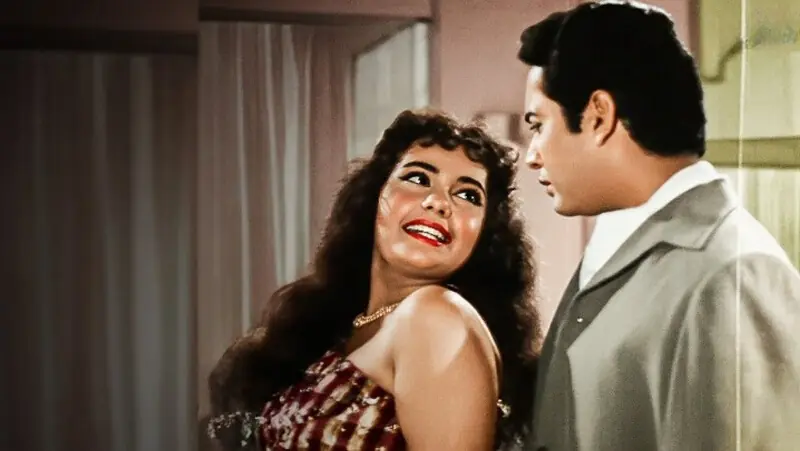
In the same film, ‘Yeh hai reshmi zulfon ka andhera’ shifted the mood from flirtation to intoxication. That number was picturised on Mumtaz, with the same Nayyar-Majrooh team behind it. If ‘Jaiye aap kahaan jayenge’ is the art of beckoning, ‘Yeh hai reshmi zulfon ka andhera’ is the art of atmosphere. Asha turns a line about silken tresses into an entire nocturnal world.
‘O mere sona re sona re’
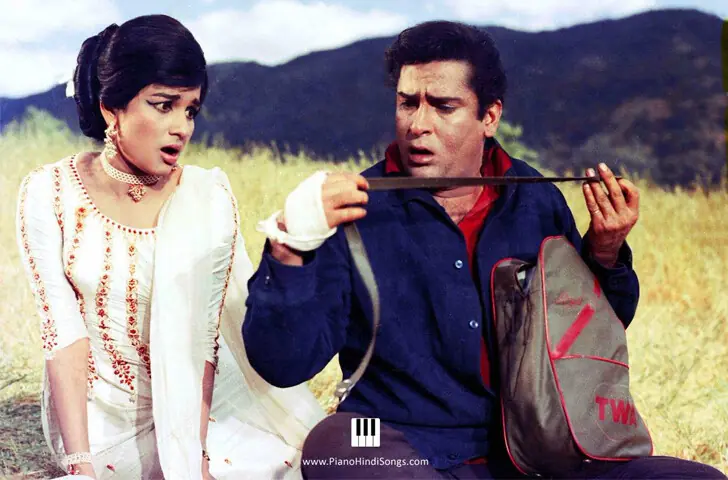
If one wants to locate the moment when Asha and R.D. Burman together changed the voltage of Hindi film music, ‘O mere sona re sona re’ from Teesri Manzil (1966) is a good place to begin. The film, directed by Vijay Anand and starring Shammi Kapoor and Asha Parekh, announced Burman as a composer of modern rhythmic force. The duet with Mohammed Rafi is buoyant, flirtatious and kinetic, exactly suited to Shammi Kapoor’s elastic screen energy and Asha Parekh’s bright charm. Reuters and other recent tributes to Asha rightly note how central her later partnership with R.D. Burman was to her legend. This song shows the beginnings of that transformation.
‘Chori chori solah singhaar karungi’
That partnership later matured into something stranger and more adventurous. ‘Chori chori solah singhaar karungi’, from Manoranjan (1974), was composed by R.D. Burman for Shammi Kapoor’s film starring Sanjeev Kumar and Zeenat Aman. It earned Asha a Filmfare nomination. The song is playful but also knowingly adult, entirely in keeping with a film that treated desire with unusual openness for mainstream Hindi cinema of its time. Zeenat Aman’s screen persona, modern and unembarrassed, found in Asha the ideal singing self.
‘Inn aankhon ki masti ke’
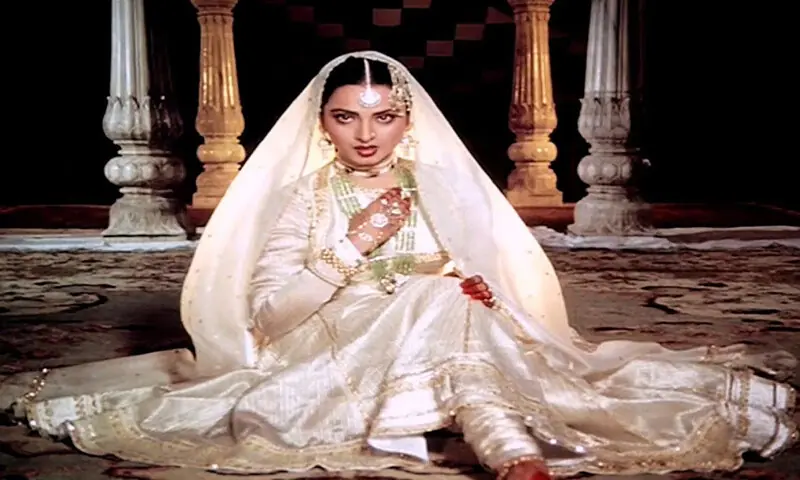
Yet, it would be wrong to remember Asha only as the voice of flirtation and glamour. Her later triumphs were songs of poise, sorrow and recollection. ‘Inn aankhon ki masti ke’, from Muzaffar Ali’s Umrao Jaan (1981), was composed by Khayyam and written by Shahryar. Picturised on Rekha in one of her greatest performances, it helped turn a literary courtesan into a living cultural memory. The film itself was in Urdu, and Asha rose to its delicacy with astonishing control. She does not over-sing. She hovers. The result is not merely beautiful; it is mannered in the best sense, steeped in tehzeeb [culture]and sadness.
‘Mera kuchh samaan’
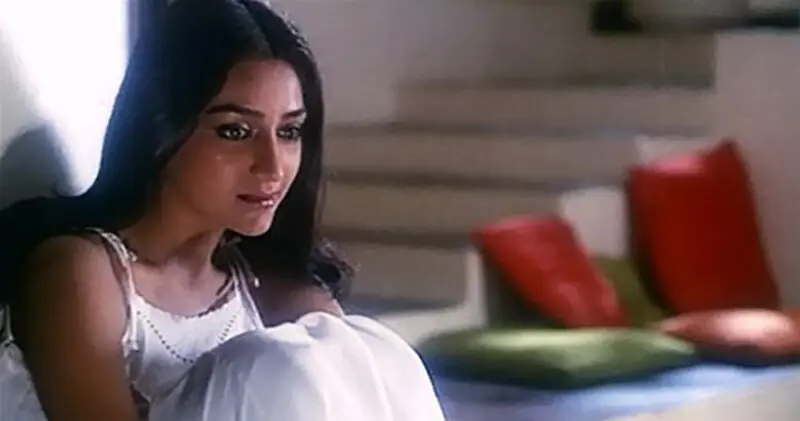
And then there was ‘Mera kuchh samaan’, from Gulzar’s Ijaazat (1987), with music by R.D. Burman and the song picturised on Rekha, Naseeruddin Shah and Anuradha Patel. By then, Asha no longer needed to prove that she could sing every kind
of song. Instead, she demonstrated that she could inhabit modern poetry. Gulzar’s lyrics are fragmentary, full of emotional residue rather than declaration. Asha Bhosle sings it not as a performance piece but as an act of remembering. Many singers can deliver melody. Few can render memory audible.
The writer is a columnist, educator and film critic. He can be reached at mnazir1964@yahoo.co.uk.
Published in Dawn, ICON, April 19th, 2026