India’s Hindu extremist group RSS lobbies foreign groups to counter minority rights criticism
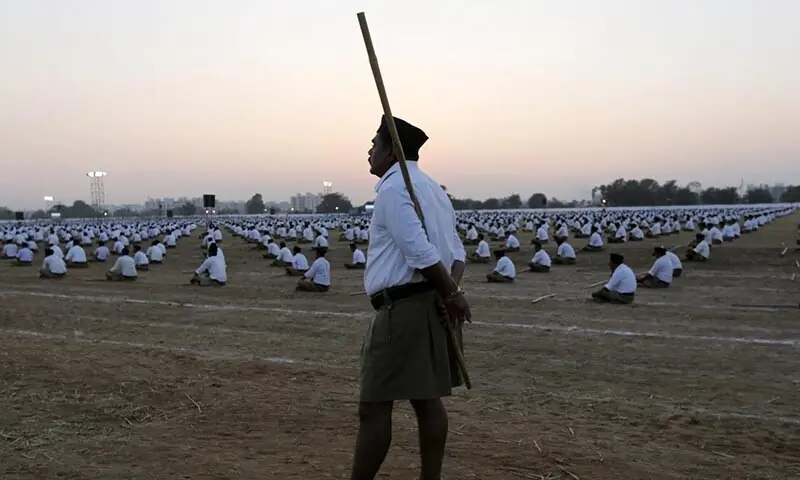

A powerful Hindu group from which Indian Prime Minister Narendra Modi’s party emerged claimed on Tuesday it had organised foreign visits, including to the US, to counter perceptions that it is a paramilitary outfit involved in attacks on minority communities.
The outreach by the Rashtriya Swayamsevak Sangh (RSS), or National Volunteer Organisation, came after the US Commission on International Religious Freedom said in a report in November that it “has been involved in acts of extreme violence and intolerance against members of minority groups for decades”.
The commission is a bipartisan body of the US federal government that monitors religious freedom around the world and makes policy recommendations to the president, the secretary of state and the US Congress.
Modi joined the RSS in his youth, and the rise of his Bharatiya Janata Party (BJP) to near-national dominance is widely attributed to the RSS’ vast network of volunteers, during a period marked by a hardening Hindu-Muslim political divide in the officially secular country where Hindus are a majority.
RSS banned several times
The RSS claims it is a “Hindu-centric civilisational, cultural movement” whose goal is to “carry the nation to the pinnacle of glory”, including by uniting Hindus and protecting the religion.
It has been banned several times since its inception in 1925, including after a former member assassinated independence hero Mahatma Gandhi in 1948.
Indian opposition leaders, particularly Rahul Gandhi of the main opposition Congress party, have repeatedly accused the RSS of promoting a divisive, majoritarian ideology that he says threatens India’s secular fabric and fuels intolerance towards minorities.
RSS general secretary Dattatreya Hosabale said he has been addressing gatherings in the US, Germany and Britain, with more planned, to “dispel certain misgivings and misconceptions about the RSS”.
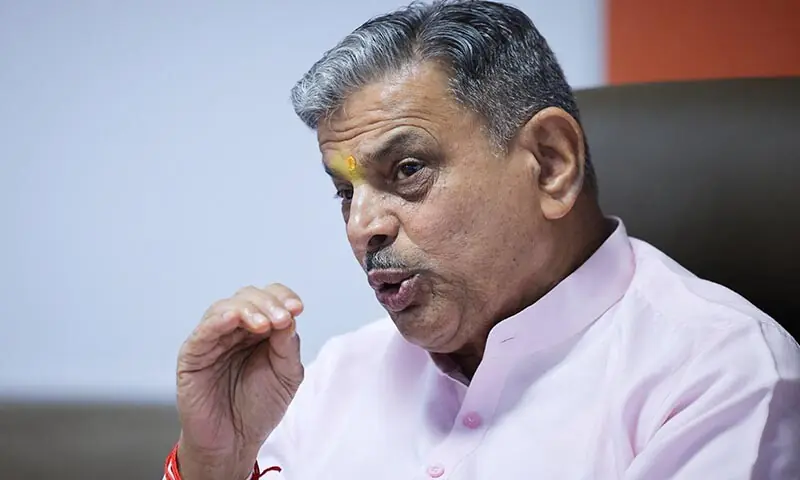
He said the main accusations against the RSS included that it was “pulling society backwards”, that it was a paramilitary organisation, that it promotes Hindu supremacist things, and that others have become second-class citizens.
“The fact is entirely different,” Hosabale told a rare briefing for foreign media in the group’s newly built 12-floor building in Delhi.
Met policymakers and business leaders
Hosabale met academics, policymakers and business leaders in his visits. He said RSS leaders would visit more countries in Europe, Southeast Asia and other regions to raise awareness about the organisation.
Modi has already delivered on two key agenda items for the RSS: building a temple to the Hindu god Ram on the site of Babri mosque razed in 1992, and revoking the special status of occupied Kashmir, formerly India’s only Muslim-majority state.
The other key goal is to end discrimination based on Hindu caste, Hosabale said.
India’s opposition successfully leveraged concerns among underprivileged castes to hand Modi a rare setback in the 2024 national election, when his party fell short of a majority and was forced to rely on allies.