On a pleasant morning, a group of children surrounds a gardener as he demonstrates the painstaking process of growing plants — preparing manure, watering saplings, and explaining not just how things are done, but why. The unusual lesson, delivered in Urdu, is part of the classwork at VM Public School.
“My children need to learn that teaching doesn’t happen only through the teacher, doesn’t happen only in the classroom, and doesn’t happen only in English. It happens everywhere,” says principal Marium Mukhi, who holds a Master’s in Education degree from the University of Sussex in the UK.
Tucked away in the Dhoraji area of Karachi, the VM Public School is a 63-year-old school that was recently recognised among the world’s top 50 schools for teacher development by the Varkey Foundation in the UK. It is an extraordinary feat for a trust-backed, homegrown matriculation teaching system educational institute.
Recognised among the world’s top 50 schools for teacher development, Karachi’s VM Public School is challenging assumptions about affordability, language and what quality education should look like
AFFORDABLE BY DESIGN
Charging an all-inclusive monthly fee of Rs5,800, the school embraces socio-economic diversity, with the child of a street vendor sitting next to a banker’s child. With roughly 400 students, the VM Public School aims to keep affordability central to its model, while also aiming to provide education that meets the global standard.
Run under a trust, the school is heavily subsidised, with most operational costs absorbed to keep fees affordable. “We are operating in a deficit,” says Ms Mukhi, “but we are backed by a strong trust, so we can still do a lot.”
Annual admission fees are around Rs10,000, with multiple concessions for siblings and staff. Monthly tuition, which previously averaged around Rs4,100-4,800, has now been consolidated to roughly Rs5,800, covering all expenses without hidden charges.
“We try to make sure education doesn’t become inaccessible,” she says. “But at the same time, the trust has to sustain itself.”
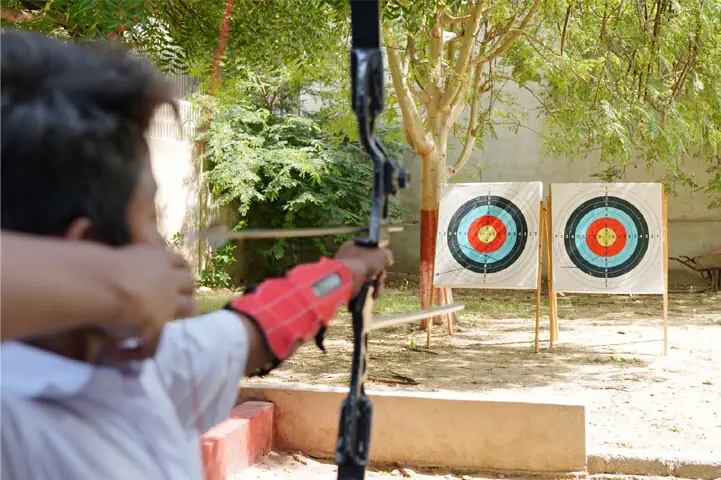
Despite financial constraints, the school has also expanded extracurricular offerings that include archery, futsal, cooking, baking and art. These activities are bundled into the core fee structure, rather than being charged separately, in an attempt to keep opportunities broad while costs remain contained.
The institution is overseen by a three-member board, comprising two trustees and the CEO of its parent organisation, while financial oversight is managed at the trust level.
That parent body is the ZVMG Rangoonwala Trust, a wider philanthropic organisation that runs multiple community-focused initiatives, including mother-and-child welfare programmes and vocational training centres. Within this ecosystem, the school functions as one project among several, and is supported by a shared philosophy of social investment.
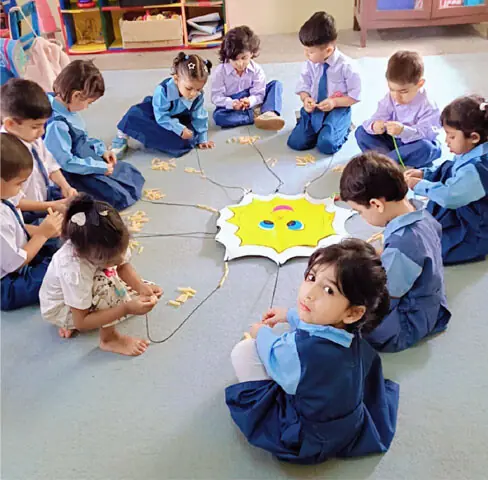
A SCHOOL IN TRANSITION
The long arc of transformation at the VM Public School was shaped by its earlier leadership under former principal Ms Zia Halai, who served for 25 years. She recalls a period when the school operated in two shifts, a structure that created deep strains on both teaching and learning.
“The second-shift children would be dropped by vans early and spend the next couple of hours playing. By the time their shift started, they would be completely spent,” says Ms Halai. The teachers, too, were effectively working double jobs. The arrangement left teachers fatigued, students exhausted and the learning environment fragmented.
With the trustees’ support, the school expanded its infrastructure to accommodate all the students. “I told them improvement can only happen if we go to a single shift. We needed more classrooms,” she explains.
By 1999, new classrooms were built and the school transitioned to a single shift, a change Ms Halai describes as one of her key achievements. Once the timetable stabilised, attention could finally shift towards teacher training and academic improvement, setting the direction for later reforms.
TEACHING FOR UNDERSTANDING
That emphasis on improving how teachers think about learning continues to shape the school’s philosophy today. One example stayed with a teacher for years.
Her daughter had been taught in primary school that only green leaves could make food, while coloured plants were “parasites”. But the family garden was full of thriving red and maroon-leafed plants. When the child questioned her teacher, there was no explanation.
She later learnt that the answer lay in both botany and physics: the leaves still contained chlorophyll, though in smaller amounts, while light reflection gave the leaves their visible red colour.
At the VM Public School, teachers are trying to move students away from rigid subject silos towards integrated learning. Science, they argue, cannot be neatly divided into biology, chemistry and physics, because real-world learning rarely exists in isolation. A child’s movement is physics, digestion is chemistry and the body itself is biology.
That philosophy has translated into extensive teacher training programmes over the years. The school conducted a long-term Early Childhood Education and Development course — offered by Agha Khan University’s Institute for Educational Development and designed especially for VM Public School’s teachers — followed by anti-bullying training for teachers through a Berlin-based programme. Finnish educators were also invited to Karachi to conduct sessions on reading strategies and classroom design for early years learning.
A DIFFERENT WAY OF TESTING
Alongside teacher development, the school is also rethinking how students are assessed. The institution is currently transitioning to a new examination system, with its first batch now sitting the Aga Khan University (AKU) Examination Board exams. While earlier cohorts continued with the Karachi Board, the institution is gradually moving fully towards the AKU Board framework.
The curriculum itself remains aligned with national standards, but the assessment approach differs significantly.
Unlike traditional board exams that emphasise lengthy answers, the AKU Board focuses on conceptual understanding within a limited space. Students are required to demonstrate clarity and precision rather than memorised elaboration.
“A question may be three marks and they will give only five lines,” Ms Mukhi explains. “Even if you write two conceptually correct sentences, you get full marks.”
The shift, Ms Mukhi adds, reduces language barriers that often disadvantage students who do not grow up speaking English at home. “For many of our students, even Urdu is their third language. English is their fourth,” she says. “They only hear it in school, so there is no reinforcement outside.”
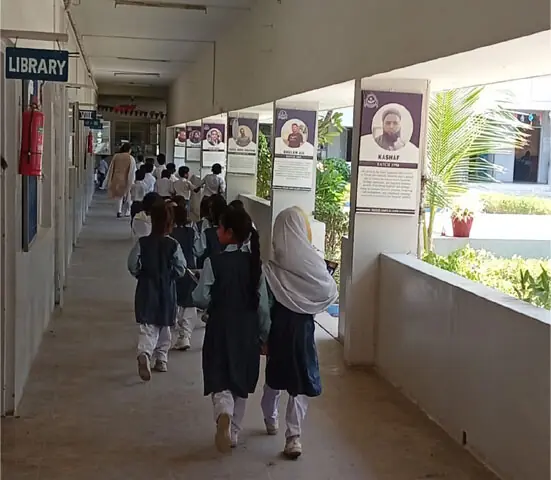
That emphasis on aspiration is evident throughout the school. Along one corridor hangs a series of alumni photographs, accompanied by their achievements and job titles, a reminder to students from all backgrounds that education makes breaking barriers possible.
In a country where education is equated with the English-speaking attending schools with price tags far above the minimum wage, VM Public’s global recognition challenges the assumption that quality education is tied only to elite branding or high fees.
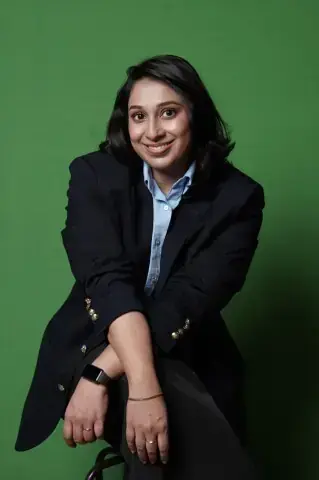
The writer is the head of the weekly Business & Finance desk at Dawn and a host of All Things Money.
X: @FatimaAttarwala
Published in Dawn, EOS, May 24th, 2026