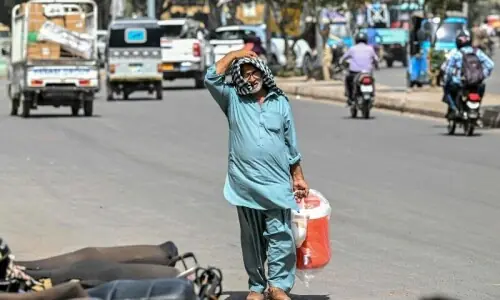
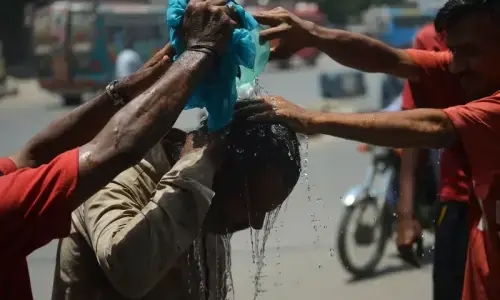
HEAT is becoming a defining feature of life in many parts of the world.
It influences how cities are built, how much electricity they consume, when people can work outdoors and, increasingly, how governments prepare for emergencies. The latest warning from the World Meteorological Organisation suggests that these pressures are likely to intensify. Global temperatures are expected to remain at or near record levels over the next five years, with a strong possibility that the world will experience its hottest year on record before the decade is out.
Scientists estimate that average temperatures between 2026 and 2030 will exceed 1.5°C above pre-industrial levels. Although this does not mean the Paris Agreement target has been permanently breached, it points to a future in which unusually hot years become increasingly common. The prospect of an El Niño event towards the end of 2026 may add further momentum, raising the likelihood of another exceptionally warm year in 2027.
Pakistan is hardly a bystander to these trends. Summers have become longer and heatwaves more frequent. This year, Dadu recorded 51.5°C, while large parts of Sindh and Balochistan endured temperatures close to 50°C. Such conditions place enormous strain on electricity networks, reduce labour productivity and expose vulnerable groups to serious health risks. For those whose livelihoods depend on working outdoors, heat is not simply an inconvenience. It can determine how much work gets done and how much income reaches home.
Research published this year suggests that nearly 3.8bn people could face extreme heat conditions by 2050. Many of those most affected will live in developing countries where access to cooling remains limited and power supply is unreliable. Yet the challenge is not confined to traditionally hot regions. Record temperatures in 2025 stretched from Central Asia and the Sahel to parts of northern Europe, highlighting how rapidly climatic patterns are changing across continents.
Scientists estimate that extreme heat events are now almost 10 times more likely than they were a decade ago. Even countries accustomed to milder climates are beginning to confront risks that were once linked mainly with the tropics.
Pakistan’s adaptation efforts have often focused on floods — understandably so after the 2022 calamity. Heat, however, deserves equal attention. Urban areas need more shade and green spaces. Building standards should encourage passive cooling. Reliable electricity and public cooling facilities will become increasingly important during prolonged hot spells. Health systems must also be equipped to recognise and respond to heat-related illness.
The coming years are unlikely to resemble the climate many societies grew accustomed to during the last century. Planning for hotter conditions can no longer be treated as a peripheral environmental issue. It is increasingly becoming a question of public health, economic resilience and public safety.
Published in Dawn, May 31st, 2026