Could India’s Gen Z rebellion begin with cockroaches?

WHAT if, one fine morning, a call is extended — “Cockroaches of the world unite!” And suddenly millions of pointless, lazy little creatures swarm out from their ugly dens — from behind boxes, from under beds, from the dark corners of old cupboards?
Lazy, yet resilient, cockroaches refused to evolve for the last 150 million years. All they have done is survive and breed. You chase them away with a broom, smash them with sandals, spray them with “Hit,” and still they return. When filth piles up, cockroaches are bound to appear.
“What if all cockroaches come together?” — this was the exact question asked by 30-year-old Abhijit Dipke after Justice Surya Kant, the Honourable Chief Justice of India, compared India’s unemployed youth to “cockroaches” during a hearing on May 15.
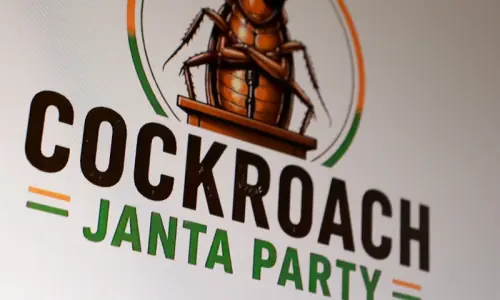
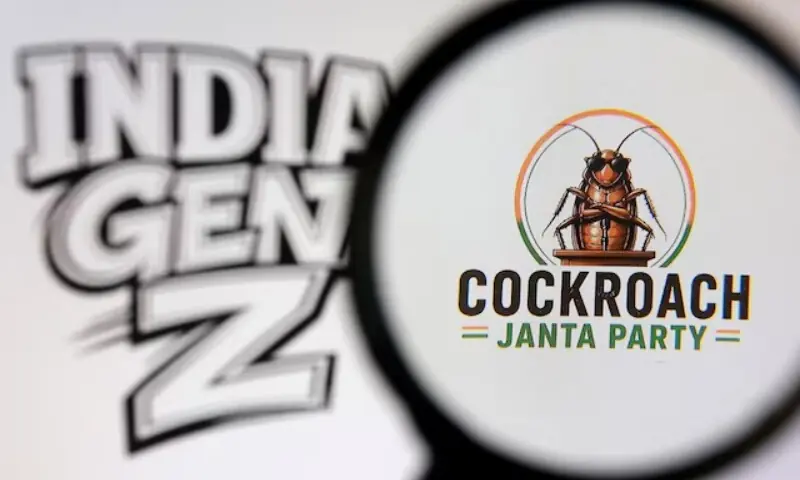
Within 24 hours, Dipke launched a website and social media handles on X and Instagram under the name Cockroach Janata Party (CJP). The name itself mocks the ruling party at the Centre. Then there is the logo: a cockroach sitting on a smartphone with full internet connectivity — reflecting the Chief Justice’s further accusation that professionally worthless youngsters turn into media or social media activists and attack everyone.
But does a cockroach really attack anyone? Its clumsy wing-flutters may create a nuisance, and its flat existence may carry messages for future propagation. It troubles, certainly, but rarely harms.
Outcome of a systematic betrayal
The Cockroach Janata Party expects its members to meet certain standards. Gender, caste, or religion do not matter. Interested individuals are encouraged to conduct an eligibility self-check to ensure that they are effectively unemployed, physically lazy, chronically online, and capable of ranting professionally.
These criteria perfectly echo how Indian society increasingly views Gen-Z. Justice Surya Kant’s remark, his later clarification notwithstanding, was not merely a personal slip of tongue. It reflected the broader mindset of India’s comfortable middle class, which does not endure the chronic financial and professional stress that the country’s youth face.
Gen Z, or those born between 1997 and 2012, now constitutes more than a quarter of India’s population. Yet nearly 40pc of young graduates remain unemployed, according to the State of Working India 2026 report by Azim Premji University —only around 7pc secure permanent salaried employment within a year of graduation.
The CJP’s manifesto contains five demands: no Chief Justice should receive a Rajya Sabha seat after retirement; the Chief Election Commissioner should face UAPA charges if legitimate votes are deleted; 50pc of cabinet positions should be reserved for women; media houses owned by Adani and Ambani should lose their licenses; and any MLA or MP defecting from one party to another should be barred from contesting elections or holding public office for twenty years.
Rallies, slogans, and street-corner speeches no longer engage educated youth the way they once did. Instead, youngsters express their political consciousness through satire, memes, parody, and comedy reels.
The party also demanded the resignation of the Union Education Minister following the recent cancellation of the 2026 NEET examination due to a question paper leak.
The demands primarily target corruption and institutional decay, which easily makes one recall the 2011 anti-corruption movement — popularly known as the Anna Andolan — which sought to address political corruption through the Jan Lokpal Bill.
That non-partisan civil movement eventually gave birth to Arvind Kejriwal’s Aam Aadmi Party while simultaneously strengthening the BJP’s anti-Congress narrative before the 2014 general election. Could the CJP similarly evolve into a larger anti-establishment movement?
The speculation becomes stronger considering that Dipke himself was associated with the AAP between 2020 and 2023. For now, however, the CJP primarily serves as a platform to raise issues and demand accountability. “The rest is satire,” they say.—The Daily Star (Bangladesh)/ANN
Published in Dawn, June 1st, 2026