Electricity prices likely to rise by Rs1.74 per unit
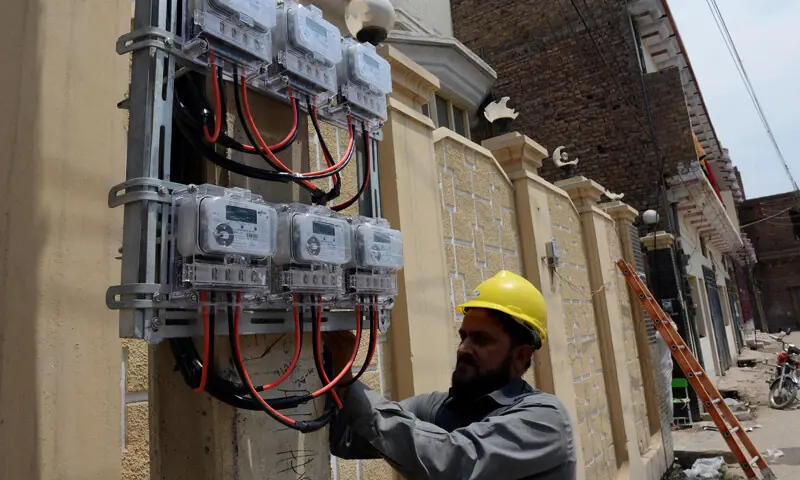

• Nepra holds public hearing after CPPA asks for additional fuel cost adjustment due to Iran war disruptions
• Regulator seeks report from K-Electric over ‘excessive loadshedding’ in Karachi
ISLAMABAD: The price of electricity is likely to be increased by Rs1.74 per unit in next month’s bills due to the higher fuel cost adjustment, in light of an official demand for over Rs16 billion in additional recoveries from power consumers.
The National Electric Power Regulatory Authority (Nepra) held a public hearing on the Central Power Purchasing Agency’s (CPPA) request for an additional fuel cost recovery of Rs1.73 per unit from consumers for the June billing month.
CPPA Chief Executive Officer Rehan Akhtar told the hearing that the reference fuel cost for April had been set at Rs8.25 per unit, but the actual cost turned out to be Rs9.975 per unit, mainly because of the US-Iran war and the resultant disruption in LNG supplies, thus necessitating an additional charge of Rs1.73 per unit on consumers in the billing month of June.
Technical constraints in shifting cheaper power sources in Sindh to load centres in the upcountry regions facing shortages also contributed to the higher fuel cost adjustment (FCA). The net increase would be Rs1.74 per unit, as an existing minor negative fuel adjustment had also come to an end.
The CPPA official said the government decided to undertake load management and limit the use of furnace oil and diesel for power generation, which helped contain the additional FCA at Rs1.73 per unit.
He said special arrangements were made for LNG imports and the government decided to charge Rs2,000 per unit for its price instead of Rs3,500 per unit under normal circumstances to limit the tariff hike.
In response to a question, he confirmed that lower availability of the Karachi Nuclear Power Plant Unit-2 (K-2) had also contributed to the higher FCA, while its past claims worth Rs3.4bn were another factor behind the increase.
Another official explained that the K-2 plant was only partially available because of forced outages due to the problems in the nuclear reactor. The regulator was informed that power supply from the national grid to Karachi continued to benefit both K-Electric consumers and those connected to the national grid.
“If KE had not been provided electricity from the national grid, an overall increase of Rs1.46 per unit in FCA and an increase of Rs2.80 per unit in capacity purchase price (CPP) would have resulted for consumers, with a total impact of Rs4.26 per unit for the month of April 2026,” Rehan reported.
He said overall power consumption in April this year was 8.5pc lower than last year, as demand declined across all consumer categories except the industrial sector, where the impact of gas disconnections for captive power plants and the incremental tariff package contributed to a 13.5pc growth.
Industrial consumers from Karachi, including Rehan Javed, Tanveer Barry and Arif Bilwani, complained that the incremental tariff package had benefited only a few consumers because of its “faulty design”. They called for the package to be reviewed. It was reported that consumption in the domestic sector dropped by almost 15pc, followed by declines of 9.5pc in the commercial sector, 7.2pc in general services, 53pc in agriculture and about 13pc among bulk consumers.
Excessive loadshedding in Karachi
During the hearing on Tuesday, Nepra also sought a detailed report from K-Electric over “excessive loadshedding” in Karachi amid scorching temperatures.
Nepra pointed out that an increasing number of complaints were being received about excessive loadshedding in Karachi.
A senior Nepra official reported that these complaints were coming from both high-loss and low-loss areas, which was a matter of concern as loadshedding schedules were not being followed.
Moreover, power cuts caused by technical faults were also not being accounted for by the power utility under load management schedules, which was against regulatory performance standards.
The K-Electric management, available live online, was asked to provide a detailed report on an urgent basis so the matter could be examined. KE promised to submit its report at the earliest but did not immediately respond to the allegations.
In a statement issued after the hearing, a KE spokesperson said that its loadshedding practices were aligned with the principles of the National Electricity Policy 2021, and blamed development work in the city by civic authorities for any localised faults that were reported.
Published in Dawn, June 3rd, 2026