
With its giant trumpet-shaped blooms and striking colours, the amaryllis is among the most dramatic flowering plants grown in home gardens.
Although most varieties are unscented and the plant is toxic if ingested, its spectacular blooms make it a favourite among gardeners. The flower has an exotic appeal and is known for its radiance and beauty. The amaryllis is also considered a symbol of hope, resilience and strength.
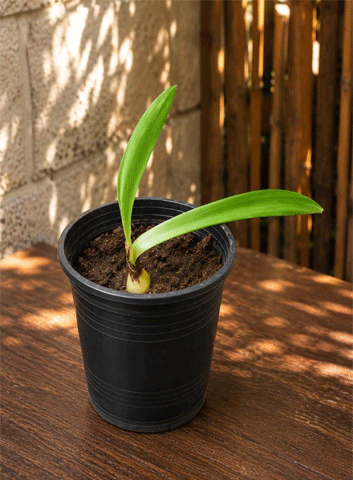
Thanks to its varied climatic zones and long gardening tradition, Pakistan offers favourable conditions for growing many flowering plants. Some popular species include hibiscus, rose, jasmine, marigold, zinnia, petunia, vinca, sunflowers and lilies. Despite requiring patience, the amaryllis is popular among gardeners in Pakistan because of its spectacular blooms, low maintenance requirements and ability to thrive in diverse climatic conditions.
Unlike many ornamental plants that are propagated through seeds, cuttings or grafting, the amaryllis is most commonly grown from bulbs. Amaryllis bulbs are usually imported from the Netherlands, South Africa and certain South American countries, including Brazil and Peru. For beginners, the easiest way to grow amaryllis at home is to purchase an already sprouted bulb from a nursery. Experienced gardeners often prefer to start with dormant bulbs. Such dormant or ungerminated bulbs are available at major nurseries and seed stores across Pakistan. They are also available online.
A mature amaryllis bulb can produce multiple stems and spectacular blooms, but success begins with choosing the right bulb
The most commonly available bulb in Pakistan is the local or desi variety, which ranges between Rs250 and Rs500 per bulb. Exotic or rare varieties can be purchased between Rs1000 and Rs4000, depending upon their size and cultivar. The local variety is not only more affordable but is also better adapted to Pakistani growing conditions, whereas imported bulbs often require greater care and attention.
A gardener cannot determine the variety of the amaryllis plant and the likely flower colour by looking at the ungerminated bulb. Therefore, it is important to purchase the bulb from a trusted source or directly from the grower.
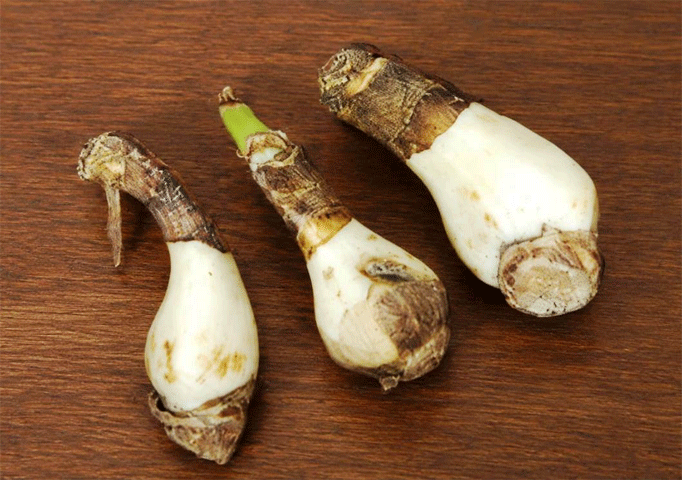
When purchasing the amaryllis bulbs, gardeners should keep several factors in mind. Most mature amaryllis bulbs are onion-shaped, while small offsets may resemble garlic cloves. These offsets are generally less expensive than mature bulbs.
The typical height of the bulb is between two to four inches, although it is usually measured based on its circumference — the distance around its widest part. As a rule of thumb, the greater the bulb’s circumference, the greater the number of stems and flowers it is likely to produce.
For instance, an onion-shaped amaryllis bulb having a circumference of 10 inches is likely to produce a plant with one to two stems and around two to three flowers. A bulb having a circumference of 12-to-14 inches can produce a plant with three to four stems, bearing four to six flowers in the same environment.
Large, mature bulbs may flower within three to four months, whereas small offsets can take two to three years to reach flowering size.
Gardeners should remember that no part of the amaryllis plant is edible. The plant contains a toxic alkaloid called lycorine, particularly in its bulbs. It is important to keep children and pets away from the plant.
Please send your queries and emails to doctree101@hotmail.com. The writer is a physician and a host for the YouTube channel ‘DocTree Gardening’ promoting organic kitchen gardening
Published in Dawn, EOS, June 7th, 2026