KARACHI: A coalition of Pakistan’s top health and nutrition experts has urged the federal government to impose higher taxes on sugary drinks to directly subsidise healthy food, arguing that fiscal policy is now critical to reversing the country’s escalating malnutrition and obesity crisis.
The call came during the ‘Budget 2026-2027 Pre-Budget National Nutrition Advocacy Dialogue’, organised by the Pakistan Nutrition and Dietetic Society (PNDS) in collaboration with the Karachi Press Club on Friday.
Themed “Nutrition Crisis — Challenges and Pathways to Reform,” the dialogue laid bare the scale of the country’s dual burden of undernutrition and rising obesity, and presented concrete budget recommendations ahead of the 2026-27 fiscal plan.
Panellists coalesced around five budget priorities for 2026-27: establishing a Nutrition and Dietetic Council to regulate the profession; appointing nutritionists and dietitians in schools and district health and food systems; shifting to performance-based nutrition budgeting with clear accountability; releasing national nutrition survey microdata for local planning; increasing taxes on sugary drinks to 40pc, while subsidising healthy foods and physical activity infrastructure.
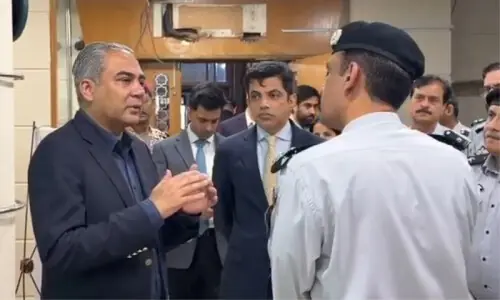
Participants at a pre-budget dialogue call for greater investment in preventive healthcare and subsidies for healthy food
Professor Dr Abdul Basit, director of Indus Diabetes & Endocrinology, warned that obesity was now a major driver of the country’s diabetes epidemic, with over 10 million children already overweight or obese.
“Prevention must begin before birth and continue through school age,” he said. “We cannot wait until people turn 30 or 40. By then, the damage is done,” he added.
To fund that prevention, Prof Basit proposed raising the federal excise duty on sugary drinks to 40 per cent. “But the tax cannot stand alone. Revenue collected should directly subsidise healthy foods and be invested in parks, playgrounds, and school physical education. We tax the problem and fund the solution,” he added.
He said new data showed that obesity among Pakistani women had doubled in recent years, even as 40 per cent of children under five remained stunted, and 18 per cent suffer from wasting. “More than half of all women and children are anaemic,” he added.
He said unsafe water, poverty, climate shocks and food insecurity were compounding the crisis.
Health Economist Dr Asim Bashir Khan said that despite the evidence, nutrition remained chronically underfunded. He said that provincial financing gaps amount to 75pc, costing Pakistan nearly 17 billion US dollars annually due to lost productivity, higher healthcare expenses, and weakened human capital.
“Global agencies like the United Nations, World Health Organisation, World Bank, and WFP are supporting us, but government allocations remain limited,” Dr Khan said, calling for a shift from incremental to performance-based budgeting, stronger monitoring, and full transparency so nutrition spending was tied to measurable outcomes.
Earlier, at the seminar’s opening, PNDS President Fayza Khan said Pakistan’s failure was not a lack of policy but of implementation. “Nutrition must be recognised as a cornerstone of Pakistan’s health system,” she said.
She stressed the need to integrate nutritionists into primary healthcare, appoint dietitians in hospitals and research institutions, and empower them to participate in policymaking.
Professor Dr Nilofer Fatmi Safdar of Ziauddin University said that the country had trained nutrition professionals, but had created no jobs for them. “The absence of nutritionists in hospitals, basic health units, and district systems undermines everything from maternal health to food system management,” she said.
PNDS Vice President Dr Rabia Anwar also advocated the placement of qualified nutritionists in school programmes and across primary, secondary and tertiary care.
Dr Ashar Malik, a health economist at Aga Khan University, emphasised that billions had flowed into nutrition projects since the 2000s from the European Union, World Bank, USAID, and others, especially in Sindh, but the missing link was accountability. “Linking these investments to performance and measurable outcomes is essential,” he added.
He proposed that districts should use granular micro-survey data to estimate local needs, and called for making national nutrition survey microdata publicly available for decentralised planning.
Other experts, including Dr Zeeshan and Dr Naqvi of Shine Humanities, stressed reducing donor dependency and tackling root causes like WASH and women’s empowerment through holistic interventions.
Published in Dawn, June 7th, 2026