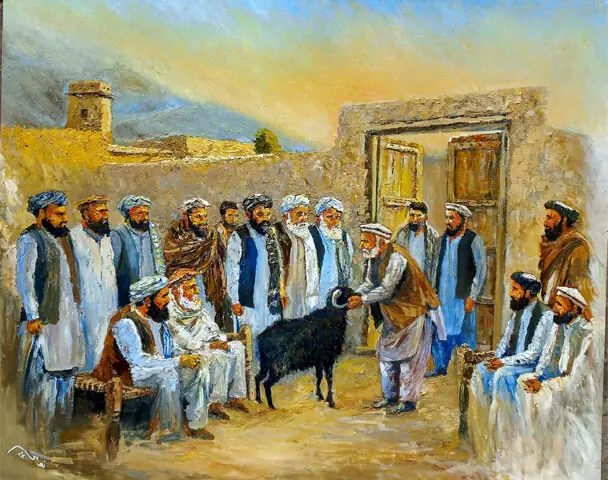
PESHAWAR: In a world often fractured by conflict and lingering grudges, a striking new watercolour painting by a senior Bannu-based artist, Nouman Khan aka Nomi, offers a moving reflection on one of Pakhtun culture’s most profound traditions.
Titled ‘Nanawatai’, the artwork explores the ancient custom of humility, forgiveness, and reconciliation that has sustained Pakhtun communities for centuries.
Nanawatai, which literally means reconciliation, forms a cornerstone of Pashtunwali – the unwritten ethical code governing Pakhtun life. It represents far more than a mere ritual; it is the solemn act of seeking sanctuary or pardon.
Traditionally, the wrongdoer or an entourage of elders approaches the aggrieved family, offering a sheep or goat to the victim party as a profound symbol of utmost humility and a plea for peace.
Under this code, even a sworn enemy who enters a home and pleads for protection must be granted it, often at great personal risk to the host. Rooted in the values of mercy over vengeance, the tradition underscores that true strength lies in moral courage, not unrelenting retribution.
Speaking to his scribe, the senior artist explained the inspiration behind the work. “In this painting, I explore Nanawatai, a profound tradition of Pakhtun culture rooted in humility, forgiveness and reconciliation,” Khan said. “More than a customary practice, it represents a deeply human moment—when pride bows before conscience, and the desire for peace overcomes the impulse for revenge.”
The watercolour masterfully captures this emotional weight through its fluid, translucent layers. Central figures embody the intense interplay of guilt and mercy, dignity and surrender, justice and compassion. One figure, head bowed in vulnerability, extends a hand in supplication, while the other stands poised between honour-bound justice and the grace of acceptance. Soft, earthy tones of ochre, deep crimson, and muted gold evoke the rugged landscapes of Khyber Pakhtunkhwa and the enduring spirit of its people, heightening the theatrical tension.
“The figures become symbols of conflicting emotions,” Khan noted. “Through their interaction, the painting reflects a timeless dialogue within every human heart. For centuries, Nanawatai has served as a bridge across divisions, allowing communities to heal wounds that might otherwise endure for generations. It is a reminder that reconciliation is an expression of moral courage, not a sign of weakness.”
Published in Dawn, June 15th, 2026