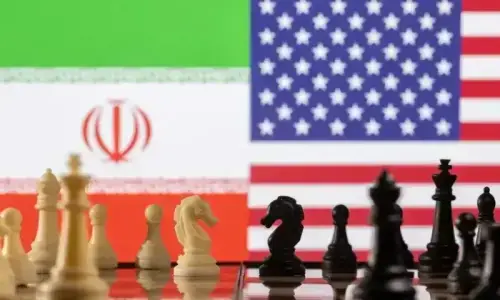
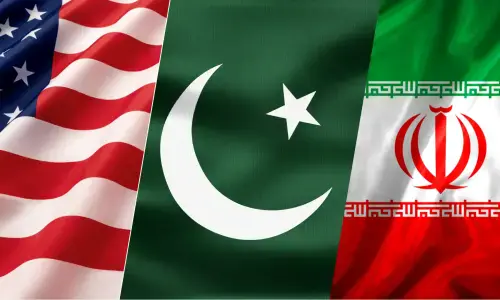
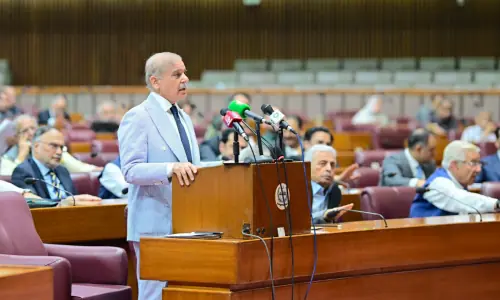
AFTER three and a half months of war between US-Israel and Iran and an acrimonious temporary ceasefire, a genuine chance at peace seems to be at hand. Early on Monday, Prime Minister Shehbaz Sharif announced what many around the world were waiting to hear: that an “immediate and permanent termination of military operations” on all fronts, including Lebanon, had been reached.
US President Donald Trump followed up shortly, offering “congratulations to all”. Confirmation of the deal was also received from Tehran. Apart from pitting two competing visions for the Middle East against each other, the war affected regions far beyond the Gulf, as the Iranians blocked the critical Strait of Hormuz, while the Americans enforced a naval blockade of Iranian ports. These grave obstacles in the way of global commerce will now be removed as the US and Iran are scheduled to sign the deal in Geneva on Friday, under Pakistan’s aegis, as per Mr Sharif.
This is a considerable diplomatic accomplishment for Pakistan. From hosting US-Iranian talks in April in Islamabad, to engaging in hectic diplomacy in order to ensure the earlier ceasefire did not collapse, Pakistan’s leadership went the extra mile to prevent a resumption of fully fledged hostilities. This critical role has been recognised by both the UN secretary general and nations around the world, who have lauded Pakistan’s efforts — as well as those of Qatar, Egypt, Saudi Arabia etc — in securing US-Iran peace.
The vast majority of nations are pleased with the outcome — considering the conflict’s impact on the global economy — yet there is great bitterness in Tel Aviv. The Zionist state, which had played a key role in convincing Mr Trump to attack Iran, is dissatisfied as the Islamic Republic has survived the joint Israeli-American onslaught, while the peace deal reportedly stipulates an end to Tel Aviv’s brutal attacks on Lebanon.
This brings us to the question: while there may be relief that a deal has been reached, will it last? After all, this is no elaborate formula for enduring peace — merely an MoU which allows all belligerents to silence their guns, and work towards achieving a long-term arrangement. Moreover, the Obama-era JCPOA took around 20 months to negotiate, so no one should expect a quick resolution within days or even weeks of the signing in Geneva.
What is important is that both sides talk, and cease all hostilities. Moreover, the US must give genuine sanctions relief to Tehran to gain the Iranians’ confidence, for after torpedoing the JCPOA and launching two attacks on Iran, there is considerable mistrust towards team Trump within the establishment in Iran. These obstacles can be overcome if the two sides approach each other with respect and sincerity, and if Israel is kept in check by Washington.
Published in Dawn, June 16th, 2026