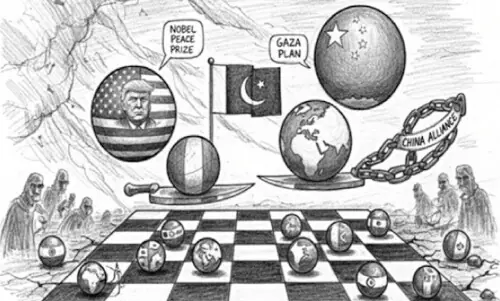
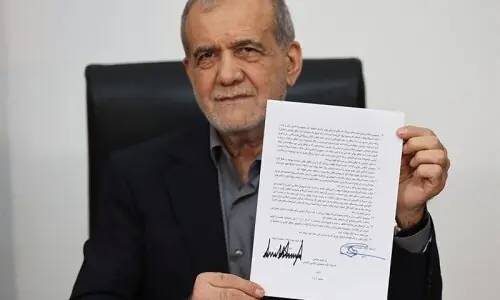
THOUGH uncertainty may surround the fate of the US-Iran MoU, throughout this episode — from the start of the war on Feb 28 to the electronic signing of the document this week — Pakistan has played a crucial role in securing a diplomatic off-ramp. Other states, such as Qatar, Egypt, Turkiye etc. have also played a significant part, but it is Pakistan that has secured top billing in this geopolitical drama.
This country’s efforts, both public and those behind closed doors, have helped prevent the war from metastasising into an even more brutal conflict. Nations across the world have appreciated Islamabad’s proactive diplomacy. The US president has often expressed his fondness for this country’s political and military leadership, while the Iranian president has warmly recognised Pakistan’s role in securing the MoU.
The fact is that despite its limitations, Pakistan has been punching above its weight for decades, bringing together disparate powers in a bid to ease global tensions. An oft-quoted parallel is the role played by Pakistan in bringing together Nixon’s America and Mao’s China.
At this moment of international glory for the country, the rulers also need to think about how to apply Pakistan’s diplomatic acumen to lessen regional tensions, as well as to encourage internal political rapprochement. Islamabad has succeeded in bringing together bitter ideological foes that have not seen eye to eye for nearly five decades, and prevented further conflict. It should now apply the same diplomatic determination to improving relations in the neighbourhood.
Granted the country has made several attempts to build bridges with two difficult neighbours — India to the east, Taliban-ruled Afghanistan to the west — with little reciprocity from either state. But such efforts should be renewed in the interest of the country’s security and economic development. Pakistan, without compromising on its key interests, should again extend the hand of friendship to Kabul and New Delhi, and invite them to resolve all outstanding issues at the negotiating table. If they shun the offer of dialogue, it will be clear for all to see exactly who is uninterested in peace in South Asia. Pakistan’s diplomats are second to none, and if these states seek to engage this country constructively, a new modus vivendi for the subcontinent can be reached.
Similarly, on the domestic front, the focus needs to be on national reconciliation. Political tribes can differ in their ideologies, but a level playing field must be provided to all, and an atmosphere of tolerance and respect for difference of opinion must be created. The prime minister hinted at the need for national unity in the House on Friday. It is time these intentions were translated into action, as without internal political cohesion, development will be impossible, and the gains made on the foreign front may not be sustainable.
Published in Dawn, June 20th, 2026